

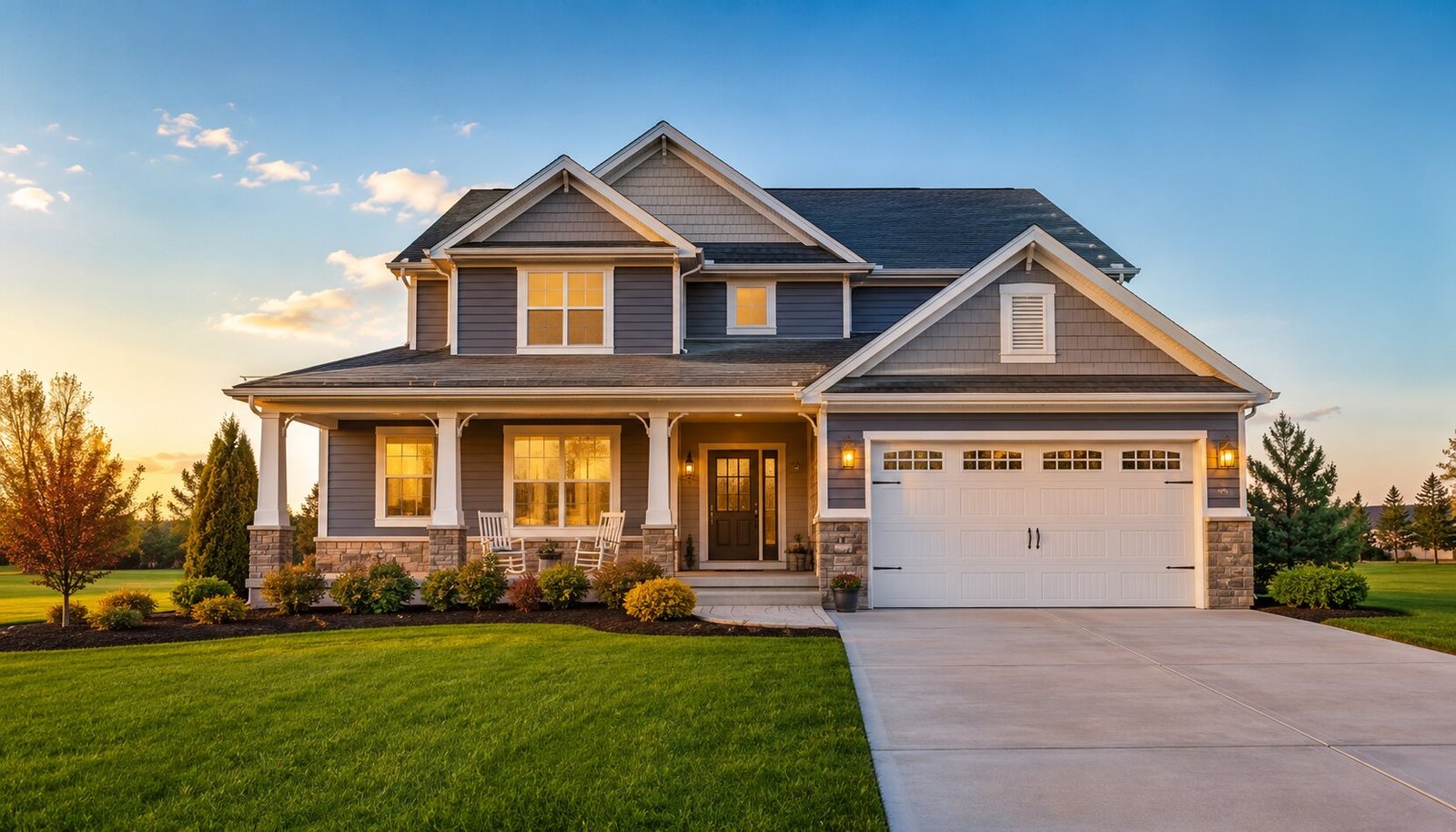
Buying a house is stressful enough without also managing a gut renovation, a leaky roof, or a kitchen that’s stuck in 1987. That’s why move in ready homes have become such a popular choice for buyers who want a simpler move. You get the keys, you unpack, and you start living. No contractors camped in your driveway for six months.
But “move in ready” gets thrown around loosely by agents and builders, and it doesn’t always mean what buyers think it means. This guide walks you through what these homes really are, how they compare to your other options, how the buying process works, and the exact checklists you should run before you sign anything. The goal is simple: help you decide if a move in ready home is right for you, and help you avoid the mistakes that cost people money after closing.

What “Move In Ready” Actually Means
A move in ready home is a house you can live in immediately after closing, without doing repairs or major work first. The plumbing runs, the electrical is safe, the roof is sound, the appliances are in place, and nothing critical is broken. You could sleep there the first night.
Here’s the part that trips people up. Move in ready does not automatically mean brand new, fully renovated, or perfect. A twelve year old house in great shape can be move in ready. So can a completed builder home that has never been lived in. The phrase describes the condition and readiness of the property, not its age.
So does move in ready mean fully renovated? No. It means functional and livable. Some of these houses have brand new finishes. Others just have honest, working systems and no glaring problems. When you’re shopping, always look past the label and inspect the actual condition.
You’ll see move in ready houses in two big categories: resale homes that are already in good shape, and new construction that a builder has finished and is holding as inventory. Both count as ready to move in homes. They just get there in different ways.
The Two Main Types of Move In Ready Homes
Builder Inventory Homes and Spec Homes
When a builder constructs a house without a specific buyer already signed up, that house is called a spec home. Once it’s finished and sitting on the builder’s list, it becomes part of their builder inventory homes, sometimes just called inventory homes. These are the classic quick move in homes you see advertised as “homes available now” or “immediate possession homes.”
Builders create these completed new homes for a practical reason. Not everyone can wait eight to twelve months for a custom build. Plenty of buyers need something now because of a job start date, a lease ending, or a school year beginning. So builders keep a few finished houses ready to go. These newly built homes usually feature modern floor plans, energy efficient construction, and popular upgrades already installed, which is why builders can move them quickly. In practice, builders stock these homes with the finishes that sell best in that market, so the design choices are made for you. The upside is that they’re usually safe, crowd pleasing picks rather than anything you’d regret.

A quick note on terms people mix up. Spec homes and inventory homes overlap heavily. “Spec” refers to why the house was built (on speculation, before a buyer existed), while “inventory” refers to its current status (finished and available). In everyday shopping, they point to the same thing: a completed house you can buy and occupy fast.
Resale Homes That Are Move In Ready
Not every ready to move in home is new. A huge share of move in ready real estate is resale homes, meaning previously owned houses listed on the MLS by regular sellers. A resale home can absolutely be move in ready if the current owners kept it up, updated the important systems, and left it in clean, livable shape.
The advantage with resale is character and location. Established suburban neighborhoods often have mature trees, bigger lots, and homes with real personality that you won’t find in a brand new subdivision. The tradeoff is that you inherit an older house, so inspection matters even more here.
How Move In Ready Homes Compare to Your Other Options
Buyers rarely shop just one type of house. You’re usually weighing move in ready against something else. Here’s how it stacks up in real terms.
Move In Ready Homes vs Turnkey Homes
Move in ready and turnkey homes are very similar, and the two terms often get used to mean the same thing. The difference is really one of degree. A move in ready home is simply livable with no repairs needed, while a turnkey home is usually finished to a higher, move-right-in standard.
That’s the nuance behind the labels. Turnkey homes are marketed as completely finished and often fully updated, sometimes even staged or furnished, with the promise that you literally turn the key and everything is done. Move in ready is a slightly broader term. A move in ready home is livable and needs no repairs, but it might not have every finish and upgrade a true turnkey listing brags about.
Example: A turnkey home might come with a fully remodeled kitchen, new flooring throughout, and fresh paint in every room. A move in ready home two streets over might have older but perfectly good flooring and a kitchen that works fine but isn’t brand new. Both are ready for you to live in. One just leans more premium.
Move In Ready Homes vs New Construction (Built to Order)
A move in ready home is finished and available to buy right now, so you can close in a matter of weeks. New construction built to order is a house you customize and wait on, usually six to twelve months from contract to move-in. Move in ready trades customization for speed and a known final product.
This is one of the most important comparisons for buyers considering a new build, because “new construction” can mean two very different things: a completed inventory home you buy today, or a house you build from a lot and floor plan over many months.
| Factor | Move In Ready New Construction (Inventory) | Built to Order New Construction |
| Timeline | Move in within weeks | Often 6 to 12 months |
| Customization | Limited, already chosen | High, you pick finishes |
| Price certainty | Fixed, you see the final product | Can shift with upgrade choices |
| Surprises | Fewer, the house exists | Possible delays and change orders |
| Best for | Buyers on a deadline | Buyers who want it exactly their way |
If you need to be settled by a certain date, move in ready new construction wins almost every time. If you dream of picking every tile and cabinet and you have months to spare, a built to order home makes more sense.
Move In Ready Homes vs Fixer Upper Homes
A fixer upper costs less up front but asks for money, time, and patience after you buy. A move in ready home costs more at purchase but saves you the renovation headache. The math isn’t always obvious.
Say you find a fixer at 40,000 dollars below the move in ready house nearby. Sounds like a deal. But if it needs a new roof, updated wiring, and a kitchen, you could easily spend that 40,000 and then some, while living in a construction zone for months. For most first time home buyers and busy families, the low maintenance homes route is worth the premium. Fixer uppers pay off mainly for buyers with renovation experience, a contractor they trust, or a real appetite for the work.
Builder Inventory Homes vs Custom Built Homes
Builder inventory homes are pre finished and standardized. Custom built homes are designed around you. Inventory homes give you speed, a known price, and a house you can walk through before buying. Custom homes give you control but demand decisions, deposits, and time. If you value certainty and a fast move-in date, inventory wins. If you value personalization above all, custom is the path.
Resale Homes vs Newly Built Homes
| Factor | Resale Homes | Newly Built Homes |
| Price | Often lower per square foot | Usually higher |
| Condition | Varies, inspect carefully | Everything is new |
| Warranty | Rarely any | Builder warranty included |
| Location | Established neighborhoods | Often newer, outer areas |
| Efficiency | Older systems | Energy efficient homes, modern insulation |
| Character | Mature lots, unique layouts | Modern floor plans, open concept |
Neither is better across the board. Newly built homes give you efficiency and peace of mind. Resale homes give you value and location. The right choice depends on what you care about most. One reality worth knowing: newly built homes in an outer subdivision may come with lower taxes and a warranty, but the yard, trees, and nearby stores can take years to fill in. A resale home in an established area gives you all of that on day one. Buyers who tour only new construction often forget to weigh what a settled neighborhood is actually worth to them.

Who Should Consider a Move In Ready Home
These homes fit certain buyers especially well.
First time home buyers often love them because there’s no renovation learning curve. You’re already handling a mortgage, a down payment, and a move. Skipping a remodel keeps the stress manageable.
Relocating professionals need instant occupancy homes when a job starts fast. If you have three weeks before day one at a new office in another state, you don’t have time to build. The hard part of relocation is usually buying in a place you don’t know yet. A smart move is to rent short term first, or at least spend a weekend driving the neighborhoods at different times of day, before you commit to a home sight unseen based on photos alone.
Growing families want stability. Family homes that are ready now mean the kids can start the school year settled, not sleeping around drywall dust.
Busy people who want low maintenance homes simply don’t want a project. That’s a completely valid reason to pay for readiness.
Financing a Move In Ready Home
The good news: financing a move in ready home works like financing any other house, and you have real home financing options.
An FHA loan is backed by the Federal Housing Administration and is popular with buyers who have smaller down payments or are still building credit. A VA loan, backed by the Department of Veterans Affairs, is available to eligible service members, veterans, and some surviving spouses, and it can offer strong terms including no down payment for those who qualify. Conventional loans through lenders that follow Fannie Mae and Freddie Mac guidelines are the other common route. Many builders also offer incentives if you use their preferred lender. In practice, the builder’s rate buydown can be worth real money, but I’ve seen the fine print offset some of that, so always compare the preferred lender against an outside quote before deciding.
Once you’re under contract, your file heads into loan underwriting, where the lender verifies your income, credit, and the property before final approval. This is the stage where deals quietly stall, usually because a buyer changed jobs, opened a new credit card, or moved money around during the process. Keep your finances boring until you close.
A few key terms you’ll run into during home ownership financing:
Your lender will order an appraisal, an independent estimate of the home’s value, to make sure the loan amount matches what the property is worth. If the appraisal comes in low, you may need to renegotiate or bring extra cash.
Your earnest money deposit and other funds usually sit in escrow, a neutral third party account that holds money until the deal closes. The earnest money shows the seller you’re serious, and escrow protects both sides until everything is final.
Before closing, your lender sends a closing disclosure, a document that lays out your final loan terms, interest rate, monthly payment, and closing costs. Under Consumer Financial Protection Bureau rules, you get at least three business days to review it. Read every line. This is where you catch surprise fees.
You’ll also sign a purchase agreement, the binding contract between you and the seller that spells out price, the move-in date, and any contingency clauses. A contingency is a condition that lets you back out and keep your deposit if something specific happens, like the inspection turning up major problems or the appraisal coming in low. Most resale listings come through the MLS, the Multiple Listing Service that agents use to share homes for sale.
Two more items round out the paperwork. Title insurance protects you and your lender if someone later claims a right to the property, such as an old lien or an ownership dispute, and it’s standard on nearly every purchase. On some homes, especially new construction with fresh lot lines, you may also get a property survey that confirms the exact boundaries and where the house sits on the lot.

The Buying Process, Step by Step
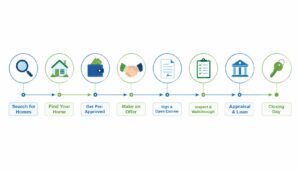
Buying a move in ready home doesn’t have to feel like a maze. Here’s the honest path most buyers follow.
- Get pre-approved. Talk to a lender first so you know your budget and can shop with confidence.
- Find your homes. Work with an agent or browse listings for quick move in homes and inventory homes that fit.
- Make an offer. Your agent submits a purchase agreement with your price and terms.
- Open escrow. Your earnest money goes into escrow and the timeline begins.
- Inspect the home. Never skip this, even on newly built homes. More on that below.
- Appraisal and loan. Your lender orders the appraisal and finalizes underwriting.
- Final walkthrough. You verify the home’s condition right before closing.
- Close. You sign, funds transfer, and you get the keys.
For a completed builder home, this can move fast, sometimes in a few weeks, because the house already exists and there’s nothing left to construct. That speed is exactly why immediate possession homes appeal to buyers on a deadline. The most common thing that slows a quick move in home down isn’t the house at all. It’s loan underwriting waiting on a document the buyer forgot to send. Answer your lender’s requests the same day and you’ll usually close on time.
Don’t Skip the Inspection, Even on a Brand New House
Here’s a mistake that costs people real money: assuming a new home is flawless and waiving the inspection. Builders are human, subcontractors rush, and things get missed. A home inspection protects you no matter how new the house is.
Use this home inspection checklist before you buy any move in ready home:
- Roof condition, flashing, and gutters
- Foundation and any cracks in walls or floors
- Plumbing, water pressure, and signs of leaks under sinks
- Electrical panel, outlets, and GFCI protection in kitchens and baths
- HVAC system age, function, and airflow
- Water heater condition and capacity
- Windows and doors for proper seal and operation
- Appliances actually run and are included in writing
- Grading and drainage away from the foundation
- Attic insulation and ventilation
- Signs of past water damage, mold, or pests
For a resale home, the inspection is about uncovering age and wear. For completed new homes, it’s about catching construction shortcuts. Either way, spend the few hundred dollars. It’s the cheapest insurance in the entire deal.
The problems that show up on new construction are rarely dramatic. More often it’s the small stuff a rushing subcontractor left behind: a reversed hot and cold line, a missing bit of attic insulation, an outlet with no power, grading that slopes toward the foundation instead of away from it. None of that is scary on its own, but you want the builder fixing it on their dime before closing, not you discovering it after the truck is unloaded. A good home inspection checklist catches these while you still have leverage.


The Final Walkthrough
The walkthrough happens shortly before closing, usually within a day or two. This is your chance to confirm the home is in the condition you agreed to, repairs were completed, and nothing new broke since the inspection. Experienced buyers treat it as more than a formality. They make sure the utilities are already on so they can actually run the furnace, fire up the water heater, and flip every switch, instead of just glancing around the rooms and calling it done.
Run this final walkthrough checklist:
- All agreed-upon repairs are finished and done well
- Every appliance, faucet, and toilet works
- Lights and outlets function in each room
- Heating and cooling turn on and respond
- No new damage, leaks, or stains have appeared
- Included items (appliances, fixtures, blinds) are still there
- Windows and doors open, close, and lock
- The home is clean and empty of the seller’s belongings
- Garage doors and openers work
If something’s wrong, raise it before you sign, not after. Once you close, fixing it becomes your problem and your cost.
Certificate of Occupancy and Builder Warranty
Two things matter a lot on newly built homes.
The certificate of occupancy is an official document from the local government confirming the house meets building codes and is safe and legal to live in. A true move in ready new construction home should have one. If a builder can’t produce it, that’s a red flag, because without it the house isn’t cleared for occupancy. One builder practice worth watching: closings sometimes get scheduled before the certificate is officially issued, on the assumption it will come through in time. Ask to see the actual document rather than take a promise, since legal occupancy depends on it.
The builder warranty is protection that comes with most new construction, though the details are far from standardized. What’s covered, and for how long, varies from one builder to the next, and some terms are shaped by state law, so two warranties can read quite differently. As a general pattern, many builders cover workmanship and finishes for a short window, major systems like plumbing and electrical for longer, and the home’s structure for up to around ten years. Don’t assume, though. Always read the actual written warranty before you close, so you know exactly what’s included and what isn’t. Even with all that variation, a warranty is usually a real advantage newly built homes have over resale homes, which often come with none at all unless the seller adds a separate home warranty plan.
Closing Day
Closing is the finish line. You’ll sign a stack of documents, your funds and loan will transfer, and ownership officially becomes yours.
Bring and confirm these items with this closing day checklist:
- Government-issued photo ID
- Your closing disclosure, reviewed in advance
- Proof of homeowners insurance
- Certified funds or a completed wire for closing costs and down payment
- Your final walkthrough completed and any issues resolved
- The certificate of occupancy on new construction
- Builder warranty documents, if applicable
- Keys, garage remotes, and access codes handed over

One thing to keep in mind as you use this guide: the United States doesn’t have a single, uniform way of buying a home. Real estate laws, builder practices, typical closing timelines, property tax rates, HOA requirements, and seller disclosure rules can all vary quite a bit from one state, county, and local market to the next. What’s routine in Texas might work a little differently in New Jersey. Treat everything here as a solid general framework, then lean on a local agent, lender, and title company or closing attorney who know exactly how things work where you’re buying.
Can You Negotiate a Move In Ready Home?
Yes. People assume finished homes have firm prices, but there’s often room to move, especially on builder inventory homes.
Builders don’t like holding finished houses. A completed spec home sitting empty costs them money in taxes, insurance, and interest. That gives you leverage. Builders may not always drop the sticker price, since that can affect their comps, but they’ll frequently offer incentives instead: covering closing costs, paying to buy down your interest rate, adding upgrades, or including appliances. In my experience, a builder will fight harder to protect the list price than to protect their margin, so asking for a rate buydown or free appliances often works better than asking for a straight price cut. Ask for the incentive, not just the discount.
For resale move in ready homes, negotiation depends on the local market, how long the home has sat, and what your inspection turns up. A solid inspection report is one of your best bargaining tools. Read the seller’s property disclosure closely too, since it’s supposed to reveal known issues like past leaks or repairs, and a National Association of Realtors member agent can help you spot what’s missing. A home that’s been listed a while, or one where the disclosure raises questions, usually leaves the most room to negotiate.
Best Time to Buy Move In Ready Homes
Timing your purchase can quietly save you thousands, especially on builder inventory homes. Builders work toward sales targets, so the end of a quarter and the end of the year tend to be when they’re most willing to deal. A finished house that’s still sitting on the books when a reporting period closes is a house a sales manager wants gone, and that motivation often shows up as incentives.
Watch for builder inventory clearance too. When a community is winding down or a builder is opening a new phase, they’ll push to sell the last completed homes from the current one. Those quick move in homes can come with the best incentives of the whole project.
Season matters as well. The market usually cools in late fall and winter, when fewer buyers are shopping and homes sit longer. Less competition means more room to negotiate, on both resale homes and completed new homes. Spring is the opposite. More inventory, but more buyers competing for it.
One thing that surprises people: builders often prefer to hand you incentives rather than cut the listed price. A price drop lowers the comparable sales that every other home in the community is measured against, which hurts the builder’s remaining inventory. An incentive like a rate buydown, covered closing costs, or free upgrades helps you just as much without touching that public number. So when you shop at the right time, ask for the incentive package, not only the discount.
Are Move In Ready Homes a Good Investment?
For most buyers, yes, especially if you plan to live there rather than flip it. You skip the renovation costs and delays, you get a predictable move-in date, and newly built homes often run more efficiently, which trims your monthly bills. The main tradeoff is paying a premium for that convenience.
That premium is why you might get more square footage per dollar with a fixer upper or an older resale home. The best “investment” is the one that fits your life, your timeline, and your tolerance for projects, not just the lowest price tag. Over time, as you pay down the loan and the home holds or grows in value, you also build home equity, which is one of the main reasons buying beats renting for a lot of people.
Hidden Costs Buyers Often Forget
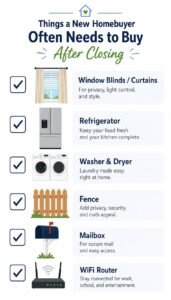
Here’s something buyers learn the hard way. A move in ready home is livable on day one, but that doesn’t mean the spending stops at closing. “Move in ready” and “nothing left to buy” are not the same thing, and the gap between them catches people off guard, especially first time home buyers who stretched to reach the purchase price.
The photos that sold you on the home were often staged, and staging leaves with the seller. That means window coverings are a common surprise, since blinds and curtains frequently do not convey. On new construction especially, the model home looks fully dressed, but the house you buy may show up with bare windows.
Appliances are another gap. A refrigerator, washer, and dryer are not always included, even in a completed new home, so confirm in writing exactly which appliances stay. Outside, landscaping is often finished only in the front, leaving the backyard as dirt, and things like fencing and even mailbox installation can be the buyer’s responsibility in a new community.
Then come the smaller line items that add up: utility connection fees to turn on power, water, and gas, an HOA transfer fee if the home is in an association, moving expenses, internet installation, and any smart home setup you want. None of these are huge on their own, but together they’re real money right when your bank account is already thin from the down payment and closing costs.
The fix is simple. Before closing, ask the seller or builder for a clear list of exactly what’s included, get it in the purchase agreement, and budget a cushion for the rest. A quick conversation up front beats an unpleasant surprise the week you move in.
Common Mistakes Buyers Make
A few errors show up again and again. Learn from them.
Skipping the inspection on a new home. Covered above, but it bears repeating. New does not mean flawless.
Falling for staging. A furnished, freshly painted home feels amazing during a showing. Look past the decor at the roof, systems, and layout.
Ignoring the HOA. Many suburban neighborhoods and new communities have a homeowners association with monthly dues and rules. Read the HOA documents before you commit, so the fees and restrictions don’t surprise you later.
Forgetting closing costs. Beyond the down payment, expect closing costs on top. Ask your lender for an estimate early.
Not comparing lenders. Builder incentives are nice, but always compare the total cost against an outside lender before deciding.
Rushing the paperwork. Your purchase agreement and closing disclosure deserve a careful read. Slow down for the documents that bind you.
Skipping the neighborhood homework. This is the one buyers seem to regret most after closing. It’s easy to fall for the house and forget to drive the commute at rush hour, check the street after dark, or ask how the area handles a heavy storm. The home can be perfect and the location still wrong for you.
A Realistic Buying Scenario
Picture this. Maria and James are first time home buyers relocating for James’s new job, which starts in a month. A custom build is out, there’s no time. They tour a completed inventory home in a growing suburb with a modern open floor plan, energy efficient windows, and appliances already installed. It has a certificate of occupancy and a ten year structural builder warranty.
They still hire an inspector, who finds a minor plumbing fix under one bathroom sink. The builder repairs it before the walkthrough. Maria and James also negotiate the builder into covering part of their closing costs. They use an FHA loan, review their closing disclosure carefully, and close in under four weeks. They move in the same weekend and start their new chapter. No dust, no delays.
That’s what buying a move in ready home looks like when you do it with your eyes open.
What to Do During Your First 30 Days After Moving In
Getting the keys is the finish line for buying, but it’s the starting line for owning. The first month is the best time to handle a few simple tasks that protect your home and your peace of mind. None of this is complicated, and most of it is free or close to it.
- Change or rekey the exterior locks. You have no idea how many copies of the old keys are floating around.
- Complete your utility transfer and confirm power, water, gas, and trash are in your name.
- Replace the HVAC filter and note the size so you can reorder easily.
- Test every smoke and carbon monoxide detector, and replace batteries.
- Locate the main water shutoff valve so you can stop a leak fast.
- Find the electrical panel and label the breakers if they aren’t already.
- Register your builder warranty right away, since coverage windows start ticking at closing.
- Organize your important documents: closing disclosure, purchase agreement, title insurance policy, warranty paperwork, and insurance.
- Inspect the caulking around tubs, showers, and sinks, and touch it up to prevent water damage.
- Set up internet and any smart home devices before you’re buried in boxes.
- Create a simple maintenance calendar for filter changes, gutter cleaning, and seasonal tasks.
Do these in the first month and you’ll avoid the two most common early headaches for new owners: a small water problem that quietly becomes a big one, and a warranty claim that gets denied because the registration window closed.
Frequently Asked Questions
What qualifies as a move in ready home? A home you can live in the day you close, with no repairs or major work needed first. The systems work, the roof is sound, and nothing critical is broken. It can be a completed new build or a well kept resale home.
Does move in ready mean fully renovated? No. It means livable and problem free, not necessarily updated or brand new. Some move in ready homes have all new finishes, while others simply have honest working systems and no glaring issues.
Can an older home be move in ready? Yes. Age doesn’t disqualify a home. A twenty year old house that’s been well maintained, with updated systems and no needed repairs, is just as move in ready as new construction. Inspection matters more here to confirm condition.
Is a home inspection still necessary on a brand new house? Absolutely. New does not mean flawless. Subcontractors rush and details get missed, so an inspection catches small construction issues while the builder still has to fix them at their cost.
Are appliances always included? Not always. Ranges and dishwashers usually stay, but refrigerators, washers, and dryers are often excluded, even in completed new homes. Always confirm in writing exactly which appliances convey before closing.
Are move in ready homes more expensive? They often carry a premium over a comparable fixer upper because you’re paying for convenience and finished condition. That said, the price can still be fair once you factor in the renovation money and months of hassle you’re avoiding.
How quickly can you move in? For a completed inventory home, closing can happen in a few weeks once your financing is in order, since there’s nothing left to build. Resale timelines depend on the seller’s situation and your loan.
What is the difference between a move in ready home and a turnkey home? They overlap heavily. Turnkey usually implies fully finished and updated, sometimes even furnished. Move in ready is broader and means livable with no repairs needed, even if every finish isn’t top of the line.
Do move in ready homes come with a builder warranty? New construction almost always does, often covering workmanship short term and structure for up to ten years. Resale homes rarely include one unless the seller provides a separate home warranty plan.
What should I check before closing? Run your final walkthrough, confirm all agreed repairs are done, verify included items are still there, review your closing disclosure line by line, and on new construction make sure the certificate of occupancy and builder warranty are in hand.
Can I use an FHA or VA loan to buy one? Yes. A move in ready home can be financed with an FHA loan, a VA loan for eligible veterans and service members, or a conventional loan, just like any other qualifying property.
Are move in ready homes better than fixer uppers? For most buyers who want to move in and get on with life, yes. Fixer uppers make more sense if you have renovation experience, a trusted contractor, and the patience to live through the work.
What hidden costs should I expect after closing? Budget for items that may not be included, such as window coverings, some appliances, backyard landscaping, fencing, utility connection fees, an HOA transfer fee, moving expenses, and internet setup. Ask for an itemized list of what’s included before you close.
Can you negotiate closing costs on a move in ready home? Often, yes. Builders will frequently agree to cover part or all of your closing costs as an incentive, especially on finished inventory homes they want off the books. On resale homes you can ask the seller to chip in too, though how much room you have depends on the local market.
Is a move in ready home a good choice for first time buyers? For a lot of first timers, yes. You skip taking on a renovation while you’re still learning how home ownership works, and the move-in date is predictable. Just budget for the extras that aren’t included, and never skip the inspection, even on a brand new build.
Can you back out after a home inspection? Usually, if your purchase agreement includes an inspection contingency. That clause lets you renegotiate, request repairs, or walk away and keep your earnest money if the inspection turns up problems you can’t live with. Read your contract so you know your exact rights and deadlines.
Do move in ready homes appreciate in value? They can, like any home. Appreciation depends mostly on location, the local market, and demand rather than on the home being move in ready. A well kept house in a desirable area tends to hold its value better than the finish level alone would suggest.
What should I bring on closing day? Bring a government-issued photo ID, proof of homeowners insurance, and your certified funds or wire confirmation for the down payment and closing costs. It also helps to have your closing disclosure on hand so you can compare the final numbers before you sign.
Final Thoughts
Move in ready homes solve a real problem. They let you skip the renovation, meet a deadline, and start living in your new place right away. But “move in ready” is a description, not a guarantee, so your job as a buyer is to verify what’s really behind the label.
Remember the essentials. Inspect every home, new or resale. Understand your home financing options and read your closing disclosure. Run the walkthrough before you sign. Confirm the certificate of occupancy and builder warranty on new construction. Compare your choices honestly, whether it’s turnkey homes, builder inventory, or an established resale house. And don’t be afraid to negotiate.
Do that, and a move in ready home can be one of the smoothest paths into home ownership there is. Keep this home buying guide handy when you’re comparing listings, preparing for inspections, or getting ready for closing day. The more you understand the process, the more confident and in control you’ll feel when it’s time to make your move.