

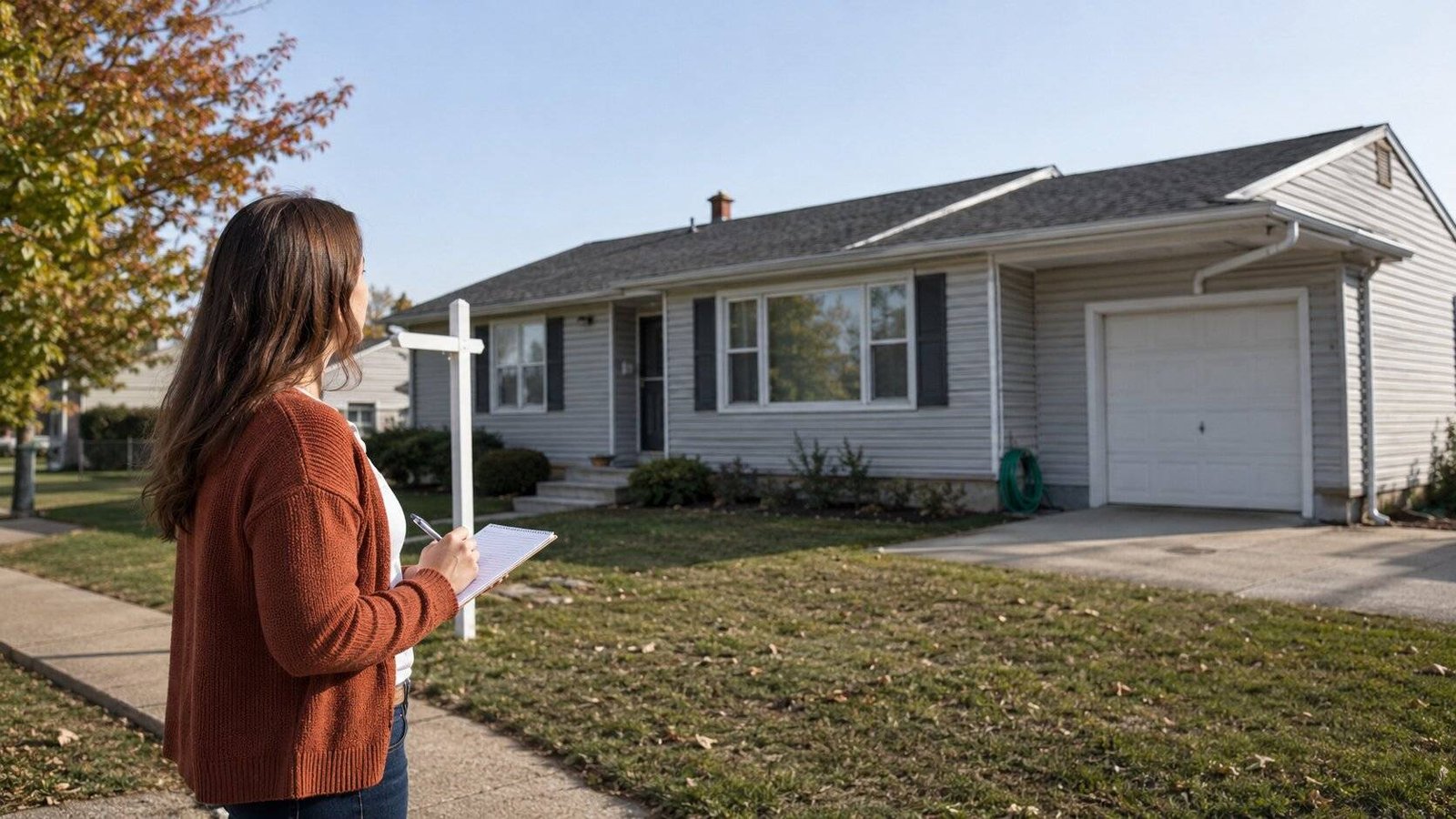
A staged living room and a renovated kitchen are built to make you fall for a house before you have looked at what it actually costs, what shape it is really in, and where it sits. The asking price is only the starting number. The most important things to know before buying a house come down to three: the total monthly cost you will carry, the condition of the parts you cannot see, and a location you cannot change later.
Real estate rules are also local. Disclosure laws, transfer taxes, property tax rates, inspection rights, and closing procedures vary by state, county, and sometimes city, so treat the specifics here as a starting point and confirm the details for your own market.
The home buying process at a glance
Most purchases in the United States follow the same sequence, though the timing and details vary by state, lender, and contract:
- Set a real budget. Decide what you can comfortably spend based on the full monthly cost, not the payment alone.
- Get preapproved. Have a lender verify your finances and put your borrowing range in writing.
- Shop for a home. Tour properties inside that range and compare them on more than looks.
- Make an offer. Propose a price and terms, including the contingencies that protect you.
- Inspect and investigate. Have the home professionally inspected and review its records and history.
- Appraisal. Your lender confirms the home is worth what you agreed to pay.
- Underwriting. The lender finishes verifying everything and issues final approval.
- Final walkthrough. Confirm the condition, that agreed repairs were done, and that included items remain.
- Closing. Sign, pay your down payment and closing costs, and in most cases receive the keys.
Start with affordability, not the listing
Affordability is the part buyers most often get backward. They find a house, fall for it, then try to make the numbers work. Do it the other way around, because the listing price is not the number that matters. What matters is the total monthly cost of owning the home and how much cash you have left after closing. A $400,000 house with high property taxes, an older roof, and HOA dues can cost more per month, and carry more risk, than a $430,000 house without them.
Lenders often reference the 28/36 guideline: housing costs around 28 percent of gross monthly income, and total debt payments near 36 percent. Treat it as a rough reference, not a rule. Underwriting standards differ by lender and loan program, and government-backed loans can allow more flexibility. But qualifying for a payment is not the same as being able to live with it. Lenders qualify you on gross income, before taxes, retirement savings, childcare, and commuting. Choose a monthly number that fits your real budget first, then let that set your price range.
Credit factors in as well. Your credit score can affect both whether you qualify and the rate a lender offers, though it is one factor among several, alongside your income, debts, down payment, loan type, and the property itself. Where it applies, the rate quietly shapes how much house you can afford, so pull your credit early, dispute errors with the bureaus, and avoid opening new accounts or financing a car in the months before you apply.
One more number gets ignored: the cash you keep after closing. Draining your savings for the down payment and closing costs, with nothing in reserve, is one of the most common and avoidable mistakes, and it is a frequent trap for first-time buyers. Keep a cushion for the first repair.
Get your financing in order before you shop
Sorting out the money before you tour a house keeps you from falling for a home outside your range, or losing one you could afford to a buyer who was ready to move.
Prequalification and preapproval are not the same thing. Prequalification is a quick estimate based on numbers you provide. Mortgage preapproval is deeper: the lender reviews your income, assets, debts, and credit, and issues a letter estimating what they will lend. A preapproval letter signals to sellers that you are serious, and in a competitive market some will not consider an offer without one. Get preapproved before house hunting, not after.
You do not need to become a mortgage expert, but the main loan types change how much cash you need up front. The most damaging myth in home buying is that you need 20 percent down. You usually do not. The figures below are minimums for buyers who qualify, and eligibility depends on the loan program, your finances, the lender, and the property.
| Loan type | Typical minimum down payment | Notes |
| Conventional | As low as 3% for eligible buyers | Private mortgage insurance usually applies under 20% down and can be cancelled later as you build equity |
| FHA | 3.5% with a credit score of 580 or higher; 10% for scores of 500 to 579 | Backed by HUD; requires mortgage insurance; many lenders set higher score minimums |
| VA | 0% for eligible service members, veterans, and some spouses | No monthly mortgage insurance; a funding fee usually applies |
| USDA | 0% for eligible buyers in qualifying rural areas | Income and location limits apply |
A few points sit behind that table. On a conventional loan, private mortgage insurance is not permanent. Under the federal Homeowners Protection Act, you can generally request cancellation once you reach 20 percent equity, and it ends automatically at 22 percent equity on the original schedule, subject to the rules and your loan. FHA down payment tiers come from HUD, but lenders often add their own overlays and require higher credit scores than the program minimum. That is one reason shopping more than one lender pays off.
Down payment assistance programs run by state and local housing agencies can reduce the cash you need, and gift funds from family are widely allowed when documented properly. These vary by location, so check what exists where you plan to buy. Treat any interest rate you hear as a snapshot. Collect written Loan Estimates from a few lenders, compare them on the same day since rates change daily, and look past the rate to the fees, points, and total cost of the loan.
What a house really costs to own
Ask new homeowners what surprised them, and it is rarely the mortgage. It is everything around it. The listing price and the principal and interest payment are the visible part. The rest is easy to underestimate:
- Property taxes, set locally and sometimes very different between two nearby towns. Ask for the current annual amount and whether a reassessment is likely after purchase.
- Homeowners insurance, priced by location, home age, roof condition, claims history, and coverage. In some regions it has become a large and rising cost.
- Mortgage insurance, on many low down payment loans, as described above.
- HOA dues, if the home is in an association, plus the possibility of special assessments.
- Utilities, which can run much higher in a larger or older home than in a rental.
- Maintenance and repairs, the steady cost of upkeep.
- Closing costs, the upfront fees covered below.
- Moving and immediate post-purchase work, from movers to a locksmith to the first round of fixes.
As a rough rule of thumb, some owners set aside on the order of 1 percent of the home’s value each year for maintenance, but treat that as a loose starting point rather than a set requirement. Actual needs vary with the home’s age, size, condition, and systems, so an older or larger home may run well above that figure and a newer one below it. The discipline of reserving something before you need it matters more than the exact number.

Here is an illustrative example, not a universal estimate. On a $350,000 home, the principal and interest might be one figure, but adding property taxes, insurance, and upkeep can push the true monthly cost meaningfully higher than the mortgage payment alone. The actual numbers depend on your location, loan, and the specific house, so run your own.
Closing costs
Closing costs are the one-time fees and prepaid items you pay to finalize the loan and the purchase: lender and underwriting fees, appraisal, title search and title insurance, recording fees, prepaid property taxes and insurance, and, in some states, transfer taxes and attorney fees. As a planning range, buyers commonly budget 2 to 5 percent of the purchase price, but it swings widely, largely because of state transfer taxes. A buyer in a high transfer tax state can pay a very different percentage than one a state line away with none.
Two practical points. Closing costs are separate from your down payment, so budget for both. And some are negotiable: you can shop for certain services such as title insurance, and sellers will sometimes cover part of your closing costs, especially in a slower market. You will see the estimated figures on your Loan Estimate early on and the final ones on your Closing Disclosure before closing.
Location and neighborhood: what you cannot change
You can change almost anything cosmetic over time: paint, flooring, fixtures, hardware, landscaping, even a dated kitchen. What you cannot change is where the house sits, and you usually cannot cheaply change the layout, the neighborhood, or the drainage. That is why staging can be a trap. A beautiful kitchen can pull your attention away from a cramped floor plan, a busy road out front, or an HVAC system near the end of its life.
| Usually easier to change | Much harder or impossible to change |
| Paint | Location |
| Flooring | Neighborhood |
| Light fixtures and hardware | Traffic and noise |
| Landscaping | Nearby development |
| Appliances | Lot size |
| Interior finishes | Commute |
| Kitchen and bath updates over time | Major drainage and grading |
Nothing in the left column is automatically cheap. A full kitchen or bathroom renovation can be a serious, costly project. The point is that those things are within your control on your own timeline, while the items on the right are not, which is why they deserve more weight in your decision than any finish.

“Check the neighborhood” means little on its own. In practice:
- Visit at different times. A quiet street at midday can change at rush hour or late on a weekend.
- Time the real commute from this address during the hours you would actually drive.
- Look into nearby development. A vacant lot or aging strip mall could become anything. The local planning or zoning office can tell you what is approved or proposed.
- Check flood risk on FEMA’s flood maps, since a flood zone can require flood insurance and add real cost. Ask whether the home has flooded before.
- Compare property taxes and insurance across the areas you are considering.
- Notice the surroundings, from the condition of nearby homes to the services within a short drive.
- Think about resale, since school district, noise, and location affect how easily you will sell later, even if you plan to stay.
Compare homes with a simple scorecard
When you tour several homes, memory blurs and emotion takes over. A scorecard keeps the comparison honest. Score each home from 1 to 5 in every category, give more weight to what matters most, and compare the totals.
| Category | What to assess | Weight |
| Location | Commute, safety, proximity to what you use, long-term desirability | High |
| Neighborhood | Noise, traffic, upkeep of nearby homes, nearby development | High |
| Total monthly cost | Payment plus taxes, insurance, HOA, utilities, and upkeep | High |
| Price vs. comparable sales | How the price compares to similar recent sales | High |
| Structure and foundation | Signs of movement, cracks, grading, and drainage | High |
| Roof | Age, condition, and how soon it may need replacing | Medium |
| Plumbing | Water pressure, visible leaks, pipe material, water heater age | Medium |
| Electrical | Panel age and capacity, working outlets, obvious hazards | Medium |
| HVAC | Age, condition, and running cost of heating and cooling | Medium |
| Layout | How well the floor plan fits how you actually live | Medium |
| Maintenance needs | Deferred upkeep and near-term repairs | Medium |
| Resale potential | How easily the home will sell later | Medium |
A high score in a low-weight category should not outweigh a low score in a high-weight one. A great layout does not rescue a house with foundation movement and a payment you cannot sustain. Picture two homes. House A has the kitchen you have always wanted but sits on a busy street, adds time to your commute, and has an aging roof and HVAC. House B has a dated kitchen you would eventually redo but sits on a quiet street, closer to work, with newer systems. Scored honestly, House A tends to lose exactly where it counts, while its advantage shows up only in a category you can change later. That is the point of the exercise: compare the whole house, not the one feature that caught your eye.
A five-minute check for showings
You are not a home inspector, and this does not replace one, but a few minutes of attention tells you whether a house deserves a serious offer and a professional look:
- Smells. A musty odor can signal moisture or mold. Heavy air freshener can be masking something.
- Water stains. Check ceilings, around windows, under sinks, and along basement walls for discoloration, bubbling, or warping.
- Cracks. Hairline cracks are common. Wide cracks, stair-step cracks in brick or block, or cracks with displacement deserve a professional’s eye.
- Floors. Notice sloping, bounce, or soft spots, which can point to structural or moisture issues.
- Water pressure. Run a faucet, and two if you can. Weak flow or a long wait for hot water is worth asking about.
- Windows and doors. Sticking, painted-shut, or fogged double-pane windows all tell a story.
- Drainage outside. Does the ground slope away from the foundation, and do the gutters carry water away from the house?
- Basement or crawlspace, where you can safely see it: dampness, efflorescence on the walls, standing water, a sump pump, or a hard-running dehumidifier.

None of these findings ends a deal on its own. They tell you where to look harder.
Red flags versus fixable problems
Buyers tend to react to whatever is most visible, panicking over an ugly kitchen and shrugging at a stained basement. Flip that instinct. What matters is not how a problem looks but how much it costs to fix, how serious it is, and how it interacts with your budget, your financing, and the inspection.
| Category | Examples | How to respond |
| Cosmetic | Paint colors, dated fixtures, worn flooring, old cabinets, landscaping | Usually inexpensive to update over time; rarely a reason to pass |
| Routine maintenance | Gutters, minor caulking, a water heater near end of life, small repairs | Budget for it and factor it into your offer |
| Worth a professional look | Roof age, electrical panel questions, HVAC condition, plumbing concerns | Have specialists assess before you remove contingencies |
| Potentially expensive | Foundation movement, major water intrusion, extensive roof failure, sewer line problems, environmental concerns | Get real repair bids, then renegotiate or reconsider |
| Reasons to pause | Several serious issues at once, a price that no longer makes sense after estimates, financing that will not cover needed work | Step back and reassess the whole deal, not just the one problem |
Notice what this table does not say. It does not tell you that a crack, an old roof, or a wet basement means walk away. A single defect on a well-priced home in the right location, with a fair repair estimate and a willing seller, can still be a good buy. The same defect on an overpriced home that already stretches your budget is a different story. Severity, cost, location, inspection results, financing, and your circumstances decide it.
Questions and documents worth investigating
Good questions surface what a listing will not tell you. Direct each to the right party, the seller, listing agent, inspector, lender, title professional, or HOA, and ask the ones that matter for the specific home:
- Why is the owner selling? The answer can hint at urgency or a problem.
- How old are the roof and major systems? Roof, HVAC, water heater, and electrical all have lifespans that predict near-term costs.
- Have there been water or flooding problems? Past water intrusion connects directly to insurance and repair risk.
- What major repairs or renovations were done, and were they permitted where required?
- What are the current property taxes, and is a reassessment likely?
- What are the HOA fees and rules, and are any special assessments coming?
- What do utilities typically cost across the seasons?
- What is included in the sale? Confirm appliances and fixtures in writing to avoid a surprise at the walkthrough.
Beyond the questions, several records are worth reviewing, and here again the specifics vary by state.
Seller disclosure requirements vary significantly by state and locality, both in what must be disclosed and in how the process works. Where disclosures are required, read them carefully and understand what the seller is actually obligated to reveal, keeping in mind that a disclosure reflects what the seller knows, not a guarantee that nothing else is wrong.
If the home is in an HOA, review the association’s rules, financials, and meeting minutes where available, so you understand both the restrictions and the association’s financial health. An underfunded association can lead to special assessments later.
Ask your insurer or insurance agent whether any available claims or loss history can be obtained for the property, and ask the seller about known prior claims or significant water losses. Availability varies, but what turns up can flag recurring problems and affect your premium. Understand title as well: a title search and title insurance protect you against ownership claims, liens, and other defects in the property’s history, usually handled by your title company or closing attorney.
Permits and renovation history
This is one of the most overlooked things to check, and it can cost real money later. When a previous owner added square footage, finished a basement, converted a garage, upgraded electrical or plumbing, or altered the structure, that work often required permits and inspections, depending on the jurisdiction. Unpermitted work can mean the job was never inspected for safety, that added space may not count for appraisal or resale, and that you could face complications with insurance or the local government. Rules and consequences vary widely, so ask the seller, check with the local building department where appropriate, and get professional advice for anything significant. A finished basement wired without permits is not automatically a dealbreaker, but you want to know about it before you own it.
Making an offer
Once a home clears your budget and your scorecard, the offer becomes a matter of strategy. Comparable sales anchor a fair price, so look at what similar nearby homes actually sold for recently, not their list prices. Market conditions shape your leverage. In a buyer’s market, with more inventory and homes sitting longer, you have room to negotiate on price, repairs, and closing costs. In a seller’s market, you have less, and overreaching on contingencies can cost you the home. Read your specific local market rather than national headlines, since conditions vary block by block.
Contingencies are your protection. Common ones include inspection, appraisal, and financing contingencies, each giving you defined rights to renegotiate or walk away. Waiving them can make an offer more competitive and also removes safeguards, so understand exactly what you are giving up. Contingency rights and deadlines vary by state and contract. Earnest money is the good-faith deposit that shows you are serious, and how much you put down, along with the conditions under which it is refundable, depends on your contract and local norms.
Inspection and appraisal
A professional home inspection is one of the smartest steps a buyer can take, and skipping it to win a bidding war is one of the riskiest. A good inspector examines the home’s accessible systems and structure, covering the roof, foundation, electrical, plumbing, HVAC, water heater, attic and insulation, windows and doors, drainage, and visible signs of water or pest damage, then gives you a report that doubles as a to-do list and, often, leverage to renegotiate.
Understand its limits. An inspection is a visual assessment of what is accessible on the day, not a guarantee. Inspectors generally cannot see inside walls, under floors, or into buried lines, so hidden defects can still exist. That is why specialized inspections sometimes make sense: a sewer scope on an older home, a radon test, a pest or termite inspection, a mold assessment, or a structural engineer’s evaluation when something looks off. Read the full report, not just the summary, understand your inspection deadline and what your contract lets you do with the findings, and get professional advice for any serious safety or structural concern.
If you are financing, your lender will order an appraisal to confirm the home is worth what you agreed to pay. It protects the lender, and indirectly you. When an appraisal comes in below the contract price, you have an appraisal gap, and you generally have to make up the difference in cash, renegotiate, or, if you have an appraisal contingency, walk away. Plan for the possibility, especially in a fast market.
Closing and final checks
Closing is the final stretch, and it helps to know the rhythm. You will receive a Closing Disclosure from your lender, which the CFPB requires you to get at least three business days before closing so you can review the final loan terms and costs. Compare it against your original Loan Estimate line by line, watching the interest rate, lender fees, points, prepaid items, and total cash to close, and question anything that moved.
Do a final walkthrough shortly before closing to confirm the home is in the agreed condition, that included items remain, that agreed repairs were made, and that nothing new has gone wrong. It is a last check, not a re-inspection.
Be alert to wire fraud. Scammers target closings by impersonating your agent, lender, or title company, often through a compromised email thread, and sending fake or last-minute “changed” wiring instructions. Federal authorities, including the FBI’s Internet Crime Complaint Center (IC3) and the Federal Trade Commission, advise verifying any wiring instructions before sending money by calling a known, trusted phone number for the title company or closing agent, never a number or link from the email itself. Treat urgency as a warning sign. If you suspect funds went to the wrong account, contact your bank immediately to try to recall the wire and report it to the FBI’s IC3 and the FTC.
At the closing table, or its electronic equivalent, you sign the documents, pay your down payment and closing costs, title transfers, and in most cases you receive the keys. Whether an attorney is required depends on your state.
When to reconsider
There is no single defect that means walk away. What should give you pause is the pattern. Several serious issues at once, repair estimates that push the true cost past what the home is worth to you, an appraisal that comes in low with a seller who will not move, or a monthly number that stopped fitting your budget once taxes and insurance were real, are all signals to step back and look at the whole deal again. Walking away from the wrong house is not a failure. It is the reason you did this work before you were legally committed.
A pre-offer checklist
Before you commit to a specific home, run through this:
- The full monthly cost, taxes and insurance included, fits your budget with room to spare.
- Your financing is preapproved and your Loan Estimate is in hand.
- You have cash for the down payment and closing costs, plus a reserve after closing.
- The location and neighborhood held up across visits at different times.
- The home cleared your scorecard, with no serious low scores in high-weight categories.
- You ran the showing check and know what needs a professional look.
- You understand the seller disclosure, HOA rules if any, and permit history.
- Your offer includes the contingencies you want, and you understand any you are waiving.
- You have budgeted for inspection, appraisal, and a possible appraisal gap.
- You have a verified process for any money transfers.
Frequently asked questions
How much should I have saved before buying a house? Enough for your down payment, which can be far less than 20 percent depending on the loan, plus closing costs, commonly 2 to 5 percent of the price but highly variable by state, plus moving costs and a reserve after closing. The reserve is what protects you from the first surprise repair.
Do I still need a home inspection if the house looks move-in ready? In almost all cases, yes. Fresh finishes can sit over the exact problems an inspection is designed to find, from an aging roof to hidden water damage, and the report often gives you room to renegotiate. Paint and flooring reveal nothing about the roof, the wiring, or what is behind the walls.
How do I know whether a house is overpriced? Compare it to recent sales of similar nearby homes rather than to its list price or to what it feels like it is worth. If the price sits well above comparable sales without a clear reason, such as a major renovation or a superior lot, it may be overpriced, and if you are financing, the appraisal will apply the same test.
This article is general educational information about buying a home in the United States, not legal, tax, mortgage, or insurance advice. Real estate rules, taxes, disclosures, and contract terms vary by state and locality, and costs and market conditions change over time. Verify the details for your area and consult a licensed agent, lender, and where appropriate an attorney or tax professional for guidance specific to your situation.