


Key Takeaways
- A home generator needs professional service at least once a year, plus simple checks you can do yourself every month.
- Most maintenance follows two clocks: a calendar schedule (monthly and yearly) and a runtime schedule (every 100 to 200 hours of use).
- The core tasks are the oil change, air filter, battery, spark plug, coolant, and fuel system.
- Skipping maintenance is the number one reason a generator fails to start during an outage, and it can also void your warranty.
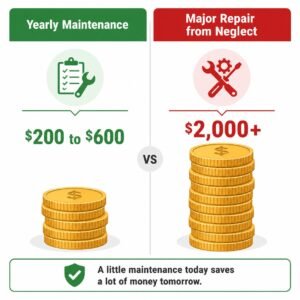
- Yearly home generator maintenance usually costs between 200 and 600 dollars, far less than one emergency repair.
A home generator is a strange kind of purchase. You spend thousands of dollars on a machine that you hope you will never actually need. It sits quietly on the side of your house for months at a time. Then one night a storm takes down the power lines, and suddenly that quiet machine is the most important thing you own.
Here is the hard truth about home generator maintenance. A generator that is ignored will often fail on the exact night you need it most. When a power outage hits, your heating, your refrigerator, and your home security system all go dark in the same moment, and a dead generator leaves you with none of them.
I watched this happen to a neighbor of mine last winter. An ice storm knocked out power across our whole street, and his Generac would not start. The reason was not complicated. The battery had died months earlier, and he had never once checked it. He spent a freezing night in the dark while my house stayed warm and bright, and the entire thing could have been avoided with fifteen minutes of attention each month.
This guide will show you exactly how to maintain a home generator so that never happens to you. You will get a full maintenance schedule, a step by step breakdown of every task, real cost numbers, and a troubleshooting section for when something goes wrong. Whether you own a large whole house standby generator wired into your home, or a small portable unit you roll out by hand, the goal is the same. You want a machine that starts every single time you need it. Good backup generator maintenance is one of the most overlooked jobs in home and property maintenance, and it is also one of the easiest to get right.
How Often Should You Service a Home Generator?
Most home generators should receive professional service once a year, or after every 100 to 200 hours of runtime, whichever comes first. On top of that, you should perform simple visual checks and a battery inspection yourself every month. Generators that run often, or that sit in harsh climates, need service more frequently.
That yearly visit is the minimum, not the ideal. Think about the way you treat your car. You do not wait for the engine to seize before you change the oil. You follow a schedule so that small problems get caught while they are still small and cheap to fix. The Federal Emergency Management Agency makes the same point about emergency generator maintenance. It recommends routine oil changes, inspections, and operational testing so the unit stays reliable through a long outage.
Generator Maintenance Schedule
The table below is your master reference. This is the standard generator maintenance schedule for a home standby unit, and residential generator maintenance rarely strays far from it. Keep one thing in mind. Your owner manual always wins if it lists something different, because intervals change a little between brands and models.
| Maintenance Task | How Often | Who Does It |
| Visual inspection for leaks, debris, rust | Weekly | You |
| Exercise or self test cycle | Weekly or monthly | Automatic and You |
| Battery inspection and cleaning | Monthly | You |
| Coolant level check (liquid cooled units) | Monthly | You |
| Transfer switch inspection and test | Every 6 months | Professional |
| Oil and oil filter change | Every 100 hours or once a year | You or Professional |
| Air filter inspection and replacement | Every 100 hours or as needed | You |
| Spark plug inspection | Once a year or every 200 hours | You or Professional |
| Load test under full power | Once a year | Professional |
| Fuel stabilizer (stored fuel only) | When storing gasoline or diesel | You |
| Full professional service | Once a year | Professional |
A quick note on that table. The tasks marked “You” are genuinely simple, and I will walk you through every one of them below. The tasks marked “Professional” involve electrical testing or real safety risk, so they are worth paying for. There is no shame in calling a technician for those jobs. I do it myself every year.
Standby vs Portable Generator Maintenance
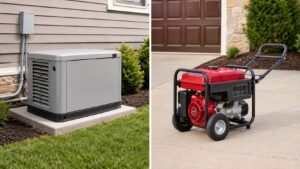
This is the part that most guides skip, and it matters a great deal. Standby generator maintenance and portable generator maintenance are not the same job, and treating them the same way is how people end up with a machine that will not start.
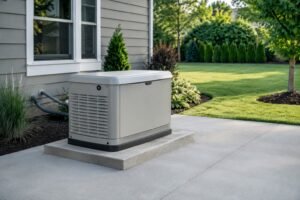
A standby generator is the permanent unit that is wired directly into your home. It usually runs on natural gas or propane, so there is no fuel sitting around to go stale. Its biggest maintenance needs are the battery, the yearly oil change, and the weekly exercise cycle that keeps the engine lubricated. Because an automatic standby generator starts on its own, the real danger is that you forget about it completely until the day it lets you down. The best time to install one is actually during new home construction, when the wiring is already open and the cost is lower. Many newer units also tie into a smart home app, so you can check the status of the generator from your phone.
A portable generator is the smaller unit that you roll out and start by hand. These need more hands on care, and the reason comes down to one word. Fuel. Gasoline can start to go bad in as little as thirty days, and most gasoline sold in the United States is an ethanol blend that breaks down even faster. That stale fuel gums up the carburetor, and a clogged carburetor is the single most common reason a portable generator will not start. If you own a portable unit, your two most important habits are these. Use fuel stabilizer, and run the tank dry (or drain it) before you store the machine for any long stretch.
I learned the fuel lesson the hard way. I once left half a tank of gasoline in a portable generator over an entire summer. When hurricane season arrived and I finally needed it, the engine would not even turn over. The carburetor was completely gummed up. I ended up spending an afternoon cleaning it out instead of preparing my home for the storm. I never store that unit with old fuel in it anymore.
Step by Step Generator Maintenance Tasks
This is the practical heart of the guide. These are the tasks you can safely handle yourself, with basic tools and a little patience. Always read your owner manual first. And never work on a generator that is running or still hot.
How to Change the Generator Oil
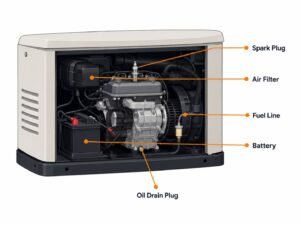
Fresh oil is the single most important thing you can do for the life of your engine. Here is what a proper generator oil change looks like.
- Run the generator for a few minutes so the oil warms up and flows out easily, then turn it off and let it cool slightly.
- Disconnect the spark plug wire on a portable unit, or the battery on a standby unit, so the engine cannot start while you work.
- Place a drain pan under the oil drain plug, remove the plug, and let all of the old oil drain out.
- Put the drain plug back, then remove the old oil filter and install a fresh one.
- Add new oil in the grade your manual lists, which is often a 5W-30 or something similar, and check the dipstick so you do not overfill.
- Wipe up any spills, reconnect the spark plug wire or battery, and run the unit briefly to check for leaks.
Do this every 100 hours of runtime or once a year, whichever comes first.

How to Inspect and Replace the Air Filter
A dirty air filter chokes the engine, wastes fuel, and can lead to overheating. The good news is that this is the easiest job on the entire list, and a generator filter replacement takes only a few minutes.
- Open the air filter cover, which is usually held on by a clip or a single screw.
- Pull out the filter and hold it up to the light. If you cannot see light through it, it is too dirty to keep using.
- A foam filter can sometimes be washed, dried, and lightly oiled. A paper filter should simply be replaced.
- Seat the clean or new filter properly and close the cover.
A new air filter costs only about 10 to 20 dollars. Replacing one is far cheaper than the repair a badly clogged filter can eventually cause.
How to Handle Generator Battery Maintenance
A dead battery is the most common reason a standby generator fails to start. Generator battery maintenance is simple, but it is also the task people forget most often, because the battery quietly loses charge whether you use the generator or not.
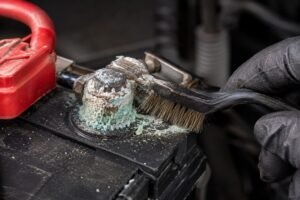
- Every month, look at the battery terminals for white or green corrosion.
- If you find corrosion, disconnect the battery and clean the terminals with a mix of baking soda and water and an old toothbrush.
- Check that the connections are tight, because normal vibration loosens them over time.
- Use a battery tester or a multimeter to confirm the battery is holding a proper charge.
Most generator batteries last three to five years. If yours is near that age and starting to struggle, do the generator battery replacement before the next storm season rather than after a failure. A new battery is a small price to pay for peace of mind.
How to Check and Replace the Spark Plug
The spark plug ignites the fuel, and a worn or fouled plug leads to hard starting and rough running. A generator spark plug replacement is cheap and quick.
- Remove the spark plug wire, then use a spark plug socket to unscrew the plug.
- Look closely at the tip. A healthy plug has a light tan color. A black, oily, or heavily worn plug should be replaced.
- Check the gap with a gap tool and set it to your manual specification if it is off.
- Thread the new or cleaned plug back in by hand first so you do not strip it, then tighten it and reconnect the wire.
Inspect the spark plug once a year or every 200 hours of use.
How to Check the Coolant on Liquid Cooled Units
Larger standby generators are liquid cooled, and the coolant is what keeps the engine from overheating during a long run.
- Wait until the engine is completely cool. Never open a hot cooling system.
- Check the coolant level in the reservoir against the marked lines.
- Top it off with the coolant type your manual lists if the level is low.
- Look around the hoses and connections for any signs of leaks or dampness.
Check the coolant monthly, and have a professional flush and replace it on the schedule in your manual.
How to Care for the Fuel System
Fuel problems cause more no start situations than anything else, and this is especially true on portable units.
For gasoline and diesel generators, add a fuel stabilizer whenever you store fuel, and never let old fuel sit for months on end. For natural gas and propane standby units, the fuel itself does not go bad, but you should still confirm that the supply line valve is open and that there are no leaks or hissing sounds near the connection.
DIY vs Professional: What You Can Do and What You Should Not
I am a firm believer in doing your own basic maintenance. It saves money, and it helps you understand your machine. That said, some jobs are simply not worth the risk.
Handle these yourself: visual inspections, clearing debris away from the unit, the oil change, the air filter, the battery check, and basic fuel care. These are low risk and need only simple tools.
Call a professional for these: the yearly full service, a full generator load test under real electrical load, transfer switch inspection, coolant flushes, and anything that involves the electrical wiring or the automatic transfer switch. These jobs involve live electricity and specialized equipment. A licensed technician also documents the service, which your warranty usually requires.
The simple rule I follow is this. If the job involves the engine, I am comfortable doing it. If the job involves the electrical panel or the transfer switch, I call someone who does it every single day.
Generator Maintenance by Fuel Type
The fuel your generator burns changes what you have to worry about. This is another detail that most guides leave out completely.
Natural gas. This is the most convenient option, because it comes straight from the utility line and never goes stale. Maintenance here focuses on the engine, the battery, and checking the gas line and regulator for leaks.
Propane, also called LP. Propane stores very well and does not degrade. Keep an eye on your tank levels, and inspect the hoses and regulator regularly, since propane connections can develop leaks over time.
Diesel. Diesel is powerful and efficient, but it can grow algae and absorb water while it sits in storage. Diesel units need their fuel filters changed on schedule, and they benefit from a fuel stabilizer and occasional tank draining.
Gasoline. This is the most common fuel for portable units and also the most demanding. Gasoline goes stale in about thirty days, so stabilizer and proper storage are not optional if you want the machine to start when it matters.
Seasonal Care and Off Season Storage
Your generator faces different challenges at different times of year, and a little seasonal preparation goes a very long way.
Before storm or hurricane season. This is your big checkup. Do a full inspection, change the oil if it is due, test the battery, and run a load test so you know the unit is ready. You do not want to discover a problem when the sky is already dark.
Winter care. Cold weather is hard on both batteries and oil. Make sure the battery is strong, use the oil grade your manual recommends for cold temperatures, and keep snow and ice cleared away from the unit so it can breathe.
Storing a portable generator. If you are putting a portable unit away for months, this is where most people go wrong. You have two safe options. Either run the tank completely dry, or fill it with stabilized fuel and run the engine for a few minutes so the treated fuel reaches the carburetor. Store the unit somewhere dry, and remove the battery if it has one.
How Much Does Home Generator Maintenance Cost?
Let us talk about real numbers, because this is what people actually want to know.
A full year of maintenance on a home standby generator usually runs between 200 and 600 dollars, with an average of around 300 dollars. That figure covers a professional annual service plus the small parts you replace along the way. Here is a rough breakdown of the individual generator maintenance cost items.
| Item or Service | Typical Cost |
| Professional annual service visit | 150 to 400 dollars |
| Oil and oil filter, per change | 20 to 50 dollars |
| Air filter | 10 to 20 dollars |
| Spark plug | 5 to 15 dollars |
| Battery replacement, every 3 to 5 years | 40 to 100 dollars |
| Maintenance kit, brand specific | 40 to 90 dollars |
Now compare that to the other side of the ledger. A major repair caused by neglect can easily pass 2,000 dollars, and a full replacement costs far more than that. There is also a hidden benefit worth knowing. A well maintained standby generator adds value to your home, and market data shows these units can recover somewhere between 50 and 70 percent of their cost when you sell. In other words, the money you spend on maintenance is some of the smartest money you will ever put into the machine.
Common Generator Problems and Troubleshooting
Even a well kept generator will act up once in a while. A little generator troubleshooting and maintenance knowledge can save you a service call. Here are the problems I see most often and what usually causes them.
The generator will not start at all. On a standby unit, check the battery first, then the fuel supply. On a portable unit, the usual culprit is a clogged carburetor from stale fuel, or a fouled spark plug.
It will not start after a storm. This is often just a tripped circuit breaker on the unit itself, so flip it back on first. Water getting into the unit during heavy weather can also cause electrical faults.
The engine starts, then dies. This usually points to a fuel delivery problem, a dirty carburetor, or a clogged fuel filter that is starving the engine.
The generator runs but produces no power. This can be a tripped breaker, a loose connection, or a problem with the alternator. If the engine sounds fine but nothing is getting power, this is a job for a professional.
The power output surges up and down. Surging is often caused by inconsistent fuel flow or a carburetor issue, and sometimes by a circuit that is overloaded.
The unit is making unusual noise or vibrating heavily. Excessive noise and heavy vibration are classic early warning signs of a mechanical problem. Do not ignore them.
There is a smell of burning oil. This can mean an oil leak that is reaching hot engine parts, or that the unit is burning oil internally. Check your oil level and look for leaks.
The generator uses oil too quickly. Rapid oil consumption usually signals engine wear, and it is worth having a technician take a look.
The battery keeps dying. A battery that will not hold a charge is either at the end of its life, or the charging system is not working properly. Test it, and replace it if it is old.
Here is a safety note that I cannot stress enough. Never run any generator inside a garage, a basement, or any enclosed space, even with the door open. Generators produce carbon monoxide, which is invisible, has no smell, and can kill quickly. A single generator can give off as much carbon monoxide as hundreds of cars. Always run the unit outside, at least 20 feet away from windows and doors.
Does Skipping Maintenance Void Your Warranty?
This is the part that costs people real money, so please pay attention to it.
Most generator manufacturers, including Generac and Kohler, require documented maintenance to keep your warranty valid. That word “documented” is the key. If your engine fails and you file a warranty claim, the manufacturer may ask for proof that the unit was serviced on schedule. No records means no coverage. A repair that should have been free suddenly comes straight out of your own pocket. Brand rules matter here too. Generac generator maintenance requirements, for example, are spelled out clearly in the owner manual, and they expect the schedule to be followed.
There are two easy ways to protect yourself. First, keep a simple maintenance log with the dates and the tasks you performed. The free checklist below does exactly this for you. Second, keep the receipts from any professional service. It takes almost no effort, and it can save you thousands of dollars if a covered part ever fails.
Your Free Home Generator Maintenance Checklist
To make all of this easy to follow, here is a simple generator maintenance checklist you can print out and keep near your unit or in your maintenance folder. Think of it as your generator inspection checklist. Tick each item as you go, and write down the date. That record is also exactly what your warranty needs.
Weekly
- Look over the unit for leaks, rust, or damage
- Clear away leaves, snow, and debris, keeping the area around the unit clear
- Confirm the exercise or self test cycle ran and sounded normal
Monthly
- Inspect and clean the battery terminals
- Test the battery charge
- Check the coolant level on liquid cooled units
- Check the fuel supply and look for leaks
Every 100 Hours or Once a Year
- Change the oil and the oil filter
- Inspect and replace the air filter
- Inspect the spark plug
Once a Year, by a Professional
- Full service and diagnostics
- Load test under full power
- Transfer switch inspection
- Record the service and file the receipt

Frequently Asked Questions
How often should I service my home generator?
At least once a year with a professional, or every 100 to 200 hours of runtime, whichever comes first. You should also do simple visual and battery checks yourself every month.
Can I maintain my generator myself?
Yes, for the basic tasks. You can safely handle the oil change, the air filter, the battery care, and the cleaning. Leave load testing, transfer switch work, and anything electrical to a licensed professional.
How long does a home generator last?
A well maintained standby generator commonly lasts 20 to 30 years. Because most home units run only during outages and a brief weekly test, they rarely wear out their engine early. Poor maintenance, on the other hand, can cut that lifespan dramatically.
What happens if I do not maintain my generator?
The most likely result is that it fails to start when you need it during an outage. Neglect also shortens the engine life, raises your repair costs, and can void your warranty.
How much does generator maintenance cost per year?
Most homeowners spend between 200 and 600 dollars a year, with an average near 300 dollars. That covers a professional service visit and the small replacement parts.
Why will my generator not start?
The most common reasons are a dead battery on standby units, and a clogged carburetor from stale fuel on portable units. A fouled spark plug or an empty fuel supply are also frequent causes.
Do I need to run my generator when there is no outage?
Yes. Running it regularly, through the weekly exercise cycle or a manual test, keeps the engine lubricated, charges the battery, and confirms that the unit is ready.
The Bottom Line
A home generator is only as reliable as the care you give it. That is the whole lesson in one sentence. The machine itself can be excellent, but it will still fail on the worst possible night if the battery is dead or the fuel has gone stale.
The good news is that these generator maintenance tips are not hard work. A few minutes of home generator upkeep each month, one yearly professional visit, and a written record are enough to make sure that when the power goes out, your lights stay on. Start with the checklist above, put the dates in your calendar, and your generator will be ready long before you ever need it.