


Imagine you buy a quiet piece of land in the countryside. A few months later, a neighbor knocks on your door and tells you that they have driven across your gravel path to reach their barn for the last fifteen years, and they have no intention of stopping. You never gave them permission. Can they really keep using your land?
In many cases, the answer is yes, and the reason is a rule of property law known as a prescriptive easement.
So, what is a prescriptive easement? In simple terms, it is a legal right to use part of someone else’s property that a person earns through long, open, and unpermitted use over a number of years set by state law. It does not hand over ownership of the land. It only grants the right to keep using it in a specific way, such as a footpath, a shared driveway, or a utility line. This guide walks through how these easements work, what the law actually requires, how the rules differ from state to state, and what you can do to protect your property.
What Is a Prescriptive Easement?
A prescriptive easement is a legal right to use another person’s land for a specific purpose, acquired through continuous, open, and adverse use without the owner’s permission for a period defined by state law. It is also called an easement by prescription. Unlike an easement you buy or one an owner grants you in writing, this right develops over time through use alone. A prescriptive easement is one piece of the larger framework of property rights in the United States, which shapes how land can be used, shared, and restricted.
Two terms help explain how it works. The land that carries the burden of the easement is called the servient estate. The land or person that benefits from the use is called the dominant estate. Once a prescriptive easement is established, it attaches to the property and can pass to future owners, even though it may never appear in the original deed.
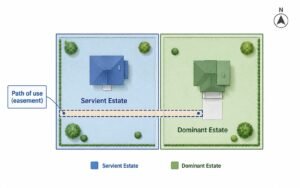
The key point to remember about the legal definition of a prescriptive easement is what it does not do. It does not transfer ownership. The person who wins a prescriptive easement claim gains the right to use a slice of the land in a particular way, while the true owner keeps the title. Courts also do not hand out these rights lightly, since granting one takes something away from a property owner.
How Does a Prescriptive Easement Work?
The idea behind a prescriptive easement goes back to a simple principle in property law: land is meant to be used, and owners are expected to pay attention to what happens on their property. When a person uses someone’s land openly for years and the owner never objects, the law eventually treats that silence as a kind of forfeiture of the right to complain.
Here is how it plays out in practice. A person starts using a strip of land, perhaps a driveway or a walking path. They do this openly, regularly, and without asking. The clock starts running. If that use continues without interruption for the full number of years required by the state, the user may have earned a legal right to keep using the land in that same way.
The right does not appear on paper by itself. In most situations, the person claiming the easement has to prove their case in court, often through a quiet title action, and the burden of proof sits entirely on them. Many states require clear and convincing evidence, which is a higher standard than the one used in an ordinary civil dispute.
The Elements of a Prescriptive Easement
To win a prescriptive easement claim, the person using the land has to satisfy every legal element. Courts treat these like a checklist, and if even one is missing, the claim usually fails. The exact wording changes from state to state, but the core prescriptive easement requirements look like this.
Open and notorious use. The use has to be visible and obvious, not hidden. The point is that the owner should have been able to notice it. A worn path across a lawn, a car parked in the same spot every day, or a fence line that everyone in the area recognizes can all count as open and notorious use.
Continuous and uninterrupted use. The use has to continue steadily for the entire statutory period. Continuous does not mean constant or daily. It means the pattern of use matches what you would expect for that kind of activity. Crossing a property every summer to reach a lake house can count as continuous use, because that is how seasonal lake access would normally happen.
Adverse or hostile use. This is the element people misunderstand the most. Hostile does not mean angry or aggressive. It simply means the use happened without the owner’s permission. If the owner ever gave permission, even a casual “sure, go ahead,” the use becomes permissive, and permissive use can never turn into a prescriptive easement no matter how many years pass. Permission is the single most common reason these claims fail.
Use for the full statutory period. The clock is set by state law and usually runs somewhere between five and twenty years. The state by state differences are covered further down.
You may also see the word “exclusive” listed as a requirement, and this is where many online articles get it wrong. For adverse possession, which grants full ownership, exclusive use generally means the claimant used the land to the exclusion of everyone else, including the true owner. For a prescriptive easement, exclusivity is treated very differently. In most states, the person claiming the easement does not need to be the only one using the land, and they certainly do not need to push the owner off it. A handful of states apply a limited version of the exclusivity idea, but it almost never means sole use the way it does in adverse possession. If a source tells you that you must have exclusive, sole use of the land to gain a prescriptive easement, treat that as a warning sign that the information is not reliable.
Prescriptive Easement vs. Adverse Possession vs. Easement by Necessity
People often confuse three legal doctrines that all involve one person gaining rights over another person’s land. They are related, but the rights they grant are very different, and mixing them up can be costly.
Adverse possession transfers actual ownership of the land. A person who uses land long enough, and meets all the requirements, can end up owning it outright. A prescriptive easement only grants the right to use the land for a specific purpose, while the original owner keeps the title. An easement by necessity is a different situation altogether. It is granted when a piece of land has no other reasonable way to reach a public road, usually because a larger parcel was split up, and it comes from necessity rather than from years of use. An express easement, by contrast, is one the owner creates on purpose through a written agreement.
The table below compares the three doctrines that arise from use or circumstance rather than a signed document.
| Feature | Prescriptive Easement | Adverse Possession | Easement by Necessity |
| What you gain | Right to use the land | Full ownership (title) | Right to cross for access |
| Based on | Long, unpermitted use | Long, unpermitted possession | Landlocked property with no road access |
| Does the owner keep title? | Yes | No | Yes |
| Exclusive use required? | Usually no | Yes | No |
| Property taxes paid by claimant? | Not required | Often required | Not required |
| Common trigger | Driveways, paths, utility lines | Fences, sheds, occupied land | A split parcel cut off from a road |
The short version is this. Adverse possession is the most serious, because you can lose the land itself. A prescriptive easement is less severe but still limits what you can do with your property, and it is the claim that most often surprises unsuspecting owners.
How Long Does It Take? Prescriptive Easement Periods by State
There is no single national rule under prescriptive easement law for how long someone must use your land before a claim can form. Each state sets its own statutory period, and the differences are significant. In California, five years of qualifying use can be enough. In Florida, the person may need a full twenty years. The table below shows commonly cited periods for several states.
| State | Typical Prescriptive Easement Period |
| California | 5 years |
| Texas | 10 years |
| New York | 10 years |
| Washington | 10 years |
| Oregon | 10 years |
| Florida | 20 years |
| Virginia | 20 years |
| Massachusetts | 20 years |
Please treat these numbers as a general guide rather than the final word. State law changes, and many states add extra conditions on top of the basic time requirement. Florida, for example, also requires that the use be inconsistent with the owner’s own use of the land. Some states have separate and much stricter rules for claims against government-owned property, and in many places you cannot gain a prescriptive easement over public land at all. Before you rely on any specific number, check your state’s current statute or speak with a real estate attorney licensed where the property is located.
Real Examples of Prescriptive Easements
Prescriptive easements are easier to understand when you see how they show up in everyday life. Here are a few common situations that lead to a prescriptive easement claim.

The shared driveway. Two rural neighbors have used the same gravel driveway for decades, even though the driveway technically sits on one person’s land. When that owner finally tries to block it off, the neighbor claims a prescriptive easement to keep using it.
The path to the lake. A family has crossed the corner of a neighboring lot every summer to reach the water. No one ever asked permission, and no one ever objected. Years later, a new owner buys the neighboring lot and puts up a fence. The family may have earned a prescriptive easement over that path.
The utility line. A power company runs lines across the edge of a property for years without a recorded easement. Over time, that open and continuous use can ripen into a prescriptive easement for the utility.
The parking strip. A small business parks its delivery trucks on part of an adjoining lot, day after day, without permission, for the full statutory period. That repeated use can support a prescriptive easement claim over the parking area.
How to Prove a Prescriptive Easement
If you believe you have earned a prescriptive easement, or you are trying to defend against one, the case usually comes down to evidence. Because the burden of proof rests on the person making the claim, documentation matters enormously.
Strong evidence often includes dated photographs of the use, a professional land survey showing the exact location and boundaries, maintenance records, utility bills, and written statements from neighbors who witnessed the use over the years. Testimony from long-time residents can carry real weight, since these cases frequently stretch back a decade or more.
One concept worth knowing is tacking. In many states, a claimant can combine their own years of use with the years of a previous owner, as long as there is an unbroken chain of ownership between them, a relationship the law calls privity. This allows the required years to add up across successive owners rather than resetting every time the property changes hands.
Because the standard of proof in many states is clear and convincing evidence, and because a single missing element can defeat the entire claim, this is one area where professional legal help is genuinely worth the cost.
How to Prevent a Prescriptive Easement
If you own property, the good news is that preventing a prescriptive easement is far easier than removing one after it has formed. You have several practical options.

- Watch your boundaries. Walk your property lines from time to time and pay attention to any signs of regular use by others, such as worn paths, tire tracks, or items stored on your land. Catching a problem early is half the battle.
- Grant written, revocable permission. This is the single most effective tool available to you. If you give someone permission to use your land, the use is no longer adverse or hostile, and a prescriptive easement can never form. A short note works well, for example: “You have my permission to continue using this path. This permission is revocable at any time.” Posting a sign that reads “Private Property. Permission to cross is revocable at any time.” accomplishes the same thing.
- Physically block the use. Installing a fence, a locked gate, or a hedge can interrupt the continuous use requirement and reset the statutory clock. Even a temporary but effective blockage can break the chain of continuous use.
- Order a survey and title search. If you are buying property, order a professional survey and a thorough title search before closing. A survey can reveal boundary issues and signs of use that a title report alone might miss, since prescriptive easements often do not appear in public records.
- Take legal action when needed. If someone ignores your warnings and keeps using your land, you may need to file a lawsuit to stop them before they meet the full statutory period. A real estate attorney can help you act before the clock runs out.
Can a Prescriptive Easement Be Removed or Terminated?
Once a prescriptive easement has been legally established, removing it is possible but rarely simple. Here are the main ways an easement of this kind can end.
Release. The easiest path is agreement. If the person who holds the easement signs a written release giving up the right, the easement ends. This usually involves negotiation and sometimes a payment.
Merger. If the same person comes to own both the servient estate and the dominant estate, the easement disappears, because you cannot hold an easement over your own land.
Abandonment. An easement can be terminated by abandonment, but this is often misunderstood. Simply not using the easement for a while is usually not enough. Courts generally require proof of a clear intention to give up the right permanently, shown through words or actions, not just a pause in use.
Quiet title action. When the parties cannot agree, or when an old easement no longer serves any purpose, the property owner can file a quiet title action. This is a lawsuit that asks a court to declare the easement no longer exists and to clear the property’s title. Costs vary widely, and a contested case can become expensive.
Estoppel. In some situations, if the easement holder stands by silently while the owner makes major improvements that depend on the easement being gone, a court may rule the easement terminated on fairness grounds.
Because these routes almost always require a court order or a signed agreement, and because the rules differ by state, removing a prescriptive easement is another situation where a real estate attorney is close to essential.
How a Prescriptive Easement Affects Buying, Selling, and Property Value
For anyone buying or selling property, a prescriptive easement is more than a legal curiosity. It can affect price, financing, and future plans.
The tricky part is that prescriptive easements frequently do not show up on a standard title report, because they are created by use rather than by a recorded document. A buyer can close on a property and only discover the easement later, when a neighbor asserts their right to keep crossing the land. This is exactly why a physical survey and a walk of the property matter so much before you sign.
Because prescriptive easement rights attach to the land, they continue to bind whoever owns the property next, not only the owner who was there when the easement formed. An established easement can also reduce a property’s value, since it limits how fully the owner can use or build on the affected area. If the easement runs across the spot where you hoped to put a garage, a pool, or an addition, those plans may be off the table. In some cases, an unresolved easement can complicate a sale or a refinance until the title issue is cleared.
There is a practical upside for buyers, though. If a title search or survey reveals a prescriptive easement before closing, you can use that discovery to negotiate a lower price or another concession from the seller. Knowing about the easement early gives you room to bargain.
Frequently Asked Questions
Does a prescriptive easement give ownership of the land?
No. A prescriptive easement only grants the right to use a portion of the land for a specific purpose. The original owner keeps full ownership and title. This is the main difference between a prescriptive easement and adverse possession, which does transfer ownership.
How long does it take to establish a prescriptive easement?
It depends on the state. The statutory period generally runs from five to twenty years of continuous, open, and unpermitted use. California requires as little as five years, while states such as Florida can require a full twenty.
Can you build on a prescriptive easement?
Usually not in a way that blocks it. Once an easement is established, the property owner cannot put up a structure that interferes with the easement holder’s right to use that area. If you were planning a garage, pool, or addition over the easement, those plans will likely need to change.
Does a prescriptive easement show up on a title search?
Often it does not. Because these easements are created by use rather than by a recorded document, they frequently do not appear in public records or title reports. This is why a physical survey and an inspection of the property are so important before you buy.
Can a prescriptive easement be revoked once established?
Not easily by the owner alone. An established prescriptive easement can end through a written release, a merger of the two properties, proven abandonment, or a court order such as a quiet title action. The property owner cannot simply cancel it at will.
What is the difference between a prescriptive easement and a license?
A license is permission to use property that the owner can take back at any time. A prescriptive easement is a legal right earned without permission, and the owner cannot revoke it once it has been established. This is exactly why granting a revocable license is such an effective way to prevent a prescriptive easement from forming.
Do you need a lawyer for a prescriptive easement?
For anything beyond a basic understanding, yes, it is strongly recommended. These cases involve a high burden of proof, state-specific rules, and significant property rights. Whether you are claiming an easement or defending against one, a real estate attorney licensed in your state can protect your interests.
Key Takeaways
A prescriptive easement is one of the quieter risks in property ownership, and it rewards owners who pay attention. Here are the essentials to remember:
- A prescriptive easement grants the right to use someone’s land, not to own it.
- It is created through open, continuous, and unpermitted use over a period set by state law, usually five to twenty years.
- Granting written, revocable permission is the simplest way to stop one from forming.
- Once established, a prescriptive easement is hard to remove and can affect property value and future building plans.
- Because the law varies by state and the stakes are high, professional legal advice is well worth it.

If you are dealing with a possible prescriptive easement, whether you are trying to establish one or protect your property from a claim, do not rely on general information alone. Speak with a licensed real estate attorney in your state, and consider ordering a professional land survey so you understand exactly what is happening on your property. A small step today can save you a long and expensive dispute later.
⚖️ Legal Disclaimer
This article is provided for general informational and educational purposes only. It does not constitute legal advice and does not create an attorney-client relationship. Property and easement laws vary significantly from one state to another and change over time. Before you act on anything you read here, please consult a licensed real estate attorney in your state for advice specific to your situation.