

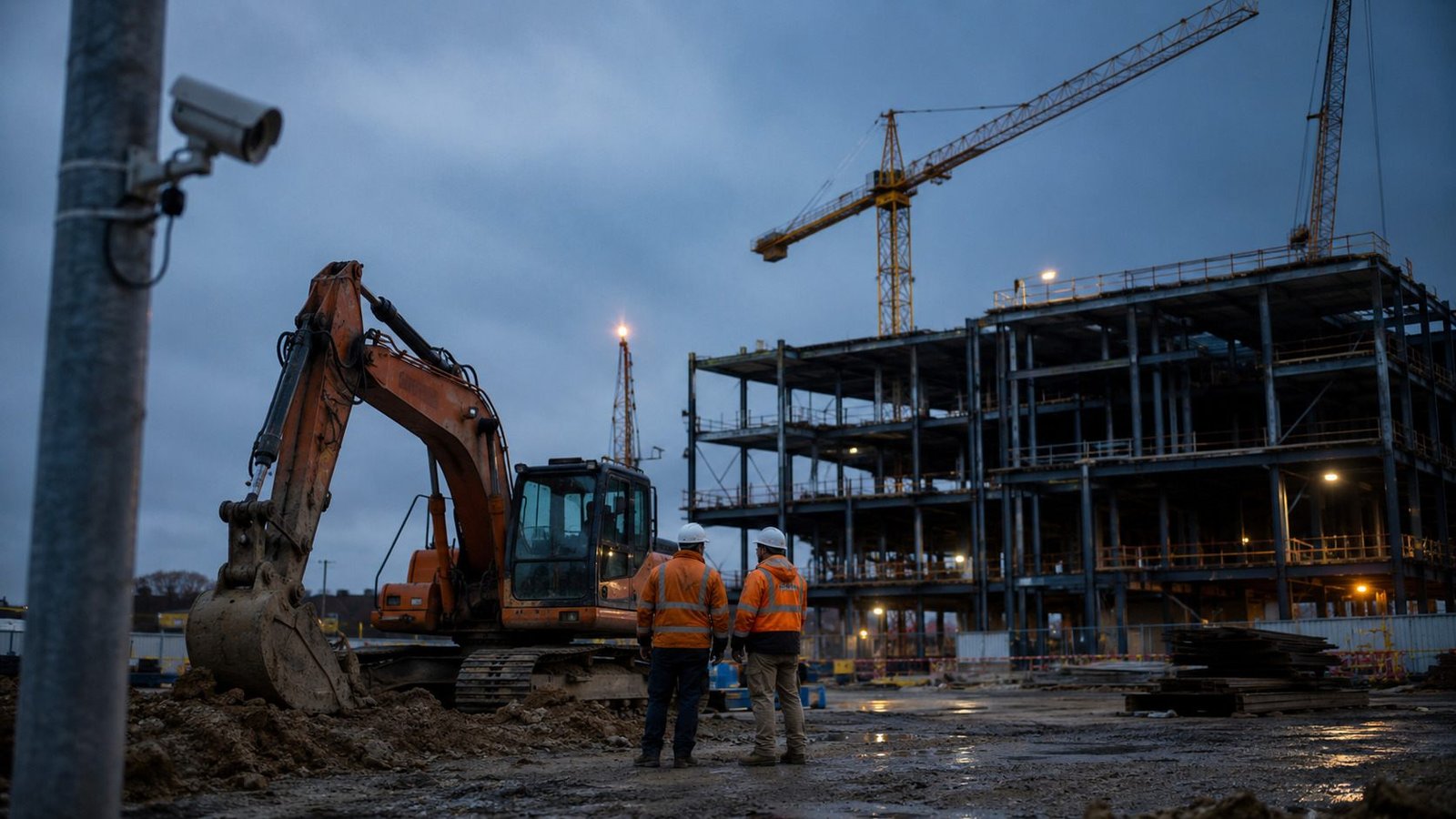
Construction is one of the world’s largest industries, yet it continues to face serious security and safety challenges. According to OSHA, construction accounts for nearly 20 percent of all workplace fatalities in the United States, despite employing a much smaller share of the workforce. Theft is another costly issue. The National Equipment Register estimates that construction equipment theft costs businesses between $300 million and $1 billion annually in North America, with only a fraction of stolen equipment ever recovered. At the same time, construction projects are becoming larger, more complex, and spread across multiple locations, making manual security monitoring increasingly difficult.
Artificial intelligence is changing how construction companies protect workers, equipment, and job sites. Instead of relying solely on security guards or reviewing hours of recorded footage after an incident, AI-powered video surveillance can detect hazards, identify unauthorized access, monitor equipment, and send real-time alerts before small issues become expensive problems.
In this article, you’ll learn how AI-powered video surveillance is transforming construction site security, why modern contractors are adopting intelligent monitoring systems, and how technologies like AI NVR are helping improve safety, reduce losses, and keep projects running on schedule.
Why Construction Sites Are High-Risk Environments
Unlike offices or retail stores, construction sites are constantly changing. New structures appear every week, temporary entrances are created, valuable equipment moves throughout the day, and hundreds of workers, subcontractors, and delivery personnel may enter the site regularly.
These dynamic conditions create several security challenges, including:
- Equipment theft
- Material theft
- Unauthorized visitors
- Worker safety violations
- Trespassing after working hours
- Delayed incident investigations
Traditional CCTV systems record these events but usually require someone to manually review footage after an incident has already occurred. By then, valuable time has been lost.
AI changes this approach by actively analyzing live video feeds and identifying unusual activities as they happen.
What Is AI-Powered Video Surveillance?
AI-powered video surveillance combines cameras with artificial intelligence to automatically interpret what is happening within a scene.
Instead of simply recording video, AI systems can recognize patterns, distinguish between people and vehicles, detect unusual behavior, and immediately notify security teams when something requires attention.
Modern AI surveillance can identify:
- Unauthorized entry into restricted zones
- Workers entering hazardous areas
- Equipment moving outside approved hours
- Suspicious loitering
- Perimeter breaches
- Safety compliance issues
- Vehicle movements
- Fire or smoke indicators in supported deployments
This transforms cameras from passive recording devices into intelligent security tools.
Protecting Expensive Construction Equipment
Heavy machinery represents one of the largest investments on any construction project. Excavators, loaders, generators, compressors, welding equipment, and specialized tools are attractive targets for thieves.
Many thefts occur at night, over weekends, or during holidays when sites are largely unattended.
AI surveillance helps reduce these risks by:
- Detecting movement after working hours.
- Recognizing vehicles entering restricted areas.
- Sending instant alerts when equipment is moved unexpectedly.
- Recording searchable evidence for investigations.
- Security personnel can verify alerts immediately instead of discovering missing equipment the next morning.
This proactive response often prevents theft before it occurs.
Improving Worker Safety
Construction remains one of the most hazardous industries worldwide.
AI-powered surveillance helps safety managers monitor job sites more effectively without constantly walking every area.
Examples include identifying:
- Workers entering dangerous zones.
- Individuals not wearing required personal protective equipment where AI PPE detection is enabled.
- Unsafe behavior near heavy machinery.
- Unauthorized access to crane operating areas.
- Blocked emergency exits.
- Unsafe vehicle and pedestrian interactions.
Rather than replacing safety officers, AI acts as an additional layer of monitoring that helps them respond faster to potential hazards.
Many organizations also use recorded AI events during safety training sessions to reinforce best practices.
Faster Incident Investigations
Investigating accidents traditionally requires reviewing hours of security footage from multiple cameras.
Finding one specific event can take several hours or even days.
AI dramatically speeds up investigations by allowing security teams to search footage using simple descriptions such as:
- “Person entered east gate.”
- “White pickup truck.”
- “Forklift near warehouse.”
- “Worker entered restricted area.”
Instead of manually scanning recordings, investigators receive relevant clips within minutes.
This allows project managers to complete investigations faster while minimizing project delays.
Keeping Multiple Construction Sites Secure
Large contractors often manage numerous active construction projects simultaneously.
Monitoring every location independently becomes expensive and inefficient.
Cloud-connected AI surveillance allows centralized monitoring from one dashboard.
Project managers can:
- Monitor multiple sites remotely.
- Receive alerts from every project.
- Review incidents from any location.
- Generate security reports.
- Maintain consistent security policies across all job sites.
This improves operational visibility while reducing the need for constant onsite supervision.
Reducing False Security Alarms
Traditional motion detection systems frequently generate unnecessary alerts caused by:
- Moving trees.
- Heavy rain.
- Animals.
- Shadows.
Changing lighting conditions.
Repeated false alarms waste valuable time and may cause real threats to be overlooked.
AI systems are much more accurate because they distinguish between humans, vehicles, and environmental movement.
Security personnel receive fewer but more meaningful alerts, allowing them to focus on genuine security events.
Monitoring Site Access
Construction projects involve many temporary workers, subcontractors, inspectors, suppliers, and visitors.
Knowing who entered the site and when is important for both security and compliance.
AI surveillance supports access management by documenting:
- Vehicle arrivals.
- Worker entry points.
- Visitor movements.
- Loading zones.
- Material deliveries.
Combined with access control systems, AI creates a more complete picture of site activity throughout the day.
Supporting Project Documentation
Construction companies increasingly use surveillance footage for more than security.
AI-assisted video records can help:
- Verify delivery times.
- Document project progress.
- Review equipment usage.
- Resolve contractor disputes.
- Confirm weather conditions during delays.
- Validate insurance claims.
Having organized, searchable video evidence reduces uncertainty during project reviews.
AI NVR Is Transforming Construction Site Monitoring
Traditional network video recorders mainly store footage for later review.
An AI NVR adds intelligent analytics directly to the video management process. Instead of functioning only as storage, it continuously analyzes live camera feeds to detect security risks, unusual activity, and operational issues.
Modern construction companies use AI NVR platforms to:
- Receive real-time alerts instead of waiting for manual reviews.
- Search recorded footage using natural language or object-based filters.
- Monitor multiple cameras from a centralized dashboard.
- Detect perimeter intrusions and unauthorized access.
- Improve response times during emergencies.
Solutions such as Coram ai demonstrate how AI NVR technology can enhance construction site security by combining intelligent video analytics, real-time alerts, fast video search, and centralized monitoring while working with many existing IP camera deployments. This enables contractors to modernize security without necessarily replacing their entire camera infrastructure.
Cost Savings Beyond Theft Prevention
Many organizations initially invest in AI surveillance to reduce theft.
However, the long-term financial benefits extend much further.
AI surveillance helps lower costs by:
- Reducing equipment losses.
- Preventing project delays.
- Supporting insurance investigations.
- Improving worker accountability.
- Reducing unnecessary security patrols.
- Improving safety compliance.
- Reducing false alarms.
- Preventing unauthorized site access.
Over the life of a construction project, these operational improvements often provide a stronger return on investment than theft prevention alone.
The Future of Construction Site Security
Artificial intelligence continues to evolve rapidly.
Future construction surveillance systems are expected to include:
- Predictive risk analysis.
- Autonomous drone integration.
- More advanced worker safety analytics.
- Digital twin integration.
- Improved equipment tracking.
- Smarter environmental monitoring.
Construction companies that adopt AI today are building the foundation for safer, more efficient projects tomorrow.
As projects become larger and deadlines become tighter, intelligent surveillance will become an essential operational tool rather than an optional security upgrade.
Frequently Asked Questions
What is AI-powered video surveillance?
AI-powered video surveillance uses artificial intelligence to analyze live and recorded video automatically. It can detect people, vehicles, unusual activity, and potential security threats while sending alerts in real time.
How is AI NVR different from a traditional NVR?
A traditional NVR primarily records and stores video footage. An AI NVR also analyzes video using artificial intelligence, making it possible to detect incidents automatically, perform intelligent searches, and provide proactive security alerts.
Can AI surveillance reduce construction equipment theft?
Yes. AI surveillance helps detect suspicious activity, unauthorized access, and equipment movement outside approved hours. Real-time alerts allow security teams to respond before theft occurs.
Does AI replace security guards?
No. AI supports security personnel by monitoring multiple cameras simultaneously, identifying potential threats, and reducing the time spent reviewing footage. Human operators still make security decisions and respond to incidents.
Is AI-powered surveillance suitable for small construction projects?
Yes. Modern AI surveillance solutions can scale from small residential developments to large commercial and infrastructure projects, allowing contractors to choose a deployment that matches their needs and budget.
Conclusion
Construction sites face unique security and safety challenges that traditional surveillance systems are no longer equipped to handle on their own. With valuable equipment, changing site layouts, and a constant flow of workers and contractors, proactive monitoring has become essential. AI-powered video surveillance enables construction companies to detect threats earlier, improve worker safety, reduce equipment theft, accelerate investigations, and gain better visibility across every stage of a project.
As the construction industry continues to embrace digital transformation, intelligent surveillance technologies such as AI NVR will play an increasingly important role in protecting people, assets, and project timelines. Companies that invest in these capabilities today are better positioned to build safer, more secure, and more efficient construction sites for the future.