

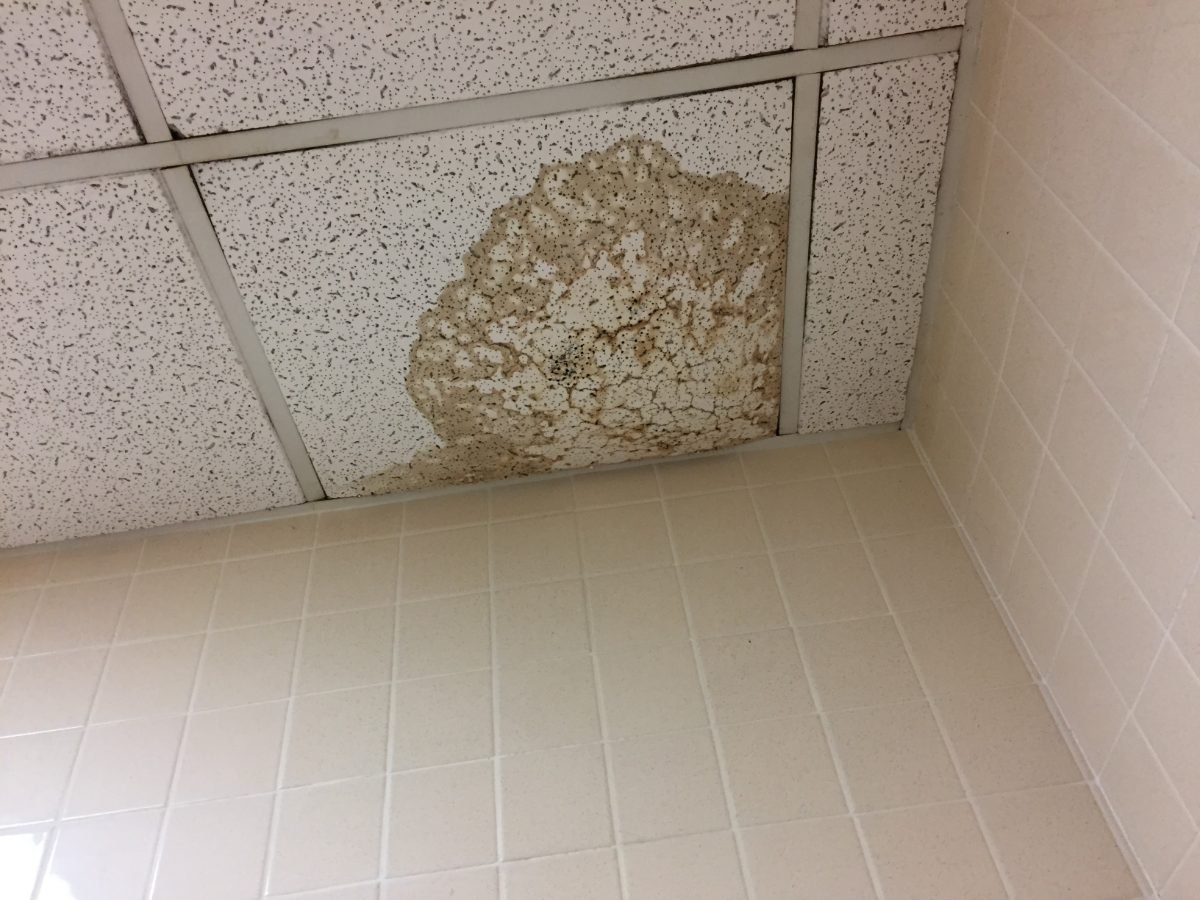
You spot a brown ring on the ceiling, go looking for the leak, and there is nothing to find. No dripping pipe, no wet patch upstairs, no obvious hole in the roof.
A water stain on ceiling but no leak behind it is one of the more frustrating things a house throws at you, and the reason is simple: three of the four likely causes leave nothing to find on the day you go looking. The water either stopped arriving months ago, it was never a leak in the first place, or it only arrives in weather you have not had yet.
This guide works through those four causes in the order worth checking them, starting with a test that costs nothing and answers the question everything else depends on: is water still arriving?
The short answer
A water stain on ceiling but no leak is almost always one of four things: a leak that already stopped and dried, condensation forming above the drywall, a leak that only runs under certain conditions, or a mark that was never water at all.
Which one you’ve got changes what you do next, and the order matters. Before you reach for primer, find out whether water is still arriving. Paint over a stain that still has moisture behind it and you’ll buy a few weeks, then the mark comes back, usually darker and wider than before.
This guide follows that order: a test that tells you if the stain is still active, then the four causes and how to tell them apart, how to read the stain’s color and shape, when to stop investigating and call someone, and only at the end how to cover it properly.
Start here: is the stain still active?
A pencil and a few days of patience answer this better than any product you can buy. Do this before anything else, because every decision that follows depends on the answer.
- Outline it in pencil. Trace the exact edge of the stain with a light pencil line and write today’s date beside it. Everything below is a comparison against that line.
- Touch it. Press gently with a clean finger. Dry and firm means the water has stopped arriving, at least for now. Cool, damp, soft or spongy means it hasn’t.
- Blot it. Hold a dry white paper towel flat against the stain for a few seconds. Any damp patch or color transfer means the drywall is still wet.
- Provoke it. A stain that’s dry today can still be an intermittent leak. Recheck your pencil outline after each of these, one at a time, so you know which one moved it: heavy rain, then again 12 to 24 hours later; a long hot shower in the bathroom above or next door; the air conditioning running several hours on a humid day; the heating running for a day or two in cold weather.
- Measure it, if you want certainty. A moisture meter removes the guesswork. A pinless meter reads through the surface without marking it, which is the better choice on a finished ceiling. A pin meter is more decisive but leaves two small holes.
Timing is the part most people get wrong. Water entering at the roof can travel along framing for hours before it shows on the ceiling below, so a dry spot during a downpour proves nothing. Homeowners on the City-Data forum make exactly this point, advising a 12 to 24 hour wait before concluding the ceiling stayed dry.
If the outline grows, the color darkens, or the ceiling ever feels soft, stop testing and read the urgent section below.
Cause 1: an old leak that already dried
Start here, because it is the easiest of the four to confirm. Something leaked once, it was repaired or it stopped on its own, and the mark was simply never painted out.
The stain’s edges are the clue. Hunker’s guide to dating a water spot points out that a single dark patch with no surrounding discoloration suggests recent water, while concentric rings mean the area has been soaked and dried repeatedly, and that more rings indicate a longer history. The same guide notes there’s no exact test for a stain’s age, so treat rings as a direction, not a date.
Go look above it. In the attic or the room overhead, a dried-out leak often leaves evidence a repair can’t hide:
- a patch of newer shingles, fresh flashing or a replaced vent boot on the roof above
- a section of roof decking or a joist that’s stained but bone dry
- a hard water ring on the top side of the drywall, with clean insulation around it
- a pipe with a repair clamp, new solder or a replaced fitting
If you find dry evidence like that and your pencil outline hasn’t moved through a rain cycle, a shower and an AC cycle, you’re almost certainly looking at history.
One caution. A dry stain proves water isn’t arriving today, not that the cause is gone. Seasonal leaks are the obvious trap: a stain that behaves perfectly in August can start again with the first ice dam or the first wind-driven storm from a particular direction.
If you bought the house recently and the stain was not on the seller’s disclosure, photograph it with your pencil outline and the date before you repaint. Disclosure rules vary by state, but a dated record of what the ceiling looked like at move-in helps you either way.
Cause 2: condensation above the drywall
Here there’s no leak to find, because nothing failed. Warm, moist air reaches a cold surface inside the ceiling cavity, water forms on it, and the drywall underneath absorbs the drips. The result looks exactly like a leak and behaves nothing like one.
The usual cold surfaces are:
- air conditioning ducts running through an unconditioned attic, sweating on humid days
- cold water supply lines in the ceiling or attic floor
- the underside of the roof deck in winter
- nail heads, joists and trusses, which stay colder than the insulated spaces between them
- a bathroom or kitchen exhaust fan that dumps into the attic instead of through the roof or wall, which is a routine finding behind a mystery ceiling stain
Why these stains show up in winter
This is the part almost every guide gets backwards. Most people turn a humidifier on when the heating goes on, which raises indoor humidity exactly when the ceiling can least tolerate it.
The EPA publishes maximum indoor humidity targets from ASHRAE, and they fall as the outdoor temperature drops:
| Outdoor temperature | Maximum indoor relative humidity |
|---|---|
| +20°F | 35% |
| +10°F | 30% |
| 0°F | 25% |
| -10°F | 20% |
| -20°F | 15% |
At 0°F outside, holding your house at a comfortable-sounding 40% humidity is roughly fifteen points too wet, and the surplus moisture goes somewhere. Some of it condenses on window glass, which the EPA notes is a visible warning sign of high indoor humidity worth investigating. The rest finds cold spots in the attic and the ceiling cavity.
For the rest of the year, the EPA’s general guidance is to keep indoor humidity below 60% and ideally between 30% and 50%, because relative humidity above 60% is likely to cause condensation indoors.
How to tell condensation from a leak
- It tracks appliances and weather, not rain. A stain that moves after a humid week or a run of cold nights, but never after a storm, is pointing at condensation.
- There’s often more than one. Leaks usually produce one stain with one source. Condensation tends to produce several, or a pattern that follows framing.
- Windows sweat at the same time. Visible condensation on glass and a growing ceiling stain in the same week is close to a diagnosis.
- The attic smells damp and the insulation feels cool and heavy near the stain, with no single wet point above it.
A hygrometer costs very little and settles most of this. Put one in the room below the stain, read it morning and evening for a week, and compare it against the table above.
Cause 3: a leak that is real but hidden or intermittent
This is the one to rule out carefully, because it’s the one that gets expensive if you paint over it.
Two things make these leaks hard to find. First, water runs downhill along whatever it lands on, so it can enter at one point and emerge through the ceiling several feet away, with nothing wet in between. Second, many of them only run under specific conditions, which is why a one-off inspection on a dry day finds nothing.
Roof
- Flashing and vent boots. Step flashing at a wall, chimney flashing and the rubber boot around a plumbing vent stack fail long before shingles do. A cracked vent boot is a classic source of a stain that appears only in driving rain.
- Wind-driven rain. Rain arriving at an angle can get past shingles that shed vertical rain perfectly well. If your stain only moves in storms from one direction, this is the likely answer.
- Ice dams. Meltwater backs up behind a ridge of ice at the eaves and is pushed under the shingles. The stain appears in a thaw, not during the snowfall, which throws people off.
- Skylights. The glass seal and the curb flashing are separate failure points, and a skylight stain often shows up a foot or two away from the frame.
Plumbing
- An upstairs shower pan or tub surround. A pan that leaks only while someone is standing in the shower produces a textbook intermittent stain. Run the shower for fifteen minutes and watch.
- A failed toilet wax ring. Water escapes around the base at each flush, often with no visible pooling on the bathroom floor.
- A pinhole or slow drip in a supply line. These run constantly, so the stain grows steadily instead of in steps.
For anything on the supply side there’s a free test. Turn off every water fixture in the house, then read your water meter, wait an hour or two without using water, and read it again. Movement with everything closed means water is escaping somewhere under pressure.
HVAC
- A clogged condensate drain line. The air handler’s drain pan fills, overflows, and soaks the ceiling below. Classic signs are a stain directly under or beside the air handler, appearing in the first properly humid week of the season.
- A rusted or cracked drain pan. Same symptom, slower onset.
- Disconnected or leaky ductwork, which adds both water and a measurable drop in airflow at the registers.
An HVAC stain is the easiest of all to provoke: run the system hard on a humid day and check your pencil outline that evening.
Cause 4: it was never water
If you’ve tested the stain through rain, a shower, an AC cycle and a cold snap and the pencil outline hasn’t budged, consider that you may not be looking at water damage at all. Four marks get mistaken for it routinely, and each has a signature.
Ghosting, also called thermal tracking
Ghosting is the one most often misread as a leak or as mold. Framing members and nail heads conduct heat differently from the insulation around them, so they sit slightly cooler. Airborne dust and soot settle preferentially on those cooler strips and build up into a permanent deposit.
The signature is unmistakable once you know it: straight, evenly spaced lines running across the ceiling, often 16 or 24 inches apart, tracing the joists or trusses above. Sometimes you can see the individual dots of the nail heads along each line.
Ghosting is cosmetic, not a health risk, but it’s a signal. It tells you the attic insulation is thin or unevenly installed, that indoor humidity is high, or that something in the house is producing soot. Candles, a fireplace, gas cooking and neglected furnace filters are the usual suppliers of the dark particles.
Soot
Soot without the joist pattern shows up as a soft, diffuse smudge, concentrated above whatever produced it: a candle shelf, a wood stove, a kitchen range with no working hood. It wipes onto a cloth. A water stain doesn’t.
Rusting drywall screws or nails
Small round rust-colored dots, roughly an inch across, appearing in a regular grid across the ceiling. Each one sits over a fastener whose coating has failed, usually because the drywall got damp once. The dots stay the same size indefinitely.
Rodent urine
This one matters because almost nothing else written about ceiling stains mentions it. Mice and rats in the floor void or attic leave urine that soaks through and dries as a brown stain that looks exactly like old water damage.
The tell is behavior no leak shows: the marks appear and disappear in different places, and painting over them doesn’t hold. A widely reported case covered by Homebuilding & Renovating followed a homeowner whose brown ceiling marks kept reappearing in new spots after she treated them as damp. Reddit users identified rodent urine, and her child confirmed it by smell. Listen for scratching overhead at night, and look for droppings along the attic joists.
If you suspect this, a pest control company is the right call, not a roofer.
Reading the stain: color, shape and location
Appearance narrows the field faster than anything except the pencil test. Use this to decide where to look first, not as a final answer.
| What you see | Most likely cause | Check first |
|---|---|---|
| One dark patch, no rings, damp to touch | A leak running now | Water meter test, then the space directly above |
| Concentric rings, dry and firm | An old leak, soaked and dried repeatedly | Attic above for a repaired roof or pipe |
| Yellow or tan ring, dry, sharp edge | An old leak, minerals and tannins left behind | Same as above |
| Straight parallel lines, 16 to 24 inches apart | Ghosting along the joists | Attic insulation depth, and soot sources indoors |
| Soft gray smudge above a candle shelf, stove or fireplace | Soot | Wipe it with a damp cloth and see if it transfers |
| Regular grid of rust dots about an inch wide | Rusting drywall fasteners | Nothing urgent, this is cosmetic |
| Brown marks that vanish and reappear somewhere new | Rodent urine | Attic for droppings, and listen overhead at night |
| Stain under or beside the air handler | Condensate drain or overflowing pan | The condensate line for a clog |
| Grows only in driving rain or storms from one direction | Roof flashing or a cracked vent boot | Flashing, vent boots, skylight curb |
| Appears during a thaw after snow | Ice dam meltwater | Eaves, gutters, attic insulation and ventilation |
| Several stains, worst in winter, windows sweating too | Condensation | Indoor humidity against the ASHRAE table above |
| Stain touching a recessed light or ceiling fixture | Either a leak or an air-leak condensation path | Stop and read the next section |
Location is the other half of it. A stain hugging an exterior wall points at the roof edge, the gutter line or an ice dam. A stain centered under an upstairs bathroom points at the shower pan, the toilet or the supply lines serving them. A stain near a supply register points at duct condensation or a duct that has come apart.
One qualifier, stated plainly: appearance can be read wrong, and no photograph settles a ceiling stain. Shape and color tell you which test to run next. The test tells you the answer.
When to stop investigating
Most ceiling stains can wait a week while you run the tests above. These can’t.
- The ceiling sags, bulges or feels spongy. Saturated drywall holds a surprising weight of water and fails without warning. Keep people out of the room and get a professional in the same day.
- It’s dripping. Put a container under it, move anything valuable, and treat it as an active emergency instead of a diagnostic puzzle.
- The stain reaches a light fixture, ceiling fan or smoke detector. Water and wiring in the same cavity is an electrical hazard. Switch off the circuit at the breaker and have an electrician look before anyone goes into the attic above it.
- You can see mold growing. The EPA’s homeowner guidance puts the practical dividing line at about 10 square feet, roughly a 3 foot by 3 foot patch: below that most people can clean it up themselves following EPA guidelines, and above that, or after significant water damage, hiring a remediation contractor is the sensible route.
- There’s a musty smell you can’t place. Odor usually arrives before visible growth, and it means something’s been damp for a while.
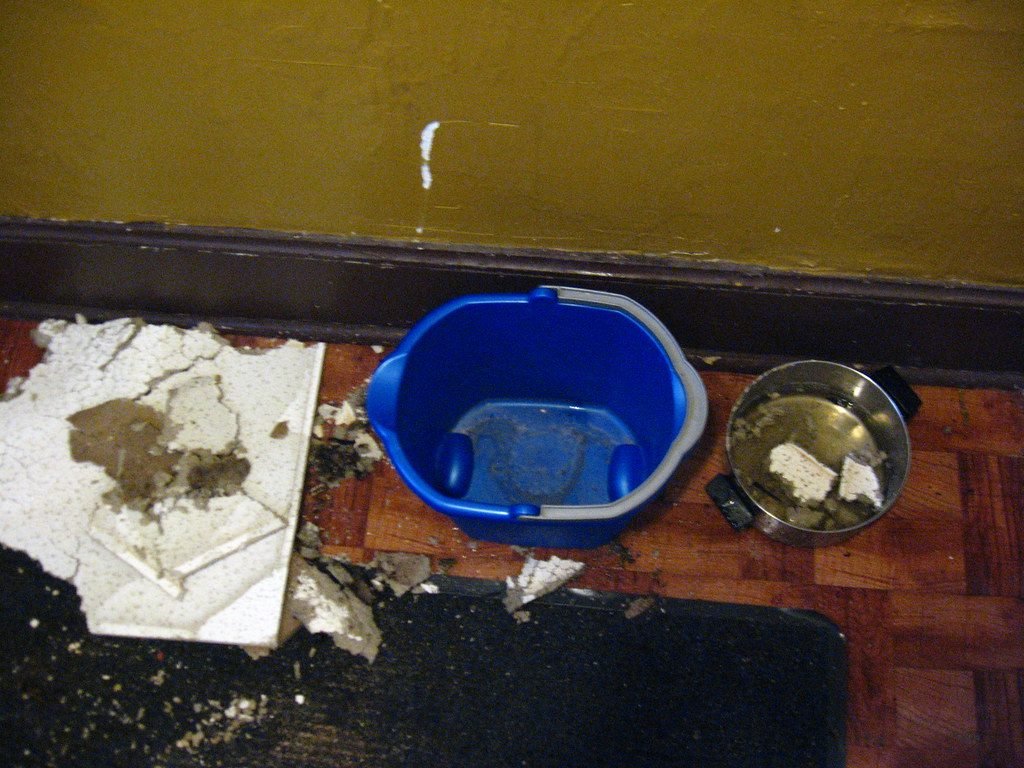
The clock matters more than people expect. The EPA advises drying water-damaged materials within 24 to 48 hours to prevent mold taking hold, while noting that growth does not always follow after 48 hours and that the figure is a guideline, not a deadline. If your ceiling is wet today, the useful response is to find the source and dry it now, not to schedule it for the weekend.
One more case for caution: if anyone in the house has asthma, an allergy to mold or a weakened immune system, bring a professional in earlier than these thresholds suggest.
Who to call for a water stain on the ceiling
The trade you call should follow the evidence, because each one inspects a different system and none of them will find a problem outside it.
| Call | When | What they actually check |
|---|---|---|
| Plumber | Stain under a bathroom or kitchen, or the water meter moves with everything shut off | Pressure test the supply lines, camera the drains, pull the toilet to inspect the wax ring |
| Roofer | Stain moves with rain, storms from one direction, or a thaw after snow | Flashing, vent boots, the shingle field, skylight curbs, and sometimes a controlled water test |
| HVAC technician | Stain under or beside the air handler, or it appears when the AC runs | Clear the condensate line, inspect the drain pan, check duct insulation and airflow |
| Home inspector | You really don’t know which system, or you’re buying or selling | Thermal camera and moisture meter across the whole ceiling, with no repair to sell you |
| Water damage restoration | The ceiling is actively wet, the area is large, or mold is visible | Moisture mapping, drying equipment, and remediation to a recognized standard |
| Pest control | Marks move to new spots, or you hear scratching overhead | Attic inspection for droppings and entry points, then exclusion |
If you can’t tell which system is at fault, start with a home inspector, not a contractor. An inspector has no repair to quote, which makes their diagnosis the cheapest honest answer available. Most of the pages ranking for this problem are published by companies that sell one specific fix, and that shapes what they look for.
Whatever you call, ask for two things before you accept a quote: a moisture reading with the meter in shot, and an explanation of why the stain is where it is and not where the source is. A diagnosis that can’t account for the location is a guess.
On insurance, policies commonly treat a sudden discharge differently from gradual seepage and from deferred maintenance, so the cause and the timeline both matter. Read your own policy instead of relying on a general rule, and keep the dated photographs and pencil outline from your testing. That record helps you whether you end up filing a claim, disputing a repair, or disclosing the stain to a buyer later.
Covering the stain, once you’ve earned the right to
Two conditions come first: the source is fixed, and the drywall is dry all the way through. A moisture meter reading is the only honest way to confirm the second one. Skip either one and the stain comes back through your new paint, which is what sends people up the ladder a second time.
Why ordinary ceiling paint fails
The brown in a water stain is dissolved minerals and tannins carried out of the drywall paper, the joint compound and any wood above. Those compounds are water soluble, so a water-based topcoat redissolves them and lifts them into the fresh paint. You can watch the stain reappear through two coats over a few days.
The fix is a primer that seals instead of covering. Three categories work, in rising order of stubbornness:
- Water-based stain-blocking primer. Low odor, easy cleanup, fine for light stains. Check the label says stain blocking, because an ordinary water-based primer won’t do it.
- Oil-based or alkyd primer. The reliable middle choice for a defined water ring. Needs ventilation and solvent cleanup.
- Shellac-based primer. The most aggressive blocker, and the one to use on a dark stain, a repeat offender, or anything with a smoke or odor component. Dries fast, smells strong, needs denatured alcohol to clean up.
Spot-prime the stain, let it cure properly, then paint the entire ceiling instead of just the patch. A primed patch under fresh paint on an older ceiling leaves a visible halo, because the surrounding paint has aged.
On bleach
Plenty of guides recommend misting a white ceiling with diluted bleach. It does lighten some stains, and it’s a reasonable option on a smooth white ceiling with good ventilation. Three warnings matter more than the tip itself:
- Never combine bleach with any ammonia-based cleaner. The reaction produces a toxic gas.
- Don’t rub a textured or popcorn ceiling. The texture comes off on the cloth. Mist and blot only.
- Bleach is not a substitute for primer. It changes the color of the stain without sealing what causes it.
One fact here cuts against almost every guide on this topic. The EPA’s homeowner guidance does not recommend bleach as a routine step. It says to scrub mold off hard surfaces with detergent and water and dry completely, and states plainly that using a biocide such as chlorine bleach is not recommended as a routine practice during mold cleanup, with exceptions where professional judgment calls for it. Plenty of pages on ceiling stains lead with bleach. The EPA does not. The same principle we applied to cleaning tile grout without scrubbing holds here: start with the mildest thing that works, and escalate only if you have to.
When painting is the wrong answer
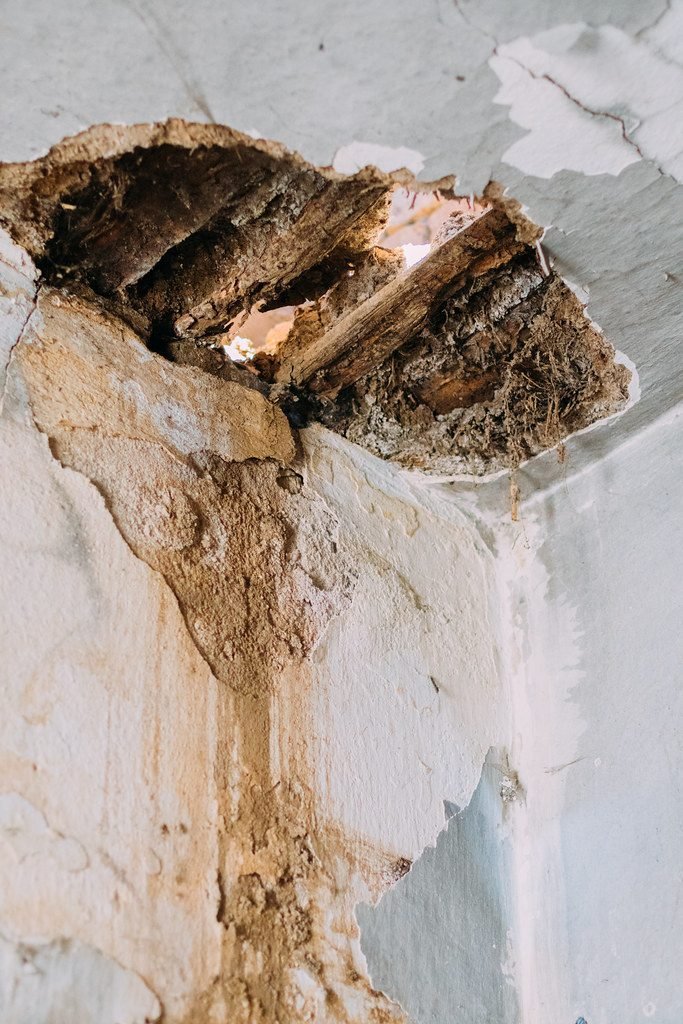
If the drywall is soft, crumbling, sagging, or has visible mold growth on it, no primer will save it. Cut out the affected section back to sound material, confirm what’s above it is dry, and patch with new board. Painting a compromised ceiling hides a structural problem instead of solving it.
Keeping it from coming back
The EPA states the principle in one line: the key to mold control is moisture control. Its prevention guidance is to fix plumbing leaks and gaps in the building envelope as soon as they appear, and to watch for condensation and wet spots instead of waiting for a stain.
In practice, for a ceiling specifically:
Control the humidity. Keep a hygrometer in the house and act on it. In winter, follow the outdoor temperature down, as the ASHRAE figures above show, and resist the urge to run a humidifier to a comfortable-feeling number on the coldest nights.
Vent moisture outside, not into the attic. Check where your bathroom and kitchen fans actually terminate. A duct that stops short in the attic is a common finding and a direct cause of ceiling stains. Run bathroom fans for fifteen to twenty minutes after a shower, not just during it.
Air seal before you add insulation. Insulation slows heat. It doesn’t stop moist air moving into the attic through gaps around fixtures, pipes and the attic hatch. Sealing those gaps first, then insulating, then confirming the soffit and ridge vents are clear and that baffles keep the insulation out of them, is the sequence that actually works. Insulation alone on a leaky ceiling plane can make condensation worse.
Flush the condensate line once a year, before cooling season. It’s a ten-minute job that heads off one of the most annoying causes on this list.
Walk the roof edge twice a year. Clear the gutters, look at the flashing where the roof meets walls and the chimney, and check the rubber boots around vent stacks for cracks. Our other property maintenance guides cover the seasonal jobs that catch problems like this early. Those boots are the cheapest part of a roof and among the first to fail.
Consider a leak alarm near the air handler, the water heater and any appliance in or above a finished ceiling. They cost very little and they tell you before the drywall does.
Common questions
Why do I have water marks on my ceiling but no leak?
Because three of the four causes don’t involve a leak you can find today. The mark is usually an old leak that already dried, condensation forming on a cold surface above the drywall, or something that was never water, such as ghosting along the joists. The fourth possibility is a real leak that only runs in certain conditions, which is why the pencil test above earns the few days it takes.
What should I do when the ceiling is wet but I can’t find a leak?
Wet is different from stained, and it changes the order. Contain the water, shut off the house water supply and check whether the meter still moves, then work out whether the air conditioning or the heating was running. If the ceiling is actively wet and you can’t identify the source within a day, call a professional instead of carrying on with tests, because the EPA’s guidance is to get water-damaged material dry within 24 to 48 hours.
Is a water stain on the ceiling serious?
Sometimes, and the stain itself doesn’t tell you. A dry, firm, ringed stain that hasn’t moved through a full rain and shower cycle is usually cosmetic. A stain that’s damp, growing, sagging, near a light fixture, or accompanied by a musty smell isn’t, and belongs in the urgent list above.
Is it okay to paint over a water stained ceiling?
Only once the source is fixed and the drywall is dry through its thickness. Painting a stain that still has moisture behind it is the mistake that undoes the work, and the stain returns darker. Even when it’s dry, ordinary ceiling paint isn’t enough, because the minerals causing the brown dissolve in water-based paint and bleed straight back through.
How do I get rid of brown water stains on a ceiling?
Seal them instead of covering them, using a stain-blocking primer in water-based, oil-based or shellac form depending on how dark the stain is. Diluted bleach on a smooth white ceiling can lighten the color, but it seals nothing and should never be mixed with an ammonia-based cleaner. Prime the stain, then repaint the whole ceiling so the repair doesn’t leave a halo.
Can old water stains be removed completely?
Usually yes, but by sealing and repainting, not by cleaning. The discoloration sits in the paper face of the drywall and the joint compound, so no amount of scrubbing lifts it out. If the board itself is soft or crumbling, replacing that section is the only real fix.
Does a ceiling stain mean there is mold behind it?
Not necessarily. Mold needs sustained moisture, so a stain from a leak that was dried quickly often has none behind it, and the EPA notes that growth does not always follow even after 48 hours of wetness. A musty smell, a stain that keeps returning, or material that has been damp for weeks all raise the odds considerably, and visible growth over roughly 10 square feet is the point at which the EPA suggests considering a contractor.
How long after rain does a ceiling stain appear?
It can take 12 to 24 hours, which is why people so often rule out the roof too early. Water entering at a roof penetration travels along the decking and framing before it soaks through the ceiling, so checking the ceiling during the storm proves nothing. Mark the outline, then look again the next day.
Why is there a water stain on my first-floor ceiling?
In a two-story house this almost always points at the bathroom, kitchen or pipework on the floor above, not at the roof. Start with the shower pan, the toilet wax ring and the supply lines serving them, and run the shower for fifteen minutes while someone watches the ceiling below. The roof only comes into it if the stain sits under a vertical run, like a plumbing vent stack or a chase, that lets water travel down from the attic through the floor void.
Sources
| Source | What it supports here |
|---|---|
| EPA, What are the main ways to control moisture in your home | The ASHRAE maximum indoor humidity figures by outdoor temperature |
| EPA, Mold Course Chapter 2 | Keeping indoor relative humidity below 60%, ideally between 30% and 50% |
| EPA, Interactive Mold House Tour | The same humidity target, and window condensation as a sign of high indoor humidity |
| EPA, A Brief Guide to Mold, Moisture and Your Home | Drying water-damaged areas within 24 to 48 hours, the roughly 10 square foot threshold for calling a contractor, scrubbing mold off hard surfaces with detergent and water, and that chlorine bleach is not recommended as a routine practice |
| EPA, Mold Remediation Guide: Chapter 4 | Table 1 on responding to water damage, and that mold growth does not always follow after 48 hours |
| EPA, Mold Remediation Guide: Chapter 2 | Moisture control as the key to mold control, and fixing plumbing and envelope leaks promptly |
| Hunker, How to tell the age of a water spot on a ceiling | Rings as an age indicator, and that no exact test for a stain’s age exists |
| Homebuilding & Renovating, brown ceiling marks caused by rodents | The documented case of reappearing brown marks caused by rodent urine rather than damp |
| City-Data forum, how to tell if there is an active leak in a ceiling | Homeowner accounts of the 12 to 24 hour delay before a roof leak shows on the ceiling |
| InspectAPedia, guide to stains on indoor surfaces | Photographic comparison of stains at fixtures, registers and near burned candles |
| Bob Vila, Water stains on the ceiling | The water meter test for a suspected supply line leak |
Every humidity figure, drying time and mold threshold in this guide comes from the EPA pages above, checked against those pages on 24 November 2026. Guidance on primer chemistry, flashing and vent boot failure, condensate line maintenance and air sealing reflects standard building practice, not a single cited source.