

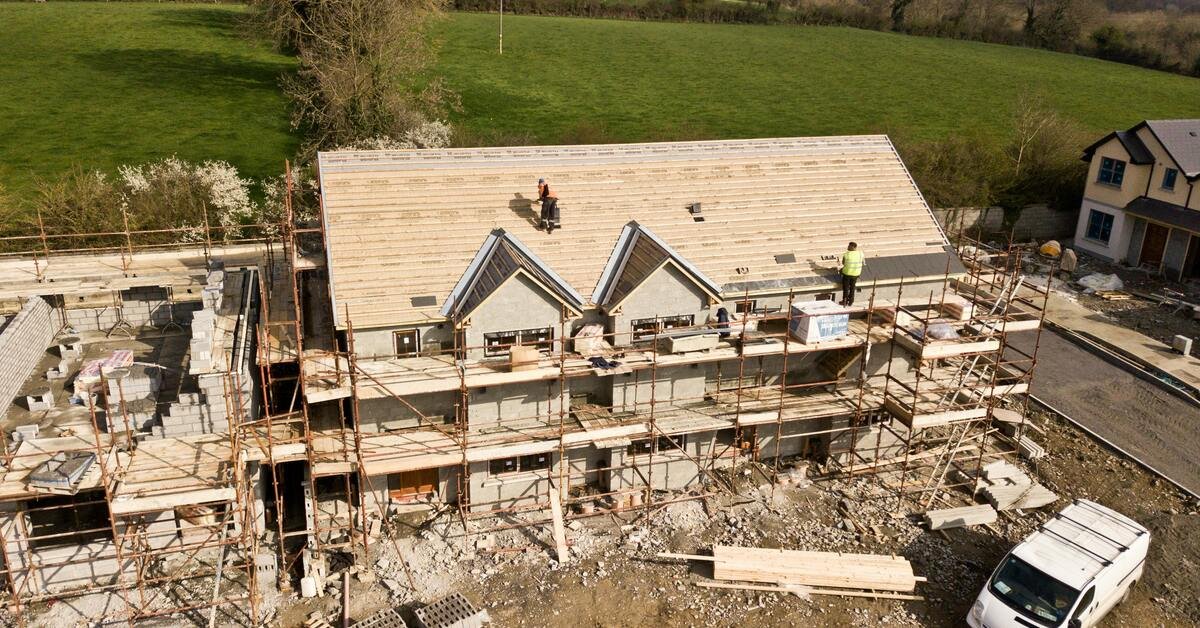
Home construction is also one of the greatest investments one will make all their life. New home construction offers the opportunity to design a house with complete control over materials, features, and design, tailored to your lifestyle needs. Understanding the construction process, costs, timelines, and financing options is essential before breaking ground.
This comprehensive guide explains everything about new home construction, from initial planning and permits through final inspections and closing. Whether you are considering a custom build or spec home construction, this article covers the complete residential building project from start to finish.
What Is New Home Construction?
New home building is known to be the entire task of constructing a residential house on an empty piece of land or a cleared piece of land. Unlike buying an existing home, ground up home building involves designing, planning, permitting, and physically constructing every element of the structure according to current building codes and your specifications.
The new home construction process typically takes six to twelve months for standard homes, though custom builds with elaborate designs may extend beyond a year. Modern residential building projects incorporate energy efficient construction methods, smart home systems, and sustainable building materials to meet current environmental and efficiency standards.
Home renovation/ remodeling is not similar to new construction. You take unpolished land and make a brand new system using new materials, new systems, and zero wear. The strategy provides warranty cover, freedom to customize, and the newest technology of building that was not possible in old buildings.
Steps in New Home Construction: Complete Phase Breakdown
Knowledge of every construction stage will make you set expectations, have a proper budget, and communicate with your builder. The home building process explained below follows industry standard progression from site preparation through final occupancy.
Phase 1: Site Preparation and Foundation Work
You start with your building lot and get yourself a firm foundation. This critical first phase sets the structural integrity for your entire home.
Site clearing and grading remove trees, rocks, and debris while leveling the land to proper specifications. The foundation and utility connection excavation is done with heavy equipment by the crew. In case your property requires a septic system or well, they are set in place at the time of first site work.
Permit acquisition happens before any physical work begins. Your builder submits plans to local planning departments for approval and obtains necessary building permits covering zoning, grading, construction, electrical, plumbing, and mechanical systems. Depending on jurisdiction, permit timelines are extremely variable, requiring weeks or even months.
The construction of the foundation refers to the process of developing the undercarriage of your house. The crew installs wooden forms, pours footings using concrete and rebar, and builds foundation walls. Foundation types include slab on grade, crawl space, or full basement, depending on your location, budget, and design.
Once the concrete has been poured, it needs to cure, and then building proceeds. During curing, crews apply waterproofing membranes to foundation walls and install drainage systems to prevent water intrusion. Plumbing lines and electrical chases that run beneath the foundation are installed before backfilling.
Cost for foundation work: Foundation costs average $10,000 to $25,000, depending on size, type, soil conditions, and regional labor rates. Difficult terrain and complicated foundations may cost more than 40,000.
Timeline: Site preparation and foundation work typically require four to six weeks, weather permitting. Extensive precipitation or even freezing can slow down the process considerably.
First inspection: Building inspectors verify that foundation components meet code requirements before construction proceeds to framing.
Phase 2: Framing and Structural Work
Framing is what makes your base into a familiar house frame. This stage is usually the most exciting for the homeowners because the structure begins to assume a recognizable form very soon.
The skeleton of your home is made up of floor systems, walls, and roof framing. Carpenters assemble the frame using dimensional lumber or engineered materials, building load bearing walls and truss systems according to your blueprints. The building should be able to bear all loads in the future, such as the weight of the roof, the weight of people, and environmental forces like the wind and snow.
Sheathing application covers the frame with plywood or oriented strand board, creating a solid surface for exterior finishes. The framed openings are installed with windows and exterior doors at this point.
Weather barrier installation protects the structure from moisture. Crews wrap the exterior with house wrap or building envelope materials that prevent water infiltration while allowing vapor to escape, reducing mold and rot risks.
Frame price: The cost of framing is between 7 and 16/ft 2 for materials and labor. The framing of a 2,000 square foot house usually costs between 14,000 and 32,000 US Dollars.
Timeline: Framing requires three to eight weeks, based on the size of the home, complexity of the design, and crew effectiveness. Rectangular floor plans are simple and therefore frame faster than elaborate multi roofline designs.
Second inspection: Inspectors examine the framing inspection to ensure proper structural connections, load paths, and code compliance before covering walls.
Phase 3: Rough Plumbing, Electrical, and HVAC Installation
With the structure framed and weather protected, mechanical systems are installed within walls, floors, and ceilings. This phase requires coordination between multiple specialized subcontractors.
Rough in plumbing involves running water supply lines to every fixture location and installing drain lines with proper venting. Bathtubs and one piece shower units are positioned now because they are too large to maneuver through doorways after drywall installation. The sewer and water service taps are completed.
Rough in electrical includes running wire from the electrical panel to every outlet, switch, and light fixture location. Electricians install receptacles for standard outlets, dedicated circuits for major appliances, and wiring for telephone, internet, cable television, and security systems. Smart home systems integration happens during this phase.
HVAC installation brings heating, ventilation, and air conditioning systems into the home. Ductwork is installed throughout the structure, connecting to the furnace or air handler location. Efficient duct sizing and sealing guarantee efficient working. HVAC vent pipes enter the roof, and refrigerant lines are used to connect outdoor condensers to indoor equipment.
Modern residential construction increasingly incorporates high efficiency HVAC systems to meet energy code requirements and reduce operating costs. Popular upgrades include heat pumps, multi zone, and smart thermostats.
Installation of insulation comes after rough mechanical work. Insulation goes into exterior walls, attic spaces, and floors above unconditioned areas like garages or crawl spaces. Common insulation types include fiberglass batts, blown cellulose, spray foam, or rigid foam boards. Insulation rating determines thermal performance, measured in R values.
Mechanicals and insulation Cost Rough plumbing Stands between 8,000 and 12,000 on average houses. Electrical rough in averages $3,000 to $6,000 for 1,000 square feet. HVAC installation with ductwork runs $7,000 to $17,000. Insurance is between 2000 and 10000 dollars, depending on the type and cover.
Timeline: Mechanical rough in is three to six weeks. Various trades are operated at the same time, and time has to be well scheduled to prevent conflict.
Third, fourth, and fifth inspections: Separate inspections verify rough plumbing, electrical systems, and mechanical installations comply with building codes before walls are closed.
Phase 4: Drywall Installation and Interior Finishes
Drywall is used to turn rough interior into smooth finished walls and ceilings, which is a significant construction visual milestone.
Drywall hanging involves attaching gypsum board panels to wall studs and ceiling joists. Professional crews cut and secure panels, as well as measuring them, in an efficient manner that can, on average, construct a whole house within several days.
Taping and finishing requires multiple coats of joint compound to hide seams and fastener dimples. Drywall finishers are involved in applying tape and mud on interim coats, sanding, and making smooth surfaces to be painted. There can be an addition of textured finishes.
The application of primer coat covers the dry wall and makes the surface ready to be painted. Other builders paint the primer as they continue, and some only after the installation of the trim.
Cost for drywall: Drywall installation costs $1.50 to $4.00 per square foot, including materials, hanging, taping, and finishing. The implementation of texture will increase by $0.80 to $2.00 per square foot.
Timeline: A drywall construction project requires two to four weeks between the hanging and final sanding and cleaning.
Phase 5: Interior Trim and Millwork
Trim construction is a finish that provides architectural style and a polished appearance to your house. Accurate carpentry is needed during this stage in order to produce clean and professional work.
Installation of doors entails the hanging of all interior doors with hardware, clearances, and smooth movements. External doors were not installed until now, and they are framed with exterior doors but are not completed and weatherstripped.
Trim carpentry involves installing baseboards, door casings, window sills, crown molding, and other decorative elements. Quality trim work imparts a lot of visual impression to the completed home. Custom millwork costs more than standard profiles but creates distinctive character.
The installation of a cabinet and vanity makes your kitchen and bathrooms come alive. Cabinets are leveled, secured, and aligned precisely before countertop installation. Cabinets are available in stock builder grade to the custom crafted unit, and these are priced differently.
The installation of balusters, handrails, and decorative features will be done in case of the multiple levels of your home.
Cost for trim and millwork: Interior doors cost $200 to $800 each, installed. The average costs of trim materials and labor are between 1,000 and 3,000 in average homes. The price of a cabinet ranges widely between 2,000 and 40,000 and above, depending on the type of custom made cabinetry. Vanities in the bathrooms average between 100-2500.
Timeline: Trim and millwork installation takes two to four weeks, depending on the detail level and customization.
Phase 6: Flooring and Countertop Installation
Hard surface finishes are applied when much construction dust and possible damage have already occurred.
Flooring installation covers the subfloor with your chosen materials. Currently, hardwood, tile, luxury vinyl, and engineered flooring are being installed. Carpet is normally the last item installed so as not to be subjected to destruction during the final construction process.
Countertop installation completes your kitchen and bathroom surfaces. There are laminate and tile materials, granite, quartz, and solid surface. Countertops are templated once cabinets are in place so that they fit perfectly.
Flooring and countertop costs: Flooring will cost 3 to 15 dollars on average, installed per square foot, based on the material. A 500 square foot area costs $1,500 to $7,500. An average kitchen counts countertops between 1,500 and 3,500 dollars and the high-end ones cost more than 10,000 dollars.
Timeline: Flooring and countertop installation takes one to three weeks.
Phase 7: Final Mechanical Trim and Fixtures
Finish work on mechanical systems, make them operational, and visually complete.
Electrical trim involves installing light fixtures, outlet covers, switch plates, and completing the electrical panel. The electrician tests all circuits and ensures proper operation.
Plumbing fixtures, including sinks, toilets, faucets, and shower fixtures, are installed and connected. The leaks and drainage are checked by the plumber.
The HVAC completion involves installation of registers, grilles, thermostats, and initial start up of the system. The HVAC technician regulates the airflow and checks whether it works properly.
Finishing mechanical cost: The average cost of installing the light fixtures is between $150 and 950 per light, depending on the complexity. The average price of plumbing fixtures is 300-1500for sinks, 400-800 for toilets, and 150-400 for faucets.
Timeframe: Final mechanical trim: two to three weeks.
Phase 8: Painting and Final Finishes
The exterior is completed with the use of paint, which provides protection as well as the aesthetic appearance of the interior.
Interior finish involves top coats on the walls, ceilings, and trim. Painters do use two layers to ensure there is evenness and application as well as longevity. The choice of color must be made a long time before this stage.
Any exterior that is not painted is done with exterior paint or finish, such as trim, soffits, and fascia boards.
Painting Interior: The interior painting costs can range between 2 and 6 per square foot or 300 and 1,000 per room, which includes the labor and the materials. Painting themselves can save a lot of money for homeowners who are skilled.
Timeline: It takes one to two weeks to do interior and exterior full painting.
Phase 9: Exterior Work Completion
As interior work is being done, exterior finishing is being done.
Siding or exterior finish covering safeguards and beautifies your house. It may be vinyl, fiber cement, brick, stone, stucco, or wood siding. The quality of materials available in the market varies in terms of durability, maintenance, and aesthetic values.
The installation of driveways and walkways serves as access to your house. It is most likely to be concrete, but then again can be asphalt, pavers, or gravel. The reason why many builders wait until the late termination of the buildings to install the driveways is to avoid the damage of heavy machines.
Exterior grading ensures proper drainage away from the foundation, preventing water intrusion and foundation damage. The lot is graded, filled, and compacted to engineering requirements.
Landscaping also involves planting grass, trees, and shrubs on the basis of your landscape plan. Simple builder landscaping usually provides sod or seeds to the lawn and a few foundation plants. Fancy landscaping is usually done following closure.
Exterior work price: Siding is between $3 and 15 per square foot installed. Concrete is between 4 and 15 dollars per square foot. Grading costs $1,400 to $3,700. Simple landscaping is between 2500 and 8000 dollars, and the advanced designs go beyond 15000 dollars.
Timeline: Exterior finishing will require four to eight weeks, and it frequently coincides with the interior.
Phase 10: Final Inspections and Walk Through
The final stage of construction is that of extensive inspection and verification of buyers.
Final building inspection entails inspection of the completed home by a code official who inspects the home to ensure that all systems are working correctly and that the building conforms to the building code standards. The inspector checks electrical, plumbing, HVAC, structural elements, fire safety features, and overall workmanship.
A certificate of occupancy is issued after passing final inspection, legally allowing you to occupy the home. In the absence of this certificate, you are not allowed to close on the property or move in.
Pre settlement walk through gives you an opportunity to inspect the completed home with your builder. Test every surface, check all systems, check demanded features, and record flaws or unfinished items. Make an issue list of the things that should be corrected prior to closing.
Timeline: Final inspections and walk through take one to two weeks, including time to address any punch list items.
New Home Construction Methods and Options
The construction of a modern house provides several possible methods of building with specific benefits. This knowledge of these techniques will enable you to make the right choices based on your budget, schedule, and priorities.
Traditional Stick Built Construction
Stick built homes use dimensional lumber framed on site, the most common residential construction method. Carpenters construct the building bit by bit, which provides the highest possible flexibility and customization of the design.
Pros: Economical to the majority of projects, accessible resources, and a talented workforce, it is easy to alter during the construction process, it can support some rare designs and personalities.
Cons: Timelines can be delayed by the weather, long construction times, there is the possibility of wastage of materials, and it is prone to weather damage during construction.
Best: Custom homes, original designs, rural or suburban, homeowners with the most control required.
Modular Construction
Prefabricated homes are constructed under factory controlled environments, and fragments are transported to the construction site and connected on a permanent basis. This process has the advantages of quality control and has expedited completion.
Advantages: Reduced construction timeline by 30 to 50 percent, consistent quality through factory production, less weather dependency, reduced site waste and environmental impact, and often lower costs through efficient manufacturing.
Disadvantages: Design limitations compared to stick-built, transportation costs and restrictions, the site must be prepared before module delivery, and fewer builders specialize in modular construction.
Best when: The building is a normal floor plan, a project with a strict timeline, a builder particular about the environment, or where the site accessibility or weather conditions were challenging.
Steel Frame Construction
Steel framing is a home skeleton that is made of structural steel rather than wood. When it was first used in commercial construction, steel framing is now spreading to residential construction projects where maximum durability is needed.
Benefits: Greater fire resistance, resistance to termites, rot, and severe weather conditions, extended structural life with a minimum number of repairs required, open plan floors and large spans, does not warp or shrink dimensionally.
Negatives: More expensive to buy and install than wooden framing, needs special installation knowledge, thermal bridging issues need to be addressed by detailed insulation, and contractors are not available in all locations.
Best in: Fire prone areas, areas prone to termites, homes that need large open areas, and buyers who think of durability and low maintenance.
Insulated Concrete Form Construction
ICF construction uses interlocking foam blocks stacked and filled with reinforced concrete, creating exceptionally strong and energy efficient walls. This technique offers excellent insulation and resistance to disaster.
Advantages: Outstanding energy efficiency, reducing utility costs 50 to 70 percent, excellent sound insulation, superior resistance to tornadoes, hurricanes, and earthquakes, low maintenance with extreme durability, fire resistant construction.
Disadvantages: More expensive than conventional framing to install initially, will demand skilled ICF contractors, is not as easy to change once built, and has limited design capacity in certain uses.
Best use: those homeowners with energy concerns, disaster susceptible areas, those interested in long term operational savings, and environmentally concerned projects.
Passive House Construction
Passive house construction achieves exceptional energy performance through rigorous design standards, airtight construction, superior insulation, and high efficiency systems. These houses have a saving of up to 80-90 percent of energy use as opposed to traditional construction.
Advantages: Dramatically lower utility costs, superior indoor air quality and comfort, minimal environmental impact, excellent long term value despite higher construction costs.
Disadvantages: Significantly higher construction costs, requires specialized design and construction expertise, limited contractor availability, and very specific material and installation requirements.
Best in: Eco-conscious homeowners, extreme climate, or high energy prices, long term operation savings are important to the buyer.
How to Estimate New Home Construction Costs
Incorrect cost estimation will result in budget shock, which will allow you to plan financing accordingly. New home construction costs vary significantly based on location, size, quality, and features.
National Average Construction Costs
In 2024, the average construction price of a new house was between 150 and 400 per square foot based on the level of quality and location. A 2,000 square foot dwelling usually sells between 300,000 and 800,000 to build, but not land.
The average new construction home prices in the country are estimated to be around 400,000 to 450,000 in 2024, but this varies greatly depending on the region. The high prices apply in urban places and areas with high labor costs, whereas the rural places with lower labor costs provide cheaper construction.
Cost Breakdown by Component
Knowing how money is spent allows you to plan and make spending a priority:
Foundation: $10,000 to $25,000 (3 to 6 percent of total) Framing and structural: $40,000 to $80,000 (10 to 15 percent) Exterior finishes: $30,000 to $70,000 (8 to 12 percent) Major systems (plumbing, electrical, HVAC): $40,000 to $70,000 (10 to 15 percent) Interior finishes: $70,000 to $150,000 (20 to 30 percent) Cabinets and countertops: $15,000 to $50,000 (4 to 10 percent) Flooring: $10,000 to $40,000 (3 to 8 percent) Site work and landscaping: $15,000 to $40,000 (4 to 8 percent) Permits, fees, and insurance: $8,000 to $25,000 (2 to 5 percent) General contractor overhead and profit: $40,000 to $100,000 (10 to 20 percent)
Cost Estimation Methods
Professional builders use several approaches to estimate construction costs:
Cost per square foot provides quick, rough estimates but lacks precision. Multiply the planned square footage by the local average cost per square foot. This approach is useful in initial budgeting only, as it simplifies actual expenses.
Detailed component estimating separates all the materials and labor expenses. Your builder or architect prepares detailed material takeoffs and laboratory estimates of labor on a phase of construction. It is the most precise way of estimating it, but it is very time-intensive and skill-intensive.
It compares itself with similar projects with the actual costs of similar homes that have been completed in your area as the benchmark. Calculate the cost of your project by modifying the size, features, and quality of your project.
Factors Affecting Construction Costs
Multiple variables influence your final construction budget:
Location and geographical variations: Labor expenses, material supply, permit expenses, and building codes differ considerably according to the region. The cost of coastal and big cities is usually 20 to 50 percent higher compared to the rural markets.
Home size and square footage: The larger the homes, the more expensive, but per square foot, it may be lower because of the fixed costs that are divided by the area.
Finishes and level of quality: Builder grade finishes are significantly cheaper than high quality finishes. Innovations in design, expensive appliances, upscale materials, and complex designs add a great deal of cost.
Site conditions: sloped lots, hard soil, poor access, as well as challenging topography, lead to rising foundation and site work costs. Lots with good soil are flat, easily accessible, and therefore less expensive to construct.
Complexity of design: The simpler the floor plan (the rectangular shapes), the cheaper the building will be (compared to complex designs that have multi-line roofs, angles, and other custom designs). Complex architectural designs demand increased efforts and resources.
Labor availability: Areas with labor shortages experience higher construction costs due to increased wages and longer timelines.
Costs of materials and supplies: Lumber prices, supply chain, and shortages of materials are major problems that affect the budget. Recent years saw dramatic material price fluctuations affecting construction costs.
Creating an Accurate Budget
Make a detailed budget prior to construction:
Get a breakdown estimate of several licensed contractors. Add contingency costs of 10-20 percent of unforeseen expenses. Consider the purchase of land when not owned. Include permit fees, impact fees, and utility connection costs. Allowance to put up temporary housing in case of construction. Landscaping, driveway, and site finishing plan. Add appliances, window treatment, and other things included, not in a base construction. Factor in financing costs like construction loan interest and fees
New Construction Home Loans and Financing Options
Funding new construction is unlike conventional home mortgages. Knowing what loans there are and what they entail gets you the right finance.
Construction to Permanent Loans
Construction to permanent loans, also called single close loans, combine construction financing and the permanent mortgage into one loan product. You make once, charge less, and make it easier.
Interest is only paid on the amount that is disbursed during construction. Once it is complete, the loan would automatically be transferred to a normal mortgage with a principal and interest payable. This structure is convenient and cost saving than individual construction and mortgage loans.
Requirements: Generally, they need 20 percent down, but there are programs that take less. Lenders need to be in possession of detailed construction plans, builder information, cost estimates, and property appraisals. The credit score requirements tend to begin at 680 and above.
Benefits: Single closing saves on fees, the interest rate is fixed on closing, and the process is easier to do because only one lender is involved.
Disadvantages: Potentially higher rates than standalone construction loans, stricter qualification requirements, and limited lender availability.
Stand Alone Construction Loans
Stand alone construction loans provide short term financing during the building process, typically lasting 6 to 12 months. After construction completes, you obtain a separate permanent mortgage to pay off the construction loan.
Conditions: It is usual that down payments are 20 to 25 percent. The lenders need elaborate plans and information about the builders, and thorough budgets. Demand stringent financial reports and increased credit requirements.
Pros: There is a potential reduction in the cost of the construction period rates, and the ability to shop around to get the best permanent mortgage once it is finished.
Disadvantages: Two closings with doubled fees, potential rate risk between the construction loan and the permanent mortgage, more complex process.
FHA Construction Loans
FHA construction loans allow qualified borrowers to finance both land and construction with as little as 3.5 percent down. These loans are guaranteed by FHA, and are thus affordable to buyers who are not able to satisfy the conventional requirements of down payments.
Requirements: The builder must be FHA approved, the plans should be of FHA standards, and the borrower should have acceptable credit and income. The house should be the main place to stay.
Benefits: Low down payments, available to first time home buyers, low interest.
Drawbacks: You will need mortgage insurance, there will be property limitations, harder standards of construction, and less availability of builders.
VA Construction Loans
VA construction loans provide qualified veterans and service members the ability to build homes with no down payment. These loans are guaranteed by VA, and they come with good conditions to qualified borrowers.
Benefits: Must possess a valid certificate of eligibility, must have sufficient income and credit, property must be the main residence, builder may be required to be VA-approved by a lender.
Pros: No down payment to pay, no mortgage insurance, good rates, good terms.
Cons: There is a restricted number of lenders, there is a financing charge, and there is a tighter appraisal rule.
USDA Construction Loans
USDA construction loans help rural buyers build in eligible areas with no down payment. These loans provide rural development channels by guaranteeing and direct lending initiatives.
Eligibility: Must reside in USDA eligible rural location, there is an income limit, the home is the main dwelling, small the size and cost of the home are limiting.
Pros: No down payment, low rates, affordable to the middle-income customers.
Cons: Geographic, income limitations, property limitations, and a restricted lender network.
Construction Loan Draw Process
Construction Lenders pay out money in phases as the work is completed, and this protects both the borrower and the Lender. Knowledge in the process of drawing enables it to control cash flow and expectations.
Typical draw schedule includes:
First draw: Covers the purchase of land and the first site work. Foundation drawing: Released at the end of the foundation and inspection. Framing draw: Paid out when framing and the roof are finished. Mechanical rough in draw: Funds released after plumbing, electrical, HVAC rough in Drywall draw: This is paid upon installation and completion of drywall. Final draw: Released at completion after final inspection and occupancy certificate
A lender visit will be done at every draw stage to ensure that work has been done before issuing funds. This safeguards against defaults by the contractors and proper utilization of funds.
When Is the Down Payment Due for a New Construction Home
The time of down payment differs depending on the loan type and the loan issuer. For construction to permanent loans, the down payment is typically due at closing before construction begins. This guarantees sufficient finances at the start of the project.
Other lenders make payments in a different manner, such that they require some down payment at the time of closing and the rest on the completion of the construction. Stand alone construction loans usually require a full down payment at initial closing.
When buying a spec home that is already under construction or finished, the due date of the down payment is in accordance with the normal schedules of home purchase, which is payable at the closing of the purchase when you take over the property.
When Do You Close on a New Construction Home
Closing on new construction happens after the home receives a certificate of occupancy and passes final inspection. Contract to closing time would be between 6 and 12 months in case of ground up construction, and this is determined by the complexity of the home and the rate of construction.
In the case of spec homes: When purchasing a virtually complete or finished spec home, closing takes place in 30-60 days, just like when purchasing an existing home.
For custom homes: Closing occurs after construction completion, final inspection, occupancy certificate issuance, and final walk through. Expect 8 to 14 months from contract signing for typical custom builds.
For construction to permanent loans: You close once at project start. On completion of construction, occupation of the property, and receipt of the occupancy certificate, the loan turns into a permanent mortgage automatically.
For stand alone construction loans: You close twice, first for construction financing before building begins, second for permanent mortgage after completion.
Prior to closing, complete your pre settlement walk through, verify all punch list items are addressed, and ensure the home meets contract specifications. Check through all closing papers attentively and know what you are covered by warranty before signing.
New Construction Home Inspection Requirements
New construction homes require multiple inspections throughout the building process to ensure code compliance and quality. The knowledge of inspection phases can assist you in tracking the progress and securing the investment.
Code Required Inspections
Departments of building require certain inspections to be carried out on important building stages:
Foundation inspection: Verifies footings, foundation walls, waterproofing, and drainage systems meet code before backfilling.
Framing inspection: Examines structural components, load bearing walls, roof framing, and structural connections for code compliance.
Rough plumbing inspection: Checks supply lines, drain lines, venting, and connections before covering with drywall.
Rough electrical inspection: Verifies wiring, circuits, panel installation, and connections before walls close.
Rough mechanical inspection: Examines HVAC installation, ductwork, and equipment before concealment.
Insulation inspection: Some jurisdictions require separate insulation verification before drywall.
Final inspection: Comprehensive examination of completed home, including all systems, safety features, and code compliance, before certificate of occupancy issuance.
Private New Construction Home Inspection
Beyond required code inspections, hiring an independent new construction home inspector provides additional protection. Private inspectors work for you, not the builder, offering an unbiased assessment of construction quality.
Pre drywall inspection: Schedule a private inspection after framing and mechanical rough in but before drywall installation. This allows examination of framing, plumbing, electrical, and HVAC systems before they are covered and inaccessible.
Final inspection: Have a private inspector examine the completed home before your final walk through. They find faults, unfinished work, and quality problems that do not necessarily break codes, but which are poor workmanship.
New construction home inspector qualifications: Choose inspectors with new construction experience and relevant certifications. They should understand building codes, construction methods, and common new build issues.
Inspection cost: New constructions: The cost of inspections in new constructions by the private services is between $300 and $700, depending on the size of the home to be inspected and the extent of the inspection. This investment covers expensive future ills.
What Inspectors Examine
Complete new construction inspections include:
Structural elements: Foundation integrity, framing quality, load paths, connections Exterior: Siding installation, flashing, drainage, grading Roofing: Installation quality, flashing, ventilation Plumbing: Supply lines, drains, vents, fixtures, water pressure Electrical: Panel installation, wiring, circuits, grounding, GFCI protection HVAC: Equipment installation, ductwork, airflow, efficiency Insulation: Coverage, R value, installation quality, air sealing Interior finishes: Drywall, paint, flooring, trim, doors Safety features: Smoke detectors, carbon monoxide detectors, handrails, emergency egress
New Construction Home Warranty Coverage
Construction of new homes normally involves warranty safeguards on defects and failures. Knowing what is covered under warranty would assist you in solving problems in good time and save the money you invested.
Builder Warranty
The warranty offered by most builders regarding new construction on the various parts has a different time period for different parts:
One year limited warranty: provides workmanship and material defects, finish, minor material, and labor defects.
Two year systems warranty: Covers mechanical systems, including plumbing, electrical, and HVAC equipment and installation.
Ten year structural warranty: Covers major structural defects affecting load bearing components, foundation, and structural integrity.
There is a great variation in builder warranties. Always carefully read warranty terms before buying a product to get to know in which areas it is covered, the exclusion list, the procedures of making claims, and the process of settling disputes.
Third Party Warranty Programs
Third party home warranty plans offer extra coverage and remedy in case of breach of warranty by builders or their going out of business:
HOW (Home Owners Warranty): Provides comprehensive coverage with independent claim resolution.
2-10 Home Buyers Warranty: Offers structural warranty and systems coverage with transferable benefits.
National Home Warranty: offers builder warranties, which are third party administered.
Third party warranties normally cost between $500 and 1500, but they bring a certain degree of security and cover in the case of builder problems.
Manufacturer Warranties
In addition to builder coverage, individual components carry manufacturer warranties:
Appliances: One to five years, depending on brand and component. HVAC equipment: Five to ten years for equipment, one year for installation. Roofing materials: 20 to 50 years, depending on the product. Windows: 10 to 20 years for seal failure and component defects. Siding: Manufacturer warranties range from 25 years to lifetime, depending on the material.
Register all manufacturer warranties promptly and maintain documentation for future claims.
What Warranties Do Not Cover
Knowledge of warranty exclusions:
The warranties are generally not used to cover wear and tear, negligence by the householder, failure to maintain the property, destruction due to misuse, cosmetic problems that do not affect the functionality, subsidence within the reasonable limits, or any external cause such as weather damage.
Keep your house in order, solve problems immediately ,and keep all warranty claims and communications with the builders or warranty companies.
How to Buy a New Construction Home: Step by Step Process
Buying new buildings will need a new strategy compared to buying houses. Here, the process of purchasing a new home construction should follow these steps:
Step 1: Financial Preparation
Another important thing to consider is that you should have your budget ready, and you should be able to finance the house hunting process. Obtain pre approval for new construction loans, understand down payment requirements, and confirm your maximum purchase price.
Step 2: Choose Location and Builder
Neighborhoods of research, lot availability, and builder reputations. Tour model homes, browse portfolios of builders, check references, check licenses and insurance, and research records of complaints with consumer protection agencies.
Step 3: Select Lot and Floor Plan
Select the location to build your home based on orientation, views, topography, and utility. Choose or make your floor plan based on wants, needs, and budget.
Step 4: Review Contract and Specifications
Check the purchase contract carefully, noting features that are included, upgrade features, allowances, schedule, schedule of payment, warranty, and procedures of change order. It may be a good idea to contract a real estate attorney to review contracts.
Step 5: Make Selections
Select finishes, fixtures, flooring, cabinets, counter tops, and colors within given timelines. Know upgrade costs and features offered.
Step 6: Monitor Construction
Go to the construction site on a regular basis, meet the scheduled inspections, keep in touch with your builder, record the progress by taking photos, and raise concerns as they arise.
Step 7: Conduct Inspections
Arrange both pre drywall and final inspections. Look at inspection reports and draw punch lists of corrections.
Step 8: Pre Settlement Walk Through
Full walk through prior to closing. Check all systems, test finishes, check the contract specification, and record any defects to be corrected.
Step 9: Closing
Check all closing paperwork, check warranty cover, obtain operation manuals, receive keys and codes, and transfer utilities.
Common New Home Construction Mistakes to Avoid
Knowing common mistakes will make you avoid expensive issues and setbacks:
Budget Underestimation
Many buyers underestimate total costs by overlooking lot preparation, utility connections, landscaping, window treatments, appliances not included in the base price, and construction loan interest. Budget based on a narrow margin of 15-20 percent contingency.
Poor Lot Selection
Selecting lots without giving attention to drainage, soil conditions, orientation, access to utilities, and the development prospects may be problematic. Invest in soil testing and survey work before purchase.
Inadequate Builder Research
It is possible to disaster in case of not checking the builder’s qualification, references, past job inspection, and history of complaints. Carefully screen builders prior to contract signing.
Insufficient Contract Review
Implementing a rush in signing contracts without comprehending their features, allowances, change orders, and warranty conditions brings problems in the future. Review contracts by lawyers prior to being bound.
Skipping Independent Inspections
Code inspections should not be used exclusively without quality inspection, since defects may be missed before they get covered. Allocate funds to internal audits in sensitive stages.
Poor Communication
The inability to stay in constant contact with builders, leaving the negotiation process unrecorded, and skipping visits to the site may give rise to some misunderstandings and poor outcomes.
Selection Delays
Inability to meet the deadline to finish the selection compels builders to make decisions or postpone construction. Decision making in due time.
Ignoring Energy Efficiency
Choosing minimum code compliance over enhanced insulation, efficient windows, and quality HVAC systems costs more long term through higher utility bills.
Frequently Asked Questions About New Home Construction
What is new home construction?
The process of constructing a residential structure on a bare piece of land to the final construction, is known as new home construction. It involves site preparation, foundation work, framing, mechanical system installation, finishing, and final inspections to create a brand new home according to current building codes and buyer specifications.
How long does new home construction take?
The average time that a normal new home construction would take is between six and nine months from the groundbreaking and the construction process. Basic houses with a simple design can be completed in four to six months, as compared to the custom house with more complex designs, which can take 12 to 18 months. Weather, availability of materials, availability of labor, and processing of permission impact timelines.
How much does new home construction cost?
New home construction costs range from $150 to $400 per square foot nationally, averaging $300,000 to $800,000 for a 2,000 square foot home. The real cost differs depending on the location, the level of quality, the condition of the lot, and the features chosen. Allow 10-20 percent more to cater to contingencies and other unforeseen expenses.
Is new home construction worth it?
There are tremendous benefits to new home construction, which are: full customization, current systems and efficiency, warranty guarantee, and no urgent maintenance requirements. However, it requires more time, higher upfront costs, and involvement compared to buying existing homes. Building is justified to the purchasers of customized houses and long-term value that can handle the extended timelines and proactive involvement.
What are new construction home loans?
New construction home loans are specialized financing products for building homes. Options include construction to permanent loans combining construction financing and permanent mortgage in one closing, stand alone construction loans providing short term building funds requiring separate mortgage later, and government backed FHA, VA, or USDA programs for eligible buyers. These mortgages release the money in instalments as the construction continues.
When is the down payment due for a new construction home?
The time of down payment varies according to the type of loan. For construction to permanent loans, the down payment is due at closing before construction begins. Stand alone construction loans require a down payment at the initial construction financing closing. In the case of purchasing almost finished spec homes, the down payment is made according to the usual times of home purchase, being paid at the time of title takeover. The percentages are between 3.5 and 25 percent based on the loan program.
When do you close on a new construction home?
The time of closing depends on the purchase construction stage. For ground up construction, closing occurs after completion, final inspection, and certificate of occupancy issuance, typically 6 to 12 months from contract signing. Construction to permanent loans close once at project start, converting to a permanent mortgage after completion. Stand alone construction loans require two closings, one before construction and one after completion. Almost finished spec houses are completed in 30 to 60 days, like the current home buying.
Do I need a new construction home inspection?
Yes, the inspections of independent new construction homes are strongly recommended in spite of the obligatory code inspections. Schedule private inspections at pre drywall stage to examine framing, plumbing, electrical, and mechanical systems before concealment, and again at completion before your final walk through. Private inspectors work for you and identify quality issues beyond code compliance, protecting your investment. The cost of inspections is between 300 to 700 dollars excluding the expenses that will be incurred in the future.
What does a new construction home warranty cover?
New construction home warranties typically provide three coverage tiers: one year limited warranty covering workmanship and material defects; two year systems warranty covering plumbing, electrical, and HVAC; and ten year structural warranty covering major structural defects. Coverage is dependent on the builder and deals with particular warranty terms. Third party warranty programs and manufacturer warranties on components provide additional protection. Warranties do not cover normal wear, negligence on the part of the owner, or failure to maintain it.
How do I choose a builder for new construction?
Select builders by checking licenses and insurance, referencing information provided by other customers, home and construction quality, investigation of complaints level with consumer protection authorities, financial strength, communication style and professionalism, comparison of warranties provided, and the way and schedule of construction. Meet several builders, visit their construction sites, and make a choice in terms of reputation, quality, and suitability to your construction project.
Conclusion
The best thing about new home construction is the fact that the prospective owner can design a custom living environment that can be constructed to current standards with the desired features and finishes. Understanding the construction process, financing options, inspection requirements, and common pitfalls helps you navigate this complex journey successfully.
During the early planning, all the way to the final closing, construction of a new home involves active involvement, careful budgeting, and patience. The investment of time and money yields a custom home with modern systems, energy efficiency, warranty protection, and the satisfaction of creating exactly what you want.
Whether choosing traditional stick built construction or exploring innovative methods like modular or ICF building, thorough research and preparation lead to successful outcomes. Hire eligible specialists, maintain realistic budgets with contingency funds, plan periodic inspections, and participate in-house during the construction.
The outcome is a brand new house that suits your way of life and which should be constructed according to the existing guidelines, and which is prepared to offer comfortable and efficient living over the decades.