

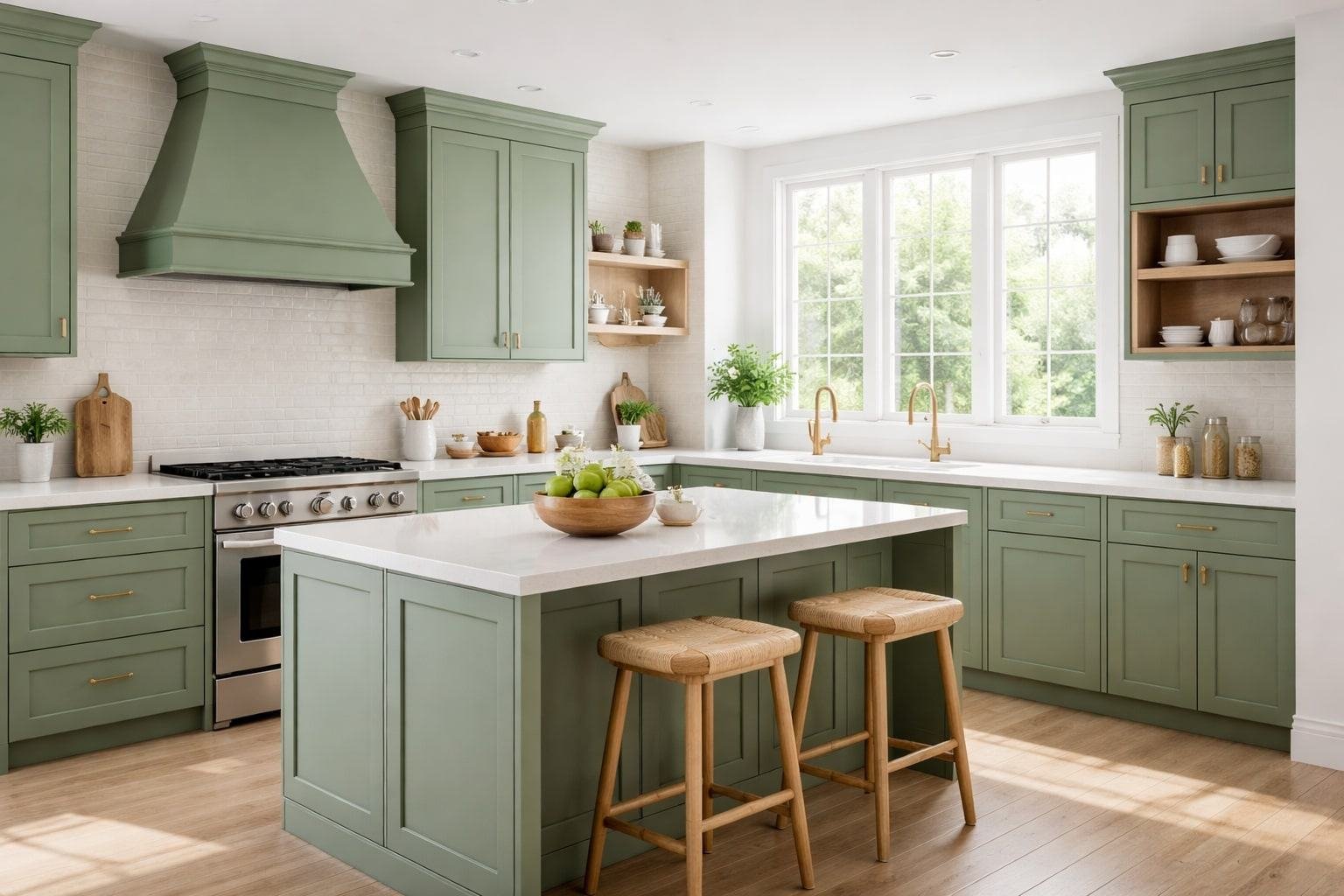
Green kitchen cabinets have evolved from a fleeting design trend into a permanent fixture in high-end and everyday kitchens alike. Homeowners who want kitchens that feel calm, fresh, and sophisticated are increasingly choosing green over traditional neutrals.
From soft sage tones to dramatic dark green finishes, green cabinets in kitchen spaces deliver versatility that works beautifully across modern, farmhouse, rustic, and traditional styles without feeling forced or overly trendy.
This guide covers everything you need to know before choosing green kitchen cabinets for your home. You’ll find detailed information about:
- Different shades and their best applications
- Style combinations and hardware pairings
- Paint selections and application techniques
- Practical design tips that help you avoid costly mistakes
Whether you’re planning a complete kitchen remodel or simply refreshing existing cabinets, this article provides the clarity you need to make confident decisions that you’ll love for years.
Why Green Kitchen Cabinets Work Across Different Design Styles
The short answer: Green bridges warm and cool tones seamlessly, making it one of the most adaptable cabinet colors available.
Green sits perfectly between warm and cool tones, making it surprisingly flexible in kitchen design. Unlike bold reds or yellows that demand constant attention, green kitchen cabinets feel grounded and natural. They pair effortlessly with wood, stone, metal, and white surfaces without creating visual competition.
The Versatility Advantage
The real advantage comes from green’s ability to set completely different moods depending on the shade you choose:
- Light green kitchen cabinets create airy, relaxed atmospheres perfect for casual family kitchens
- Dark green kitchen cabinets bring richness and elegance suited to formal entertaining spaces
- This range lets you customize your kitchen’s personality without changing the layout or investing in expensive materials
Practical Benefits Beyond Aesthetics
Green also hides everyday wear better than white or cream cabinets. Minor scuffs, fingerprints, and cooking splatters blend into green tones rather than standing out prominently.
This makes green genuinely practical for busy households where the kitchen sees constant use from multiple family members throughout the day.
The Psychology Factor: The color’s connection to nature creates measurable psychological benefits. Rooms with green elements tend to feel more calming and welcoming. Your kitchen transforms from a purely functional workspace into a gathering space where people naturally want to spend time.
Sage Green Kitchen Cabinets: Soft, Versatile, and Endlessly Appealing
Bottom line: Sage green remains the single most requested green shade because it delivers color without risk.
Sage green kitchen cabinets remain one of the most requested cabinet colors among homeowners and professional designers alike. The shade is subtle, slightly muted, and exceptionally easy to live with long-term. It provides color and personality without overwhelming other kitchen elements or demanding constant attention from everyone who enters the room.
Light Sage Green Kitchen Cabinets for Smaller Spaces
Light sage green kitchen cabinets work beautifully in smaller kitchens or spaces with limited natural light. They reflect light more effectively than darker shades, helping compact rooms feel more open and breathable rather than cramped.
Best for:
- Galley kitchens under 100 square feet
- Spaces with single windows or limited natural light
- Kitchens where you want personality without visual weight
This shade pairs particularly well with white quartz countertops and light wood flooring that amplifies the airy feel throughout the space.
Pro tip: Add under-cabinet lighting to enhance the brightening effect even further and prevent dark corners from diminishing the openness you’ve created.
Rustic Sage Green Kitchen Cabinets with Character
Rustic sage green kitchen cabinets bring warmth and lived-in character to kitchen spaces that need more soul than perfection.
They look most authentic with:
- Visible wood grain showing through the paint
- Open shelving displaying everyday dishes rather than hiding everything
- Slightly distressed finishes that suggest age and use
This approach works exceptionally well in older homes or countryside-inspired kitchens where too-perfect finishes feel out of place and somehow wrong.
Perfect pairings:
- Copper hardware for warm metallic accents
- Butcher block counters for natural texture
- Exposed wood beams for architectural character
Important: Skip high-gloss finishes entirely—matte or satin sheens enhance the rustic aesthetic without looking cheap or poorly executed.
Farmhouse Sage Green Kitchen Cabinets for Classic Appeal
Farmhouse sage green kitchen cabinets typically feature shaker-style doors, simple hardware in oil-rubbed bronze or matte black, and warm complementary textures throughout the space.
Combined with apron-front sinks, wood floating shelves, and vintage-inspired light fixtures, they create welcoming spaces that feel comfortable and inviting from day one.
The key to authentic farmhouse style: Restraint is everything in this aesthetic.
Avoid overloading the space with too many decorative elements competing for attention. Let the sage cabinets provide the color while keeping other finishes relatively simple and functional.
White subway tile backsplashes and neutral walls work far better than busy patterns that fight the cabinets visually.
Modern Sage Green Kitchen Cabinets for Contemporary Homes
Modern sage green kitchen cabinets use clean lines and minimal visible hardware to create sleek, updated looks that feel current without following fleeting trends.
Flat or slab cabinet doors paired with matte finishes deliver contemporary sophistication while keeping spaces soft and inviting rather than cold and sterile.
For truly modern results:
- Consider handleless cabinets with push-to-open mechanisms
- Pair sage cabinets with white quartz countertops
- Choose stainless steel appliances and simple pendant lighting
- Let the color become the primary design statement
The restraint in design details allows the color itself to shine without competing elements stealing focus.
For modern home architecture ideas, refer to modern mountain home architecture
Dark Green Kitchen Cabinets: Rich Depth Without Overwhelming
Quick guidance: Dark greens work brilliantly in large, well-lit kitchens but require strategic planning in smaller or darker spaces.
Dark green kitchen cabinets make bold statements while maintaining the grounded, natural quality that makes green such a reliable color choice across different home styles.
They’re perfect for homeowners who want depth and drama without the harshness of black cabinets or the coldness of navy blue.
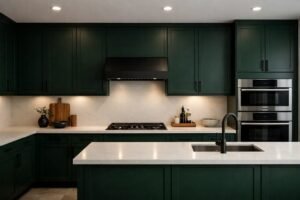
Modern Dark Green Kitchen Cabinets in Contemporary Spaces
Modern dark green kitchen cabinets work best with simple cabinetry profiles and clean, uncluttered surfaces that let the color command attention.
When paired with handleless doors, slim brass pulls, or integrated handles, the result feels genuinely high-end and contemporary rather than traditional or dated.
Lighting requirements: Large kitchens with excellent natural light handle dark green beautifully. Windows on multiple walls prevent dark cabinets from making spaces feel cave-like or oppressive.
If your kitchen receives limited natural light from only one direction, consider using dark green only on lower cabinets while keeping upper cabinets white or removing them entirely for open shelving that maintains visual openness.
Hunter Green Kitchen Cabinets for Classic Elegance
Hunter green kitchen cabinets lean slightly deeper and cooler than other dark greens. They create sophisticated, library-like atmospheres perfect for kitchens where you want elegance and formality without stuffiness.
This shade looks particularly stunning against brass, copper, or gold hardware that adds warmth and prevents the space from feeling too serious or unwelcoming.
Space requirements: Hunter green works best in larger kitchens with at least 200 square feet of space. The depth of color needs room to breathe and show its full character.
In smaller kitchens, hunter green can feel oppressive unless you limit it strategically to a single wall or island that becomes a focal point.
Classic combination: Pair hunter green cabinets with marble countertops, especially white marble with gray veining. The combination channels classic elegance without feeling stuffy or overly formal.
Add brass or gold light fixtures, and you’ve created a kitchen that feels expensive regardless of your actual budget investment.
Olive Green Kitchen Cabinets for Earthy Warmth
Olive green kitchen cabinets add warmth and earthy tones that bridge the gap between sage and hunter green perfectly. They’re neither too light nor too dark, making them surprisingly adaptable across different design styles and lighting conditions.
Olive works exceptionally well in kitchens where you want a strong connection to nature and organic materials.
Pair olive with:
- Warm beige walls for subtle contrast
- Natural stone backsplashes in travertine or limestone
- Wooden elements like exposed ceiling beams or wood floors
- Bronze or brass hardware for warm metallic accents
This shade complements both modern and traditional kitchens, depending entirely on cabinet style and hardware choices.
Slab doors with minimal hardware read contemporary and current. Shaker doors with bronze pulls feel more traditional and timeless. The same base color adapts beautifully to your preferred aesthetic direction.
Light Green and Mint Green Kitchen Cabinets for Bright, Cheerful Spaces
The reality: Light greens offer the easiest entry point for homeowners nervous about color commitment.
Light green kitchen cabinets offer a safe entry point if you want color without drama or long-term commitment anxiety. They feel fresh, clean, and remarkably easy to update with simple decor changes over time.
Mint green kitchen cabinets bring slightly more personality and playful energy to spaces. They work beautifully in smaller kitchens, breakfast nooks, or butler’s pantries where you want cheerful vibes without overwhelming primary cooking spaces.
Perfect pairings for mint:
- White or cream walls
- White countertops
- Light wood or white floors
Practical Considerations
Both light green and mint shades photograph beautifully, which matters significantly if you eventually plan to sell your home. They appeal to broad audiences while still offering more personality than plain white cabinets that feel generic.
Important consideration: These lighter shades show dirt, grease, and wear more readily than medium or dark greens. Plan for more frequent cleaning sessions, especially on lower cabinets near cooking zones where splatters concentrate.
Styling Guidelines
Light greens work best with simple, unfussy cabinet styles that don’t compete for attention. Elaborate door profiles or heavy trim details can make light green cabinets feel too cottage-like or childish rather than sophisticated.
Best choices: Stick with clean shaker styles or flat panels for sophisticated results that age well.
Green and White Kitchen Cabinets: Balanced Two-Tone Design
Designer’s note: Two-toning with white is the safest way to introduce green if you’re uncertain about full commitment.
Green and white kitchen cabinets create classic, fail-safe combinations that work across virtually all kitchen sizes and styles without exception.
White keeps spaces feeling bright and open, while green adds personality and warmth that pure white kitchens consistently lack.
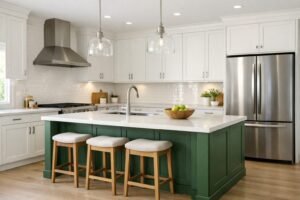
Popular Two-Tone Approaches
Option 1: Green Lower, White Upper
The most popular approach uses green lower cabinets with white upper cabinets. This grounds the space visually with color at eye level while maintaining openness above that prevents the room from feeling heavy.
The technique prevents green from overwhelming the kitchen, especially important in smaller or darker spaces where color can quickly dominate.
Option 2: White Perimeter, Green Island
Alternatively, paint perimeter cabinets white while featuring a green island that becomes the room’s focal point. This makes the island the visual anchor without committing to green throughout the entire kitchen layout.
It’s a safer choice if you’re uncertain about how much green you can comfortably live with long-term or how your family will respond to the color.
Design Flexibility Benefits
Green and white kitchen cabinets also provide exceptional flexibility with other finishes and design elements. You can confidently use:
- Bolder backsplash patterns
- Colored appliances
- Statement lighting
- Decorative accessories
The neutral white balances whatever green shade you choose, from soft sage to dramatic hunter green, without creating visual chaos or competing design stories.
Proportion guidelines:
- Small kitchens: Keep green to 40% or less of total cabinetry
- Medium kitchens: Handle 50-50 splits comfortably
- Large kitchens: Can embrace up to 60% green without problems
The key is maintaining enough white to prevent the space from feeling heavy, closed-in, or visually overwhelming.
Green Kitchen Cabinets with Wood: Natural, Organic Pairings
Expert insight: Green and wood pairings feel timeless because they mirror combinations found throughout nature.
Green kitchen cabinets with wood create naturally harmonious combinations that feel timeless rather than trendy or tied to a specific era.
Wood tones add warmth and texture that soften green’s color impact while reinforcing the inherent connection to nature that makes green so appealing.
Light Woods with Sage and Mint
Light woods like white oak, maple, or ash pair beautifully with sage and mint green shades. The pale wood prevents lighter greens from disappearing visually while maintaining the airy, open feeling these colors naturally provide.
Design ideas:
- Wood floating shelves against sage cabinets
- A wood island surrounded by light green perimeter cabinets
- White oak floors with mint green cabinets
Dark Woods with Hunter and Forest Green
Darker woods like walnut, cherry, or mahogany work better with dark green kitchen cabinets. The depth of both elements creates rich, sophisticated spaces without one overwhelming the other visually.
Applications:
- Wood floors in dark tones ground green cabinets beautifully
- Wood ceiling beams add architectural interest overhead
- Walnut open shelving creates a warm contrast
Understanding Wood Undertones
Critical consideration: Pay close attention to wood undertones before finalizing your combination.
Woods with red or orange undertones can clash badly with cool-toned greens that lean blue or gray. Warm greens with yellow undertones complement nearly all wood tones without fighting visually or creating discord.
When uncertain, request samples and view them together in your actual kitchen lighting at different times of day before making final purchasing decisions.
Wood Countertops
Wood countertops, particularly butcher block, bring organic warmth directly into the green kitchen cabinets design. They’re practical for prep areas while adding natural texture that softens the space.
Maintenance note: Wood counters require more consistent care than stone or quartz alternatives. Seal them properly and oil them regularly to prevent damage and maintain their beauty over the years of use.
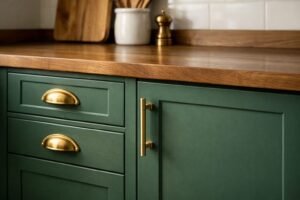
Green Kitchen Cabinets with Gold Hardware: Elevated Elegance
The transformation: Gold hardware instantly elevates green cabinets from nice to luxurious with minimal investment.
Green kitchen cabinets with gold hardware create instantly sophisticated combinations that elevate even modest kitchens into spaces that feel thoughtfully designed and expensive.
Brass and gold finishes add subtle luxury while providing the warm metallic contrast that makes green cabinets truly shine and command attention.
Pairing Different Greens with Gold
This combination works across various green shades, though some pairings feel more natural and harmonious than others:
Sage + Brushed Brass
- Creates soft, elegant looks perfect for traditional or transitional kitchens
- The combination feels timeless and sophisticated without being overly formal or stuffy
Dark Green + Aged Brass
- Feels rich and library-like, ideal for formal spaces with character
- Antique gold hardware adds warmth that prevents dark cabinets from feeling cold or unwelcoming
Hunter Green + Polished Gold
- Creates bold, glamorous statements that demand attention
- This combination requires confidence—it’s not subtle or understated
- Use it in kitchens where you want drama and aren’t afraid of attention-getting design
Hardware Selection Guidelines
The key to success: Let the metal finish provide impact rather than relying on overly decorative shapes that can date quickly.
Simple cup pulls, bar pulls, or round knobs in gold tones work far better than ornate, vintage-style hardware that can make green cabinets feel dated, costume-like, or overly themed.
Creating cohesion: Consider matching gold hardware with gold or brass light fixtures and faucets throughout the space. The repetition of warm metals creates a cohesive design that feels intentional and professionally executed rather than accidental.
Balance warning: Don’t go overboard with gold elements—three to four strategic gold touches are plenty. More than that risks looking gaudy, overdone, and trying too hard.
Cabinet Style Options: Shaker, Vintage, and Modern Designs
Industry standard: Shaker-style green cabinets remain the most popular choice because they work across nearly every home style.
Green shaker kitchen cabinets remain one of the most popular and versatile options available in the cabinet market today.
The simple frame-and-panel construction works beautifully across farmhouse, transitional, and even modern kitchens without looking out of place.
Why shakers work: Shaker doors provide enough visual interest to prevent cabinets from looking flat and boring while maintaining clean simplicity that doesn’t compete with the color for attention.
Shaker style suits nearly every green shade from light sage to deep hunter green. The door profile provides a subtle dimension that enhances color depth without adding unnecessary fussiness or visual clutter.
This makes shakers the safest bet if you’re uncertain which cabinet style works best with your chosen green shade and overall design direction.
Vintage Green Kitchen Cabinets for Period Charm
Vintage green kitchen cabinets feature softer finishes, rounded edges, and period-appropriate hardware that authentically captures the charm of earlier eras.
They work perfectly in older homes where modern, sleek cabinets would feel jarring, out of place, and disrespectful to the home’s original character.
Authenticity matters: True vintage cabinets often show wear and patina that add character and history to the space.
If you’re painting existing vintage cabinets, consider preserving some of that aged quality rather than making everything perfectly pristine and new-looking. Slight distressing, especially on edges and corners, creates authenticity that modern cabinets simply can’t replicate.
Hardware choices:
- Cup pulls in brass or bronze
- Bin pulls for drawers
- Classic backplates for traditional appeal
Complete the look:
- White subway tile backsplashes
- Hexagonal floor tiles
- Vintage-style light fixtures with character
Modern Green Kitchen Cabinets for Clean Contemporary Looks
Modern green kitchen cabinets focus relentlessly on minimalism and clean lines that eliminate all unnecessary detail.
Flat panel or slab door styles eliminate all profile detail entirely, creating smooth surfaces where color becomes the primary and often sole design statement.
Hardware options:
- Integrated handles for a sleek appearance
- Push-to-open mechanisms to remove visible hardware entirely
- Slim horizontal pulls in matte black or brushed brass
Color selection for modern: Modern cabinets work best in crisp, saturated greens rather than muted or dusty tones that can feel dated.
Clean sage, true olive, or deep forest green all read as contemporary and current. Avoid grayed or yellowed greens that can feel dated, muddy, or confused in modern contexts.
Complementary finishes:
- White quartz with minimal veining
- Solid surface materials
- Simple white tile backsplashes
- Streamlined stainless appliances
Save pattern and texture for smaller elements like bar stools or pendant lights rather than major permanent surfaces that can’t be easily changed.
Painted Green Kitchen Cabinets: Paint Selection and Application
Budget reality: Professional painting delivers superior results but costs 5-10x more than DIY materials.
Painted green kitchen cabinets offer the most budget-friendly path to green cabinetry, especially if your existing cabinets are structurally sound with good bones worth preserving.
Cost comparison:
- Professional painting: $3,000-$8,000
- DIY projects: $300-$800 in materials alone
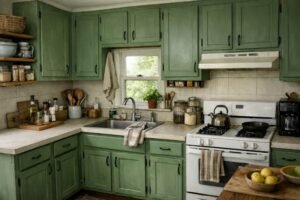
Best Green Paint for Kitchen Cabinets
The best green paint for kitchen cabinets must balance aesthetics with serious, long-term durability.
Kitchen cabinets endure constant contact, grease exposure, temperature fluctuations, and frequent cleaning cycles. Regular wall paint simply won’t survive these demanding conditions for more than a few months.
Top cabinet paint brands:
- Benjamin Moore Advance – Self-leveling formula with excellent durability
- Benjamin Moore Scuff-X – Maximum scratch and scuff resistance
- Sherwin Williams Emerald Urethane Trim Enamel – Superior hardness and washability
These paints cure significantly harder than standard latex paints, creating surfaces that genuinely resist chips, scratches, and yellowing over time.
Popular green paint colors:
- Benjamin Moore’s Salamander
- Sherwin Williams’ Clary Sage
- Farrow & Ball’s Green Smoke
- Benjamin Moore’s October Mist
- Sherwin Williams’ Retreat
Critical reminder: The “best” color depends entirely on your specific lighting conditions, existing finishes, and personal preferences. Never choose paint without testing samples in your actual space for several days at minimum.
Paint Finish Selection: Matte, Satin, or Semi-Gloss
Finish selection matters just as much as color choice itself. Each sheen offers distinctly different benefits and drawbacks worth considering carefully.
| Finish | Pros | Cons | Best For |
| Matte | Sophisticated appearance, hides minor imperfections beautifully | Shows fingerprints and grease readily, harder to clean effectively | Upper cabinets with less contact |
| Satin | Best balance for most kitchens, easier to clean, photographs well | None significant | All cabinet applications, especially mixed upper and lower |
| Semi-Gloss | Maximum durability, wipeable surfaces, tolerates serious scrubbing | May look too reflective on pale colors | Lower cabinets, families with children |
| High-Gloss | Dramatic jewelry-box effect | Highlights every flaw, requires perfectly smooth surfaces | Butler’s pantries or powder room kitchenettes only |
Green Kitchen Cabinets with White Countertops: Classic Pairing
Designer consensus: This combination remains one of the most reliable, attractive pairings you can choose.
Green kitchen cabinets with white countertops create one of the most reliable, attractive combinations available in kitchen design today.
White counters provide the clean, bright backdrop that allows green to shine prominently without overwhelming spaces or creating visual competition for attention.
White Quartz Countertops: The Practical Choice
White quartz countertops offer the best practical choice for most homeowners, balancing budget, durability, and aesthetics.
Quartz benefits:
- Durable and genuinely long-lasting
- Stain-resistant
- Non-porous (doesn’t harbor bacteria)
- Available in dozens of white variations, from pure white to cream
- No surprises—you see exactly what you’re getting before installation
- Low maintenance compared to natural stone alternatives
Marble Countertops: The Luxury Option
Marble countertops elevate green cabinets to luxury status instantly. Natural veining adds organic movement that complements green’s inherent connection to nature beautifully.
Marble pairings:
- Carrara marble with gray veining pairs beautifully with cool-toned sages
- Calacatta marble with gold veining enhances warm olive or hunter greens
Important considerations: Marble requires significantly more maintenance than quartz. It stains, etches from acidic liquids, and needs regular sealing to maintain appearance.
Choose marble only if you’re genuinely comfortable with ongoing maintenance requirements or accept that patina and aging become part of its character over time.
Edge Profile Considerations
Consider countertop edge profiles carefully, as they significantly impact the overall aesthetic:
- Simple, eased, or straight edges: Feel modern, let the green-white combination shine cleanly
- Ornate ogee or Dupont edges: Add traditional elegance, work with darker greens, but can overwhelm lighter shades
Color Matching Tips
Critical rule: Avoid pure white counters with very pale green cabinets—the contrast becomes too weak, and both elements disappear visually into each other.
Better choices for pale greens:
- Off-whites like cream
- Ivory tones
- Warm whites with subtle undertones
These provide a definition that actually registers visually and creates genuine visual interest rather than a washed-out appearance.
How to Choose Green Kitchen Cabinets That Work for Your Space
Most important factor: Your kitchen’s natural lighting conditions matter more than any other single variable.
Understanding how to choose green kitchen cabinets requires evaluating several practical factors that directly impact whether you’ll love or regret your choice.
Skip these considerations, and you risk expensive mistakes that create kitchens you tolerate rather than genuinely love using daily.
Evaluate Kitchen Size and Layout
Small Kitchens (Under 100 square feet)
- Need light sage green kitchen cabinets or other pale greens
- Dark greens will make tiny kitchens feel like closets
- Maximize perceived space with reflective light colors
- Consider two-toning with white uppers
Medium Kitchens (100-200 square feet)
- Handle most green shades successfully
- Your sweet spot for experimentation
- Try everything from soft mint to rich olive tones
- Perfect size for two-toned approaches
Large Kitchens (Over 200 square feet)
- Can embrace dark green kitchen cabinets confidently
- Square footage prevents dark colors from overwhelming
- Consider dramatic hunter green islands
- Can handle 60% or more green cabinetry
Assess Natural and Artificial Lighting
Testing is essential: Lighting conditions fundamentally change how green appears throughout the day. Test paint samples or cabinet samples in your actual kitchen at different times before committing.
What to observe:
- Morning light
- Afternoon light
- Evening artificial light
- Each reveals completely different aspects of the same color
Multiple window kitchens: Handle darker greens beautifully. Natural light from different directions prevents any shade from feeling oppressive or cave-like.
Single window kitchens: Need lighter greens or risk feeling dark and closed-in, especially on overcast days.
Artificial lighting considerations:
| Bulb Type | Color Temperature | Best For | Effect |
| Warm LED | 2700K-3000K | Sage, olive, warm hunter greens | Enhances warm greens, makes cool greens look muddy |
| Cool LED | 4000K-5000K | Blue-toned greens | Makes cool greens look crisp, can make warm greens look sickly |
The rule: Match your bulb color temperature precisely to your greens’ undertones for optimal results.
Consider Existing Elements You’re Keeping
If you’re painting existing cabinets or replacing cabinets while keeping countertops, backsplash, or flooring, these fixed elements must inform and guide your green selection.
Your new green must complement what’s staying, not fight against it visually.
Countertop considerations:
- Busy granite or heavily veined marble can clash with certain greens
- Clean quartz or simple tile provides neutral backdrops
- If stuck with challenging surfaces, choose softer, neutral greens like sage
Flooring matters enormously:
- Cool-toned greens clash badly with honey oak or orange-toned wood floors
- Warm spices and olives harmonize with most wood tones naturally
- Strong floor color should guide your green selection
- Installing new floors? Choose neutral options like gray luxury vinyl or light whitewashed wood
DIY Green Kitchen Cabinets: When It Works and When to Hire Pros
Reality check: DIY can save thousands, but demands significant time, patience, and realistic expectations about final results.
DIY green kitchen cabinets can save $3,000-$6,000 compared to professional painting, but success depends entirely on a realistic assessment of your skills, available time, and existing cabinet condition.
When DIY Makes Sense
Ideal conditions for DIY:
- ✓ Cabinets are solid wood in good structural condition
- ✓ No major damage present
- ✓ Minor dings and scratches (these actually help paint grip)
- ✓ You have proper tools and a dedicated workspace
- ✓ You’re willing to invest significant time
Time investment reality:
- At least one full weekend for thorough preparation
- Two more weekends for painting and drying
- Total: 3-4 weeks with the kitchen partially disassembled
- Working around daily life creates real stress and inconvenience
Essential DIY Steps
Preparation determines results more than painting skill:
- Remove all doors and drawer fronts completely
- Clean everything thoroughly with TSP to remove all grease and grime
- Sand all surfaces with 220-grit paper to create tooth for adhesion
- Prime with a bonding primer specifically designed for cabinets
- Apply paint in thin, even coats
- Allow proper drying between each coat
- Cure for a full 30 days before heavy use
When Professional Painting Wins
Professional painting makes sense when:
- You have laminate cabinets requiring special primers
- You want a factory-quality spray finish
- Time is limited, or inconvenience is costly
- Cabinet painting experience is minimal
Professional advantages:
- ✓ Spray equipment creates smoother, more durable finishes
- ✓ No visible brushstrokes or roller marks
- ✓ Jobs complete in 3-5 days
- ✓ Kitchen returns to function faster
- ✓ Liability insurance protects you
- ✓ Typical 60-80% return at resale
Hiring tips:
- Get at least three detailed quotes
- Ask for photos of previous green cabinet projects, specifically
- Check reviews carefully across multiple platforms
- Ask about warranty coverage in detail
- Verify cabinet painting experience, specifically, not just general painting
Common Design Mistakes to Avoid with Green Cabinets
Critical insight: Even beautiful green shades fail miserably when paired incorrectly or installed in the wrong situations.
Avoid these frequent mistakes that undermine green kitchen cabinets design and create disappointing results that homeowners regret almost immediately.
Mistake #1: Matching Greens Too Closely to Walls
The problem: Painting cabinets and walls in nearly matching greens creates flat, boring spaces where nothing stands out or provides visual relief whatsoever.
The solution: Your cabinets should be notably, obviously different from the walls, even if both use green family colors.
Better approach:
- Green cabinets + warm white walls
- Green cabinets + soft gray walls
- Green cabinets + creamy beige walls
Let the cabinets provide color while the walls recede visually. This creates genuine depth and dimension that all-green rooms completely lack.
Mistake #2: Ignoring Floor Undertones
The problem: Cool-toned greens clash horribly with honey oak or orange-toned floors. The combination creates visual discord that feels wrong even when you can’t identify exactly why.
The fix if you’re keeping floors:
- Choose warm greens with yellow undertones like sage or olive
- These harmonize naturally with most wood tones
The fix if installing new floors:
- Choose neutral options like gray luxury vinyl
- Light whitewashed wood works with any green
- Avoid heavily colored or strongly grained woods
Mistake #3: Overloading with Multiple Bold Elements
The problem: Green cabinets already provide significant color and personality. Adding busy patterned backsplashes, colorful appliances, bright window treatments, and decorative wallpaper creates visual chaos rather than cohesion.
The solution: Let green be the star element.
Keep these elements neutral:
- Backsplash (simple subway tile or solid colors)
- Countertops (white or light neutral)
- Walls (warm white or soft gray)
- Major appliances (stainless or white)
Save color for small, easily changeable items:
- Dish towels
- Small appliances
- Bar stools
- Decorative accessories
Mistake #4: Choosing Trendy Shades Over Timeless Colors
The problem: Bright limes, gray-greens, or other edge-case shades feel trendy right now but date quickly and make resale significantly harder.
The solution: Stick with proven classics that have demonstrated staying power:
- Sage green
- Olive green
- Forest green
- Hunter green
The test: Ask yourself whether your chosen green would have looked good twenty years ago. If yes, it will likely look good twenty years from now. Timeless colors protect your investment far better than following whatever’s currently popular on social media.
Budget Considerations: Finding Your Price Point
Price reality: Green kitchen transformations span from a few hundred dollars to well over $40,000, depending on your approach.
Understanding all available options helps you choose a path that realistically fits your budget without unnecessarily sacrificing results or quality.
Option 1: DIY Painting ($300-$800)
What you get:
- Paint, primer, sandpaper, brushes or rollers, and new hardware
- Complete color transformation
- Preservation of existing layout
Requirements:
- Existing cabinets must be solid wood in good condition
- Layouts you genuinely like
- Significant time investment
- Realistic expectations about finish quality
Outcome: Careful DIY painting can deliver dramatic improvements that fully justify the effort if you follow proper techniques meticulously and patiently.
Option 2: Professional Painting ($3,000-$8,000)
What you get:
- Professional prep work
- Spray-applied finish
- Factory-smooth results
- Minimal kitchen disruption
Best for:
- Solid wood cabinets in good structural condition
- When you like the current layout but want color updates
- Homeowners with limited time
- Those wanting professional results
Expected lifespan: Most professional paint jobs last 7-10 years with proper care and maintenance.
Option 3: Cabinet Refacing ($5,000-$15,000)
What you get:
- New doors and drawer fronts
- New hardware
- Existing cabinet boxes remain
- Fresh appearance
Cost savings: Roughly half of the full replacement cost
Best for:
- Solid cabinet boxes with dated doors
- Changing door styles (raised panels to shakers)
- Keeping the existing kitchen layout
- Avoiding demolition mess
Flexibility: Choose any green shade and door style without disturbing plumbing or electrical systems.
Option 4: Full Cabinet Replacement ($15,000-$40,000+)
What you get:
- Perfect construction
- Optimal layouts
- Modern storage solutions
- Any door style in your chosen green
- Custom dimensions for your exact space
Cost breakdown:
- Semi-custom cabinets: $8,000-$20,000 with decent quality and some customization options
- True custom cabinetry: $20,000-$40,000+ delivers exactly what you want
Timeline: Expect 8-10 week lead times for custom work
Best for:
- Seriously outdated kitchens
- Changing layouts entirely
- New construction
- When the budget genuinely allows
Lighting Considerations That Make or Break Green Cabinets
Essential truth: The same green shade can look stunning in one kitchen and terrible in another—lighting is almost always the reason.
Lighting fundamentally changes how green appears throughout the day and across different seasons. Understanding this reality helps you choose shades that work beautifully in your specific conditions rather than just in idealized showroom lighting.
Natural Light: The Gold Standard
Natural light brings out green’s truest color while making spaces feel open, welcoming, and alive.
Multiple window kitchens:
- Handle any green shade successfully
- Even dark hunter greens feel appropriate
- Sunlight from different directions prevents oppression
Single window kitchens:
- Need more careful color selection
- Dark greens can feel oppressive
- Choose medium to light greens
- Or use dark green only where windows are located
Artificial Lighting Temperature Matters
Artificial lighting color temperature matters just as much as brightness levels when evaluating how your green will appear daily.
Warm LED bulbs (2700K-3000K):
- ✓ Enhance warm greens with yellow undertones beautifully
- ✗ Make cool greens look muddy and unappealing
- Best for: Sage, olive, warm hunter greens
Cool LED bulbs (4000K-5000K):
- ✓ Make cool greens look crisp and clean
- ✗ Can make warm greens appear sickly yellow
- Best for: Blue-toned greens
The matching rule: Warm greens need warm bulbs. Cool greens need cool or neutral bulbs. Mismatching creates problems immediately.
Pro tip: Install dimmers so you can adjust brightness throughout the day as natural light changes and creates different moods.
Under-Cabinet Lighting: Essential for Dark Cabinets
Under-cabinet lighting becomes absolutely essential with dark green kitchen cabinets rather than just a nice optional upgrade.
Benefits:
- Prevents shadows that make dark cabinets feel cave-like
- Provides practical illumination for food prep work
- Creates an ambient glow in the evenings
- Enhances the color rather than fighting it
Options that work equally well:
- LED strips for continuous lighting
- Puck lights for spot illumination
- Both are available in warm or cool temperatures to match your needs
Maintaining Green Kitchen Cabinets for Long-Term Beauty
Good news: Green cabinets hide everyday wear significantly better than white, but they still require consistent care.
Follow these practical maintenance guidelines for lasting results that keep your cabinets looking fresh for years rather than months.
Daily and Weekly Cleaning
What to use:
- ✓ Microfiber cloths
- ✓ Mild dish soap in warm water
- ✓ Soft, non-abrasive sponges
What to avoid:
- ✗ Harsh chemicals
- ✗ Abrasive scrubbers
- ✗ Ammonia-based cleaners
- ✗ Magic erasers (too abrasive for painted surfaces)
Why it matters: Gentle cleaning preserves color and sheen far better than aggressive scrubbing that damages protective topcoats over time.
Addressing Damage Immediately
Chips and scratches:
- Address immediately when they occur
- Small touch-ups prevent moisture penetration
- Moisture causes larger problems like peeling or wood damage underneath
Touch-up solutions:
- Keep leftover paint in clearly labeled containers
- Purchase paint pens in your exact shade
- Touch up every 6-12 months as needed
High-Traffic Area Protection
Near the stove:
- Wipe down after cooking
- Prevent grease buildup that becomes harder to remove
- Consider clear protective film on immediately adjacent cabinets
Near the sink:
- Wipe water splashes immediately
- Prevent moisture damage to painted finishes
- Check caulking regularly for gaps or deterioration
Hardware Maintenance
Metal-specific care:
| Hardware Type | Cleaning Method | What to Avoid |
| Brass and gold | Gentle cleaners to preserve patina | Abrasive pads that remove finish |
| Chrome and brushed nickel | Stronger cleaners tolerated | Scratchy scrubbers |
Important: Don’t use abrasive pads on any hardware—they scratch finishes permanently and create dull spots that can’t be repaired.
Annual Adjustments
Door and drawer alignment:
- Adjust annually to maintain proper alignment
- Hinges loosen over time with constant use
- Most adjustments take only minutes with a screwdriver
- Prevents long-term damage from misaligned doors that rub against frames
Moisture Prevention
The problem: Hanging wet dish towels directly on cabinet doors damages painted finishes significantly and can cause warping over time.
The solution: Install towel bars or hooks on walls instead for better cabinet protection and longer finish life.
Regional and Climate Considerations for Green Cabinet Selection
Often overlooked: Your location and climate affect both paint performance and color perception in significant ways.
Understanding regional factors helps you make choices that work specifically for your environment rather than following generic national advice.
Humid Climate Challenges
The issue: Humid climates require extra attention to paint curing times that many DIY painters ignore.
The fix:
- Don’t rush the process at all
- Improperly cured paint remains soft and damages easily
- Allow full cure times specified by manufacturers without exception
- Typically, 30 days for cabinet paints before heavy use
Coastal Area Concerns
The issue: Salt air corrodes standard brass hardware surprisingly quickly, often within the first year.
The fix:
- Choose salt-resistant hardware finishes from the start
- Sealed brass
- Stainless steel
- Other corrosion-resistant options
- Avoid replacing hardware within just a few years
Very Dry Climate Adjustments
The issue: Wood shrinks more in dry climates than in humid regions, creating gaps or revealing unpainted edges over time as cabinets shift.
The fix:
- Professional painters in dry climates account for this movement
- DIY painters should research techniques specific to their climate
- Consider climate-appropriate primers and paints
High Altitude Painting
The issue: Thinner air affects paint drying and leveling significantly. Paints may dry too quickly before leveling properly, creating uneven texture.
The fix:
- Use additives that slow drying for better results
- Consult paint stores familiar with high-altitude applications specifically
- Follow altitude-specific techniques religiously
Extreme Temperature Zones
The issue: Wide temperature swings between seasons can cause cracking or peeling if the wrong paint is used.
The fix:
- Not all cabinet paints perform equally in these demanding conditions
- Ask paint retailers for products proven in your specific climate
- Don’t rely solely on national brands without verified local recommendations
FAQs About Green Kitchen Cabinets
Are green kitchen cabinets a good long-term choice?
Yes, green kitchen cabinets work exceptionally well long-term when you choose classic shades like sage, olive, or hunter green rather than trendy, fashion-forward tones that date quickly.
These colors have remained popular across multiple decades, proving their genuine staying power. Green also hides wear better than white cabinets while offering more warmth than gray alternatives.
However, success depends on choosing the right shade for your specific kitchen size, lighting conditions, and existing finishes.
Key to success: Test samples thoroughly before committing to ensure you’ll love the color years from now, not just in this moment.
Do dark green kitchen cabinets make a kitchen look smaller?
Dark green kitchen cabinets can make small kitchens feel more closed-in, but this depends entirely on kitchen size and natural lighting conditions rather than being an absolute rule.
Large kitchens (200+ square feet): With excellent natural light from multiple directions, handle dark greens beautifully without feeling cramped whatsoever.
Small kitchens (under 100 square feet): Should stick with light to medium greens to maintain openness and prevent a cramped feeling.
Strategic dark green use: Even in smaller spaces, you can successfully use dark green on lower cabinets only or a single island while keeping upper cabinets white or using open shelving to maintain visual openness above.
What wall colors go best with green cabinets?
Warm white, soft cream, light gray, and greige work best with green kitchen cabinets across all shade variations. These neutrals let cabinets become the focal point without creating competing color stories that confuse the eye.
Avoid:
- Walls in nearly matching green shades (creates flat, monotonous spaces)
- Cool whites with warm-toned greens
- Warm whites with cool-toned greens
- The undertone mismatch creates subtle visual discord
If you want color on walls: Consider soft beige or light taupe that complements green naturally without overwhelming the space or fighting for attention.
Are green kitchen cabinets hard to maintain?
No, green kitchen cabinets are actually easier to maintain than white cabinets because they hide minor wear, fingerprints, and cooking splatters significantly better.
Maintenance routine:
- Clean regularly with microfiber cloths and mild dish soap in warm water
- Avoid harsh chemicals or abrasive scrubbers entirely
- Touch up chips and scratches promptly to prevent moisture damage
Finish selection matters:
- Satin or semi-gloss finishes are easiest to clean effectively
- Matte finishes show grease more readily
- High-gloss highlights every imperfection
Bottom line: Overall maintenance is straightforward and no more demanding than any other cabinet color choice.
Which green shade works best for small kitchens?
Light sage green kitchen cabinets work best for small kitchens under 100 square feet. The soft, pale tone reflects light effectively, helping compact spaces feel more open and breathable rather than cramped.
Mint green also works well for small kitchens wanting a cheerful, fresh feel without overwhelming the limited space available.
Avoid in small kitchens:
- Dark greens like hunter or forest (they absorb light and make already-small kitchens feel significantly cramped)
If you love dark green: Use it only on a small island or lower cabinets while keeping uppers white to maintain essential visual openness.
Can I paint my existing cabinets green?
Yes, you can paint existing cabinets green if they’re solid wood in good structural condition without major damage or deterioration.
The process requires:
- Thorough cleaning with TSP
- Sanding with 220-grit paper
- Proper priming with bonding primer
- Cabinet-specific paint (Benjamin Moore Advance or Sherwin Williams Emerald Urethane)
- Removing all doors and drawer fronts
- Painting them flat rather than installed
Laminate cabinets: Require special bonding primers but can also be painted successfully with proper technique.
Cost comparison:
- Professional painting: $3,000-$8,000
- DIY: $300-$800 in materials
Critical: Allow proper cure times—typically 30 full days—before heavy use to ensure maximum durability.
Do green cabinets work with modern kitchens?
Yes, green cabinets work beautifully in modern kitchens when you choose clean, saturated shades and pair them with appropriately sleek cabinet styles.
Modern green cabinet features:
- Flat panel or slab doors
- Minimal or no visible hardware
- Clean lines and simple profiles
Best green shades for modern:
- Crisp sage
- True olive
- Deep forest green
Pair with:
- White quartz counters
- Stainless steel appliances
- Matte black or brushed brass hardware
Avoid in modern spaces:
- Dusty, grayed greens
- Overly yellow-toned shades
- These feel dated rather than current
The key: Match contemporary color with contemporary styling throughout for genuinely cohesive results.
How do I know if green cabinets suit my kitchen’s natural lighting?
Test paint samples on large poster boards and observe them in your kitchen throughout the day before committing any money. Green appears dramatically different in morning sunlight, afternoon light, and evening artificial light.
Kitchens with windows on multiple walls: Handle any green shade well, including dark greens, because light comes from multiple directions throughout the day.
Single-window kitchens: Need lighter greens to avoid feeling dark and closed-in, especially on overcast days.
Also consider artificial lighting:
- Warm LED bulbs enhance warm greens
- Cool LEDs enhance cool greens
The fail-safe rule: If your sample looks wrong at any time of day, that shade won’t work regardless of how beautiful it appears in stores under controlled lighting.
Testing duration: Observe for at least one full week before making final purchasing decisions.
Making Your Final Green Cabinet Decision
Final thought: Green cabinets offer versatility and timeless appeal that white and gray simply cannot match across different home styles.
From soft sage that soothes to bold hunter green that commands attention, there’s a shade suited to virtually every kitchen size, lighting condition, and design style you prefer.
Keys to Success
- Honest Assessment Comes First
Success starts with a brutally honest evaluation of your kitchen’s specific conditions rather than following trends blindly or copying what looks good on social media:
- Small kitchens genuinely need lighter greens
- Large kitchens can confidently embrace dramatic dark shades
- Good natural lighting expands your options significantly
- Limited light narrows choices to medium and light tones only
- Testing Prevents Expensive Mistakes
Test samples extensively before committing serious money to paint or new cabinets:
- Live with large sample boards in your actual kitchen
- Observe for at least one full week minimum
- Watch how the color changes throughout the day
- This small investment builds genuine confidence and prevents regret
- Personal Preference Trumps Trends
Remember that green should make your kitchen feel more authentically you, not just fashionable or trendy:
- Choose green because you genuinely love it
- Not because it’s currently trending on design shows
- Authentic personal preference sustains satisfaction for years
- Trends come and go, but your kitchen remains
- Consider the Complete Picture
Think about all elements working together harmoniously:
- Cabinet color and style
- Countertops and backsplash
- Flooring and wall colors
- Hardware and fixtures
- Lighting conditions throughout the day
The best kitchen design decisions balance aesthetic appeal with practical functionality, creating spaces you’ll genuinely love using every single day for years to come.